💡 The Concept

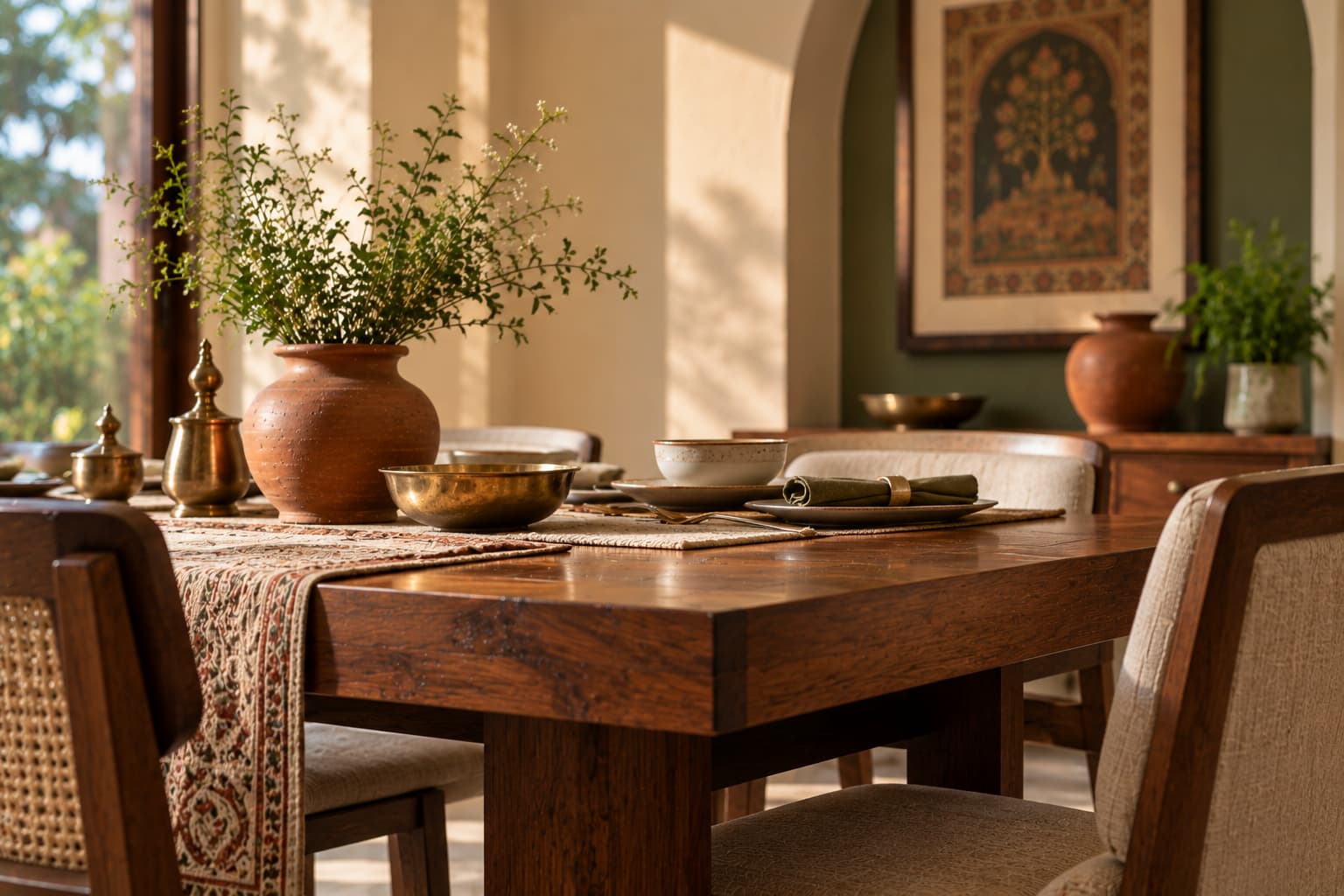
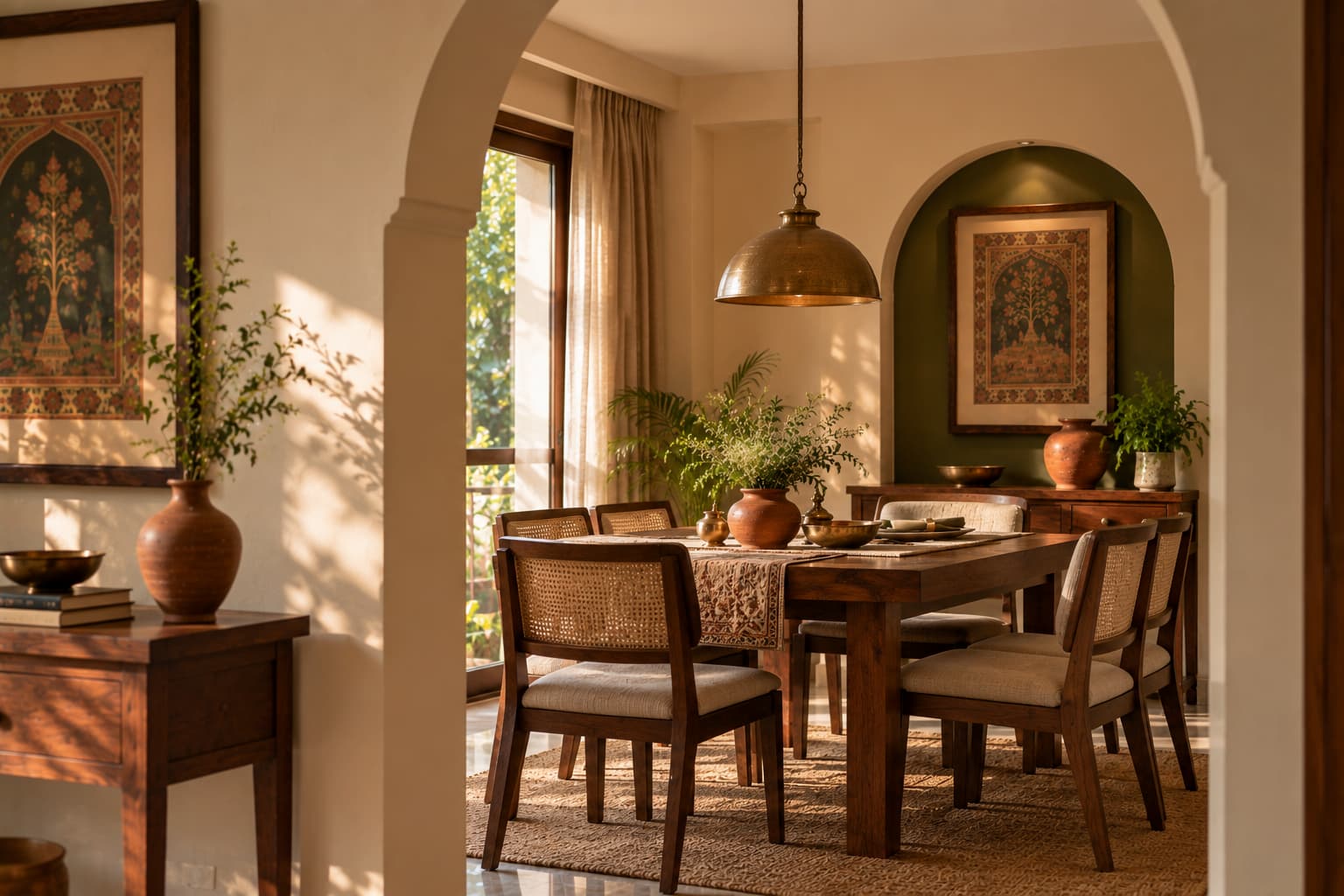
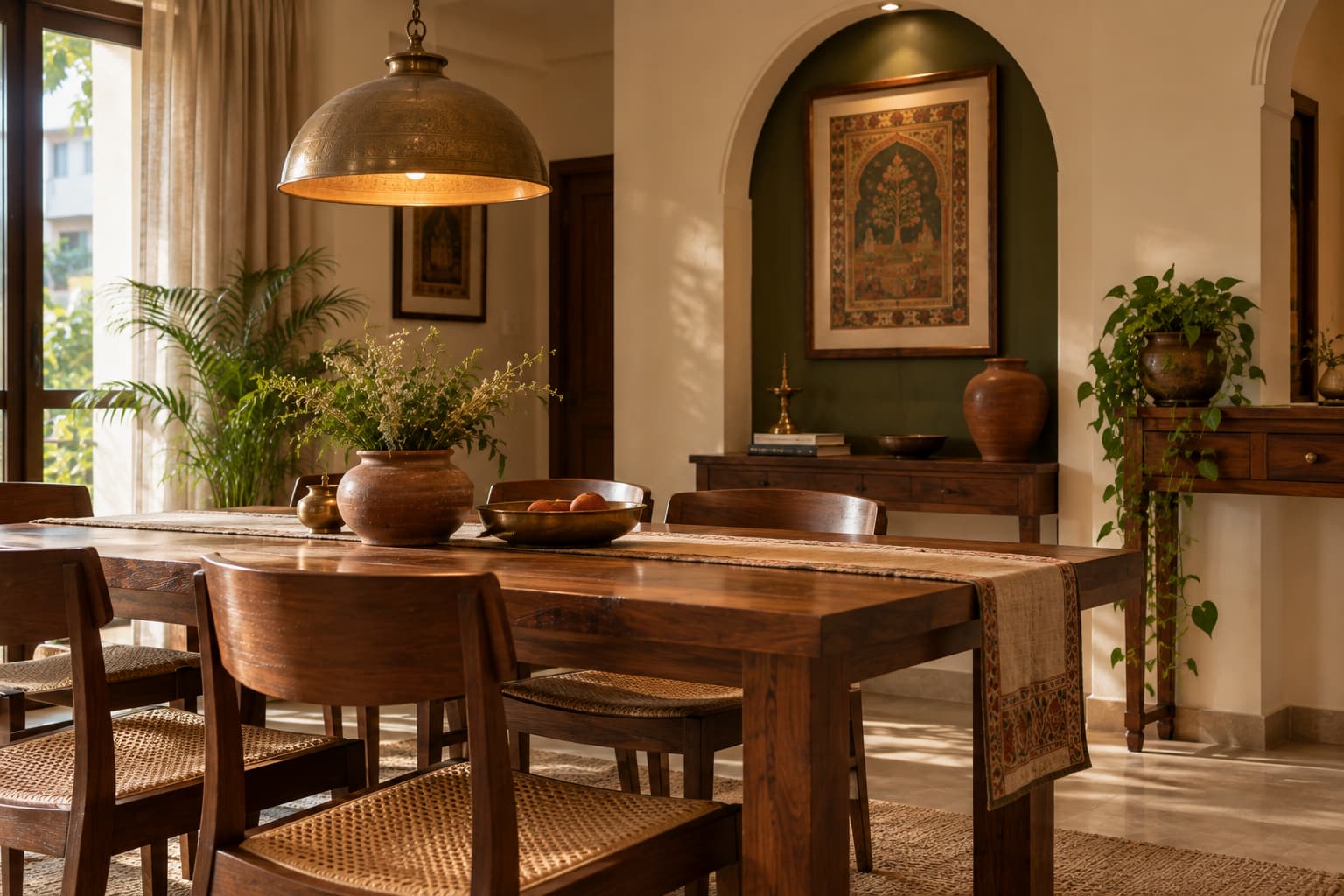
The Modern Mughal Dining Room takes visual cues from the architectural language, craftsmanship and material richness associated with Mughal interiors, but translates them into a dining space that belongs in a contemporary Indian home. The intention is not to recreate a palace dining hall. Instead, a few carefully chosen elements establish the character while the room remains practical, comfortable and relatively easy to achieve.

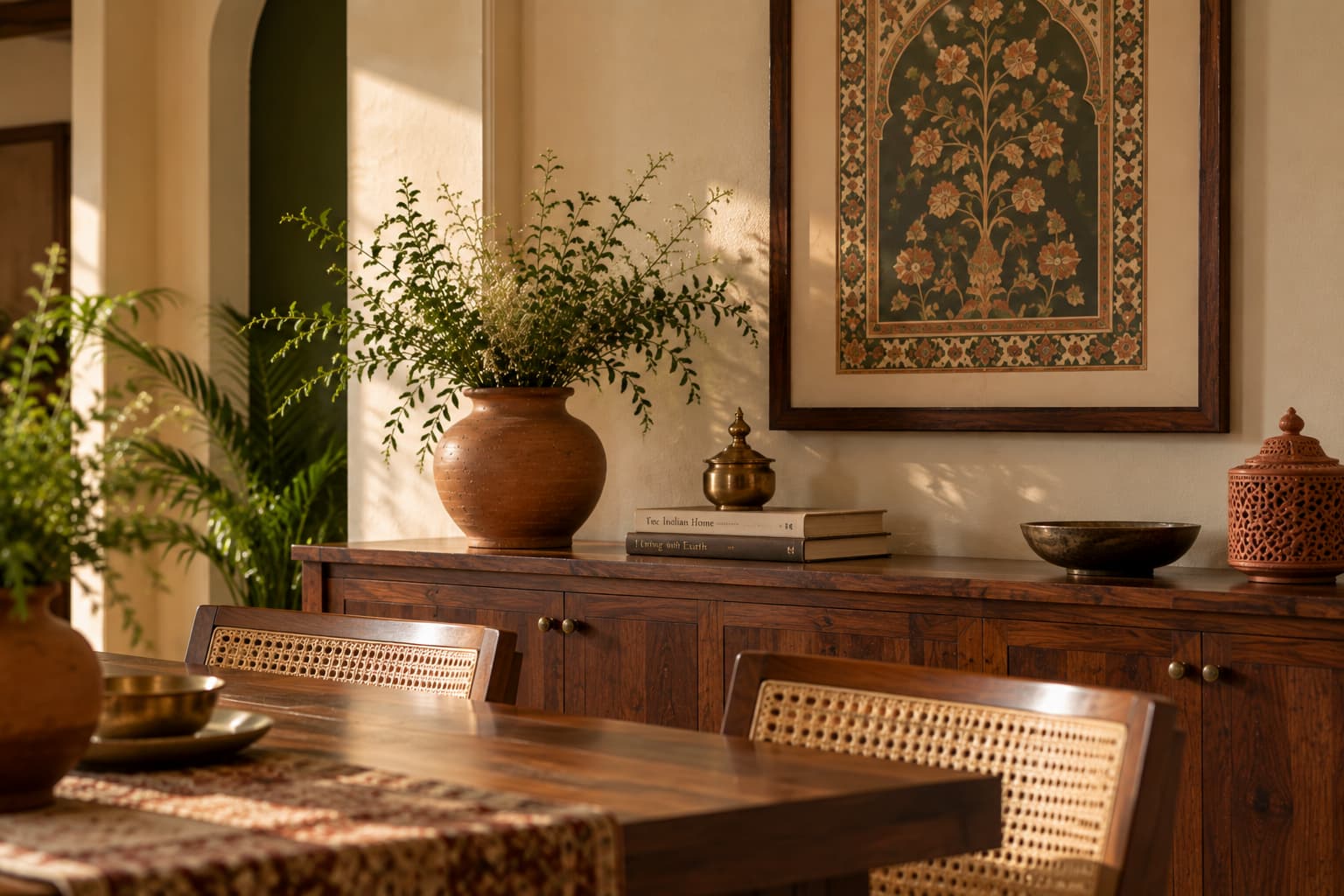
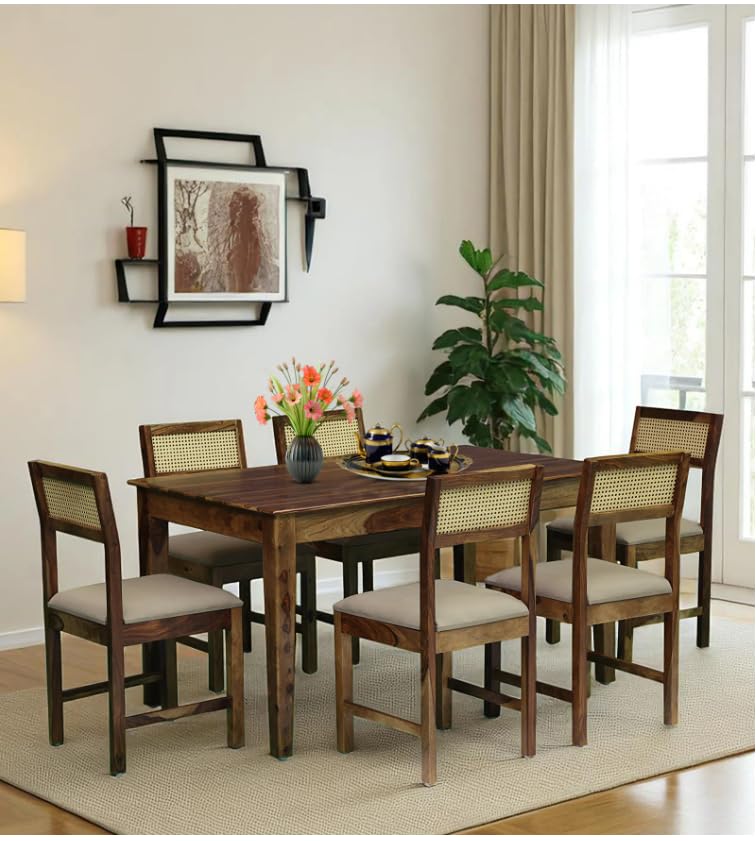
The dining table forms the centre of the room. A substantial wooden table with a clean silhouette provides warmth and everyday functionality, while upholstered or wooden dining chairs keep the setting contemporary. Rather than using heavily carved furniture throughout the room, introduce craftsmanship selectively through a carved console, patterned cabinet front or a small decorative piece.

Architecture provides one of the strongest Mughal references. A shallow arched doorway, niche, mirror frame or wall detail can establish the connection without requiring elaborate construction. If structural changes are not practical, an arched mirror or framed wall treatment can create a similar visual cue with considerably less intervention.

The palette is intentionally restrained. Warm ivory and beige create the foundation, while walnut brown provides depth. Muted terracotta and deep green can appear in small quantities, while aged brass introduces the characteristic warmth associated with traditional Indian interiors. The combination should feel sophisticated rather than excessively royal.

Geometric pattern can also be used sparingly. A patterned rug, carved screen, decorative panel or small piece of artwork can reference traditional ornament without covering every surface. The goal is to let negative space remain part of the design.

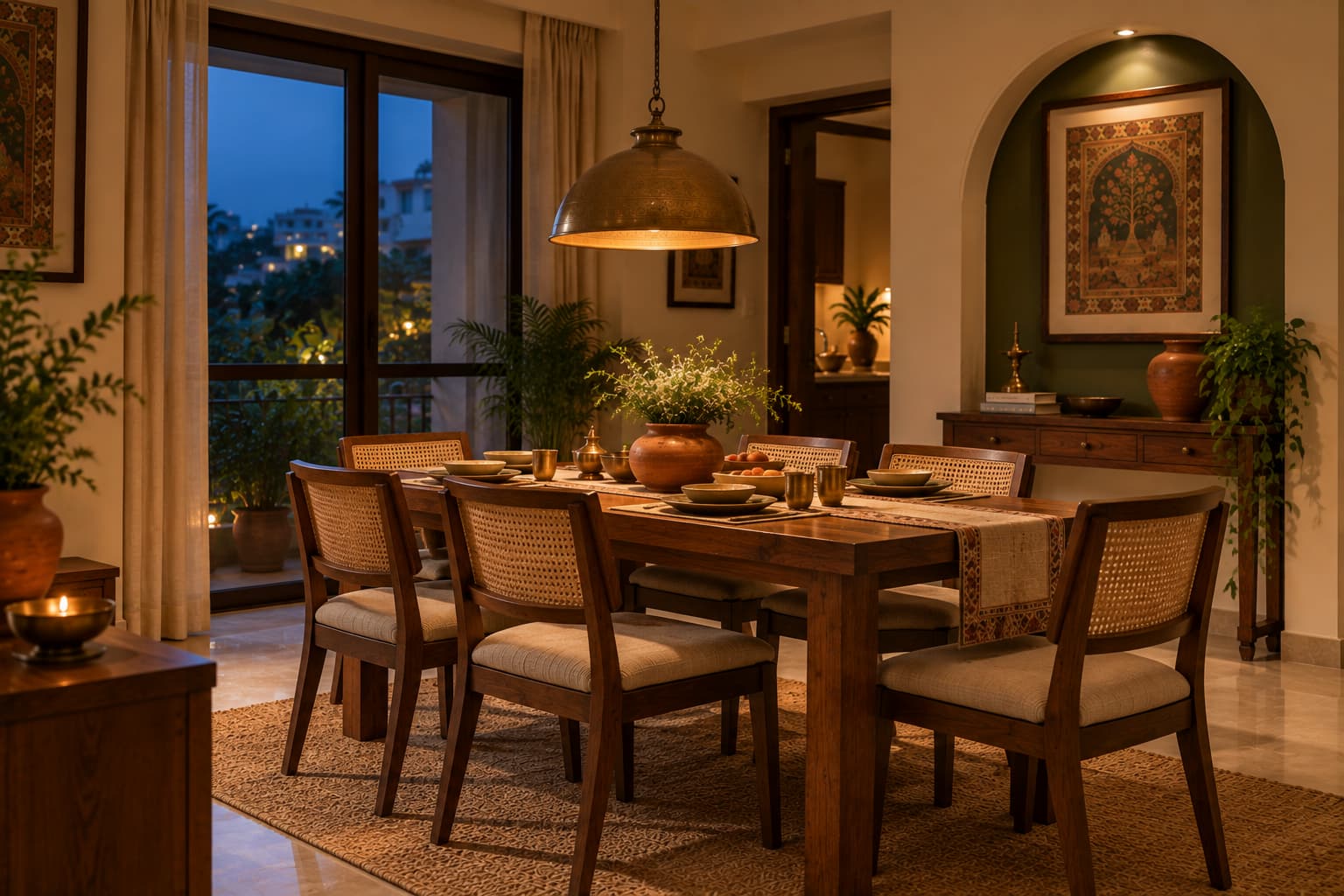
Lighting should reinforce the atmosphere. A single warm pendant or chandelier-style fixture above the dining table can become the room’s visual centre, while understated wall lights or a console lamp provide softer secondary illumination. Avoid excessively bright white lighting, which can flatten the warmth of the materials.

The final room should feel like a modern Indian dining room with a carefully edited Mughal vocabulary — wood instead of excessive ornament, one or two architectural references instead of palace-like detailing, and warm craftsmanship instead of decorative excess.

🎨 Colour Palette
Warm Ivory
#f1e8d8
Main walls and large background surfaces
Walnut Brown
#684735
Dining table, console and wooden furniture
Muted Terracotta
#a85e48
Artwork, pottery and selected accent details
Deep Mughal Green
#465644
Accent chair upholstery, artwork or small decorative elements
Aged Brass
#9a7947
Lighting, hardware and selected decorative objects
🪵 Materials & Textures
Wood
Walnut-Toned Hardwood
Use warm, medium-to-dark wood for the dining table, console and selected furniture to create depth without making the room feel excessively traditional.
Brass
Aged Brass
Introduce aged brass through pendant lighting, handles, small decorative objects and carefully selected hardware for a warm handcrafted accent.
Stone
Natural Stone
A stone tabletop, console surface or small decorative element can introduce a cool natural contrast to the warmer wood and brass.
Plaster
Textured Plaster
A softly textured warm-ivory wall finish provides depth and works particularly well behind an arched architectural feature or artwork.
Ceramic
Handcrafted Ceramic
Use simple ceramic vessels and tableware-inspired objects to introduce handmade character without relying on heavily ornate accessories.
Metal
Powder-Coated Metal
A restrained dark metal can be used for chair frames, lighting structures or decorative screens to balance the warmer wood and brass.
🧭 Vastu Considerations

According to traditional Vastu principles:

  • A dining room is traditionally considered suitable in the west, east or southeast areas of a home depending on the overall plan.
  • When possible, the dining table can be positioned so that diners face east, north or west.
  • Keep the centre of the dining area relatively open for comfortable movement.
  • Heavier storage or cabinetry can be placed toward the south or west.
  • Avoid positioning the dining table directly in the main circulation path.

These are traditional Vastu guidelines and are not scientifically established requirements.

📋 How to Recreate This — Step by Step
1
Start With a Solid Wood Table
Choose a substantial dining table with a clean contemporary silhouette and warm wood finish. Let the table provide most of the room's visual weight.
2
Introduce One Architectural Arch
Use an arched doorway, wall niche, mirror or framed feature as the primary Mughal-inspired architectural reference instead of adding multiple elaborate elements.
3
Layer Warm Natural Materials
Combine wood with aged brass, textured plaster, ceramic and a small amount of stone to create material depth without visual clutter.
4
Add Restrained Mughal Pattern
Introduce geometric or floral-inspired pattern through one rug, artwork, screen or decorative panel rather than repeating patterns across the entire room.
5
Balance With Deep Accents
Use muted terracotta and deep green sparingly against warm ivory and walnut to give the dining room richness without making it feel overly dark.
6
Create a Warm Dining Glow
Place a warm pendant or chandelier directly above the table and supplement it with subtle wall or console lighting for evening meals.