This Website Is Still Under Development! So Some Things Might Not Work
We are creating something AWESOME!!!

Concept Overview
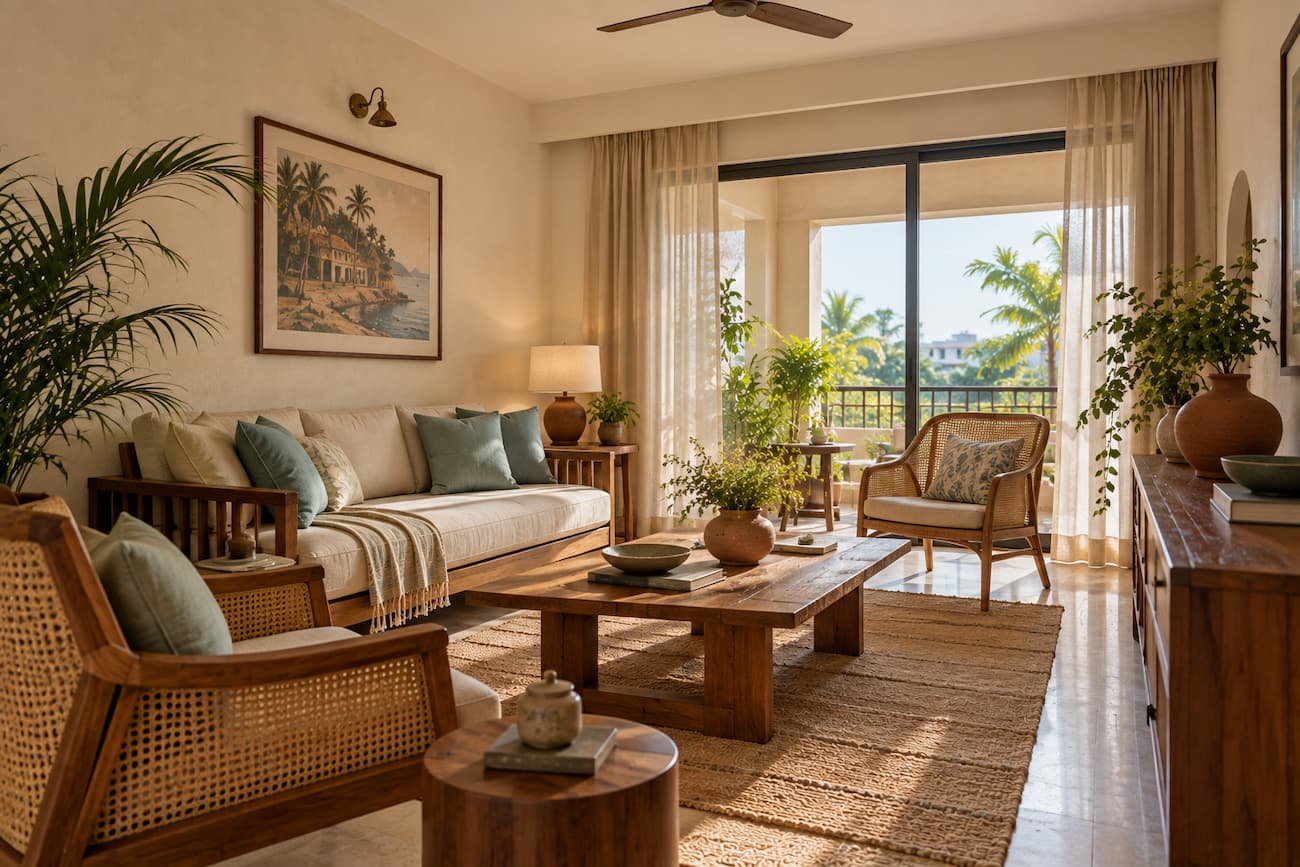
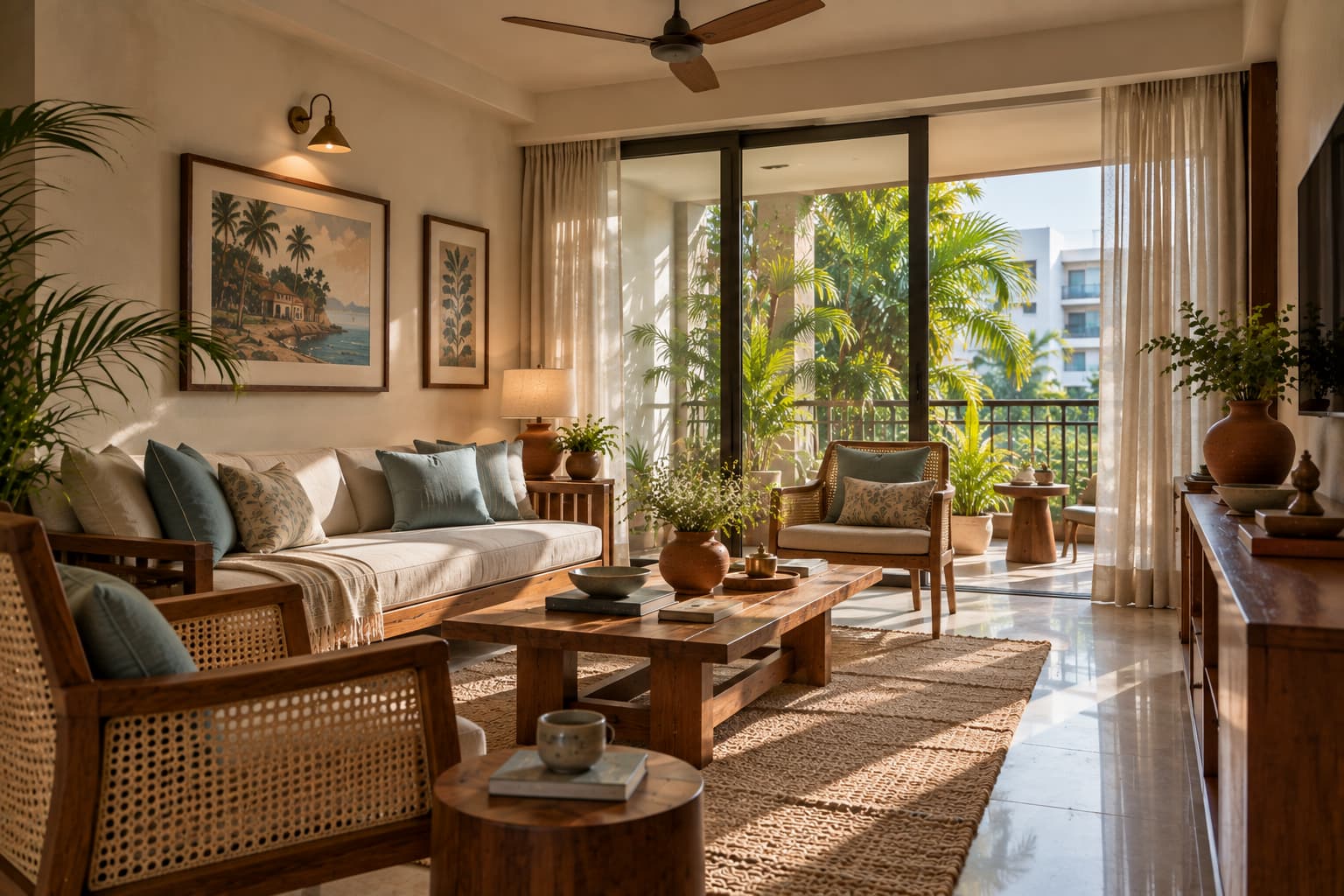
A Coastal Goan Living Room
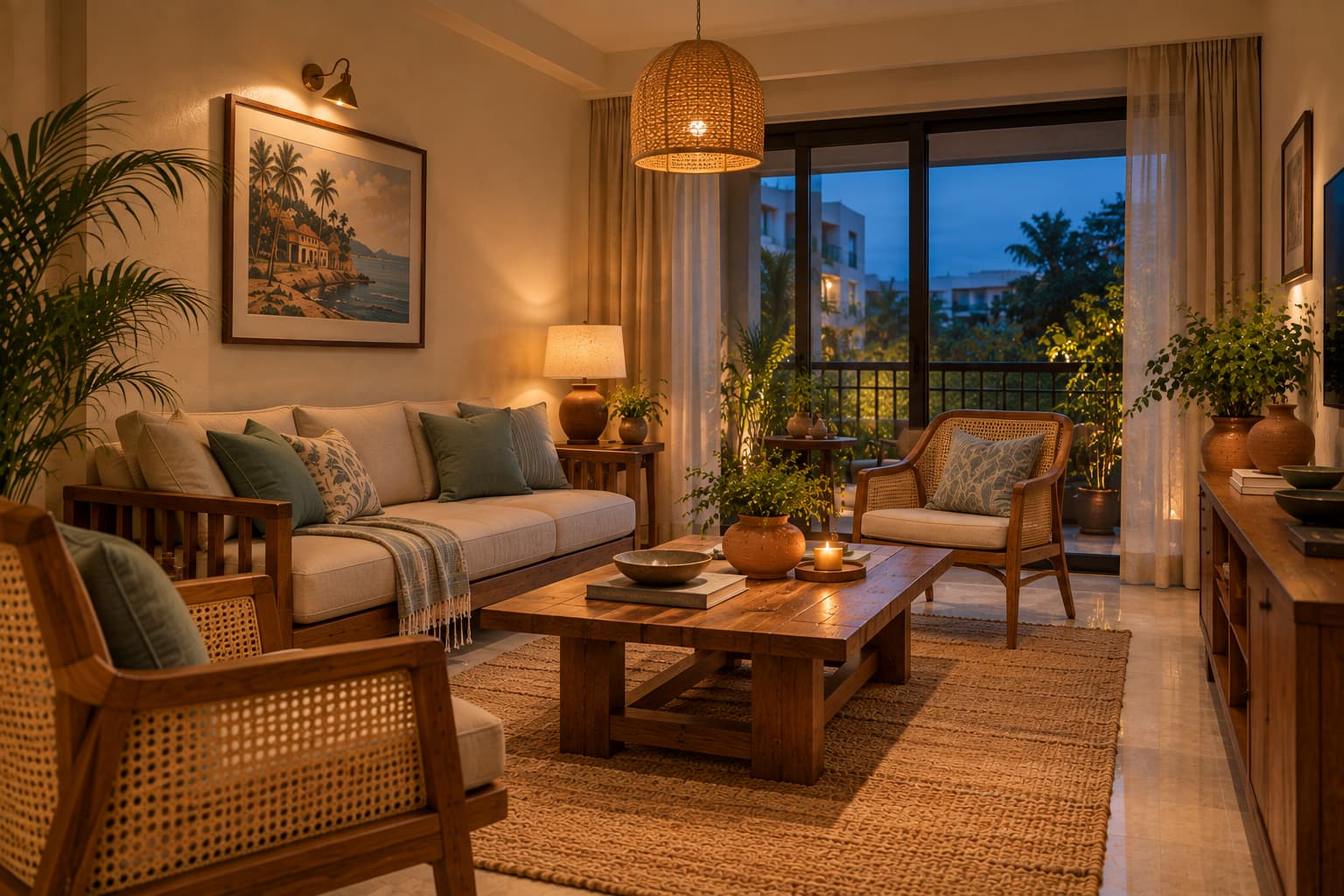
A relaxed Goan-inspired living room combining light wood, cane furniture, lime-washed surfaces and muted coastal colours with the comfort of a modern Indian home.
Design Style
Coastal
Room Type
Living Room
Room Size
Medium — approximately 180–250 sq. ft.
Layout
Open seating around a low wooden table
Key Feature
Cane furniture with soft coastal colours
Lighting
Abundant daylight with warm evening lighting
The Concept
A Coastal Goan Living Room should feel relaxed without becoming a themed beach interior. The design takes its cues from Goa’s easy relationship with sunlight, tropical surroundings, verandas, old homes and locally familiar materials, then adapts those qualities to a contemporary Indian living room.
The furniture should establish the atmosphere first. A light natural-wood sofa with comfortable neutral upholstery can form the main seating, paired with one or two cane or rattan chairs. A low wooden centre table keeps the room informal, while a simple console or compact storage piece provides practical function without making the space feel heavy.
The architectural character can remain subtle. Lime-washed or softly textured walls, large windows, timber details and an opening toward a balcony or planted outdoor area can create the relaxed openness associated with coastal homes. There is no need for faux beach walls, oversized arches or decorative nautical elements. The room should look like a real Indian home that happens to have a strong Goan influence.
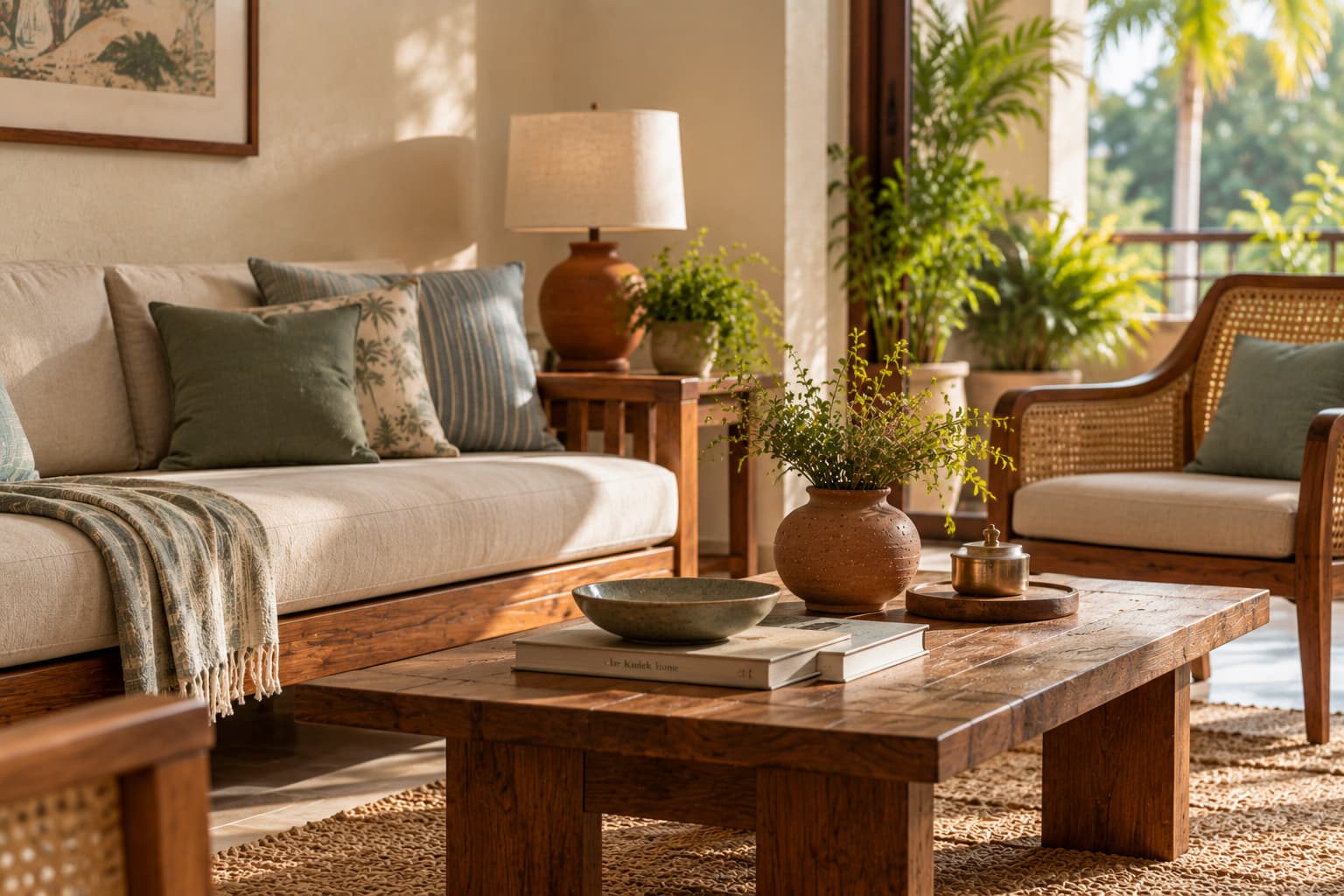
The colour palette stays sun-softened rather than brightly tropical. Warm white and sandy beige form the base, while muted sea green, dusty blue and terracotta can appear in small amounts. These colours should feel slightly weathered and natural rather than saturated. Natural wood and cane provide warmth and prevent the room from becoming visually cold.
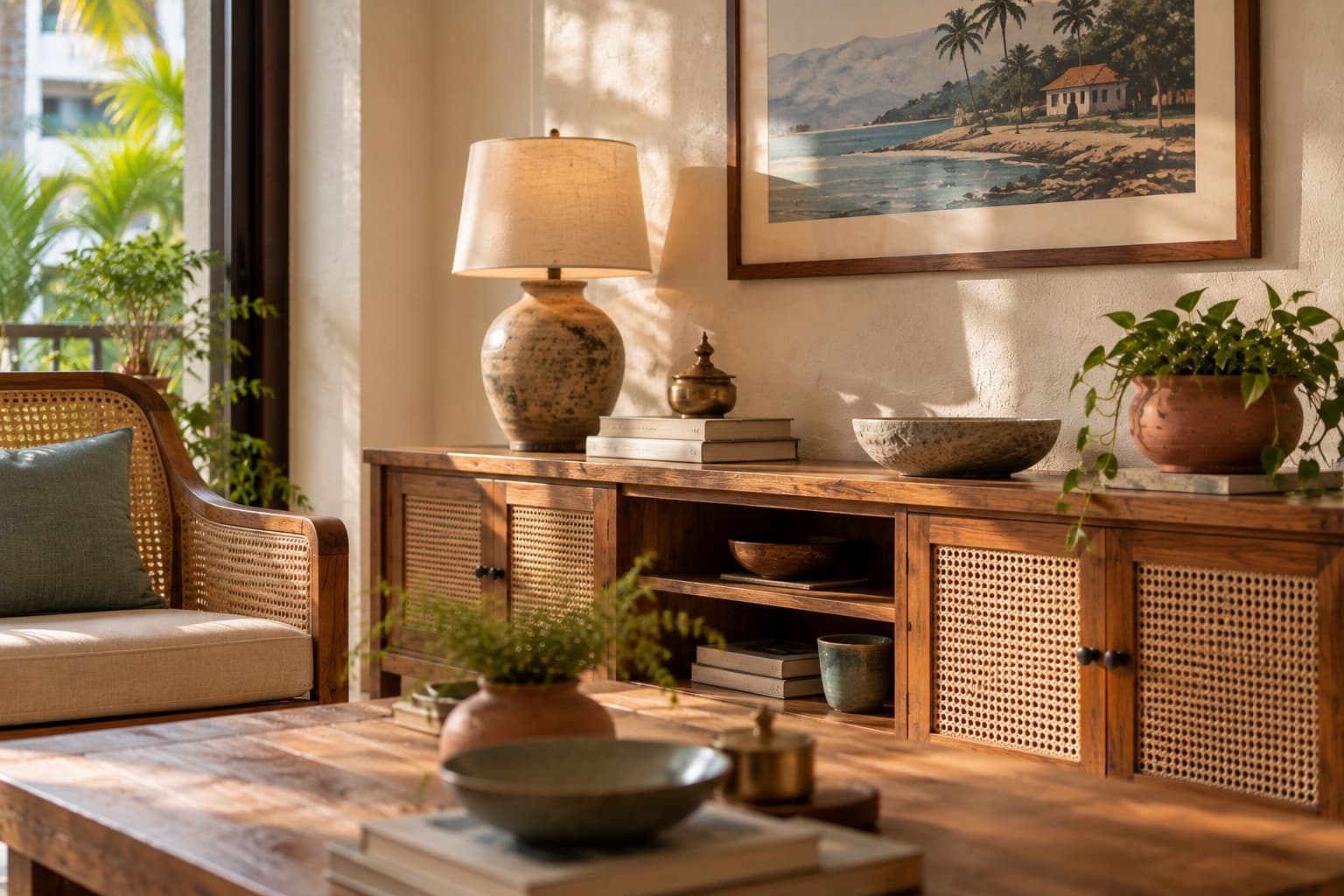
Materials are equally important. Cane, rattan, timber, terracotta, ceramic and aged brass work naturally together. A handmade ceramic vessel or terracotta planter can bring in a craft element, while a natural-fibre rug grounds the seating area. Decorative pieces should be limited so that windows, daylight and materials remain the focus.
Lighting should make the room feel different throughout the day. During daylight, large openings should provide most of the illumination. In the evening, warm pendant lighting, a table lamp or a simple wall light can create a comfortable atmosphere without turning the room into a resort-style interior.
The finished space should feel casual, bright and distinctly Indian, with Goan influence visible through its materials, relaxed furniture, softened coastal palette and connection to the outdoors rather than through obvious beach-themed decoration.
Colour Palette
Warm White
#f3eee4
Main walls and larger background surfaces
Sand Beige
#cdbfa8
Upholstery, rug and secondary furnishings
Muted Sea Green
#71877a
Accent chair, artwork and small decorative details
Dusty Coastal Blue
#718594
Selected artwork, pottery and subtle accents
Soft Terracotta
#b76f56
Planters, ceramics and small warm accents
Materials & Textures
Light Natural Wood
Use pale or medium natural wood for the sofa frame, coffee table, console and occasional furniture to keep the room warm but visually light.
Natural Cane
Cane works well for accent chairs, cabinet panels and smaller furniture pieces, providing texture while reinforcing the relaxed coastal character.
Lime-Textured Finish
A soft lime-washed or lightly textured wall finish creates a matte, sun-softened background inspired by traditional coastal interiors.
Terracotta
Use terracotta through planters, pottery and small decorative objects to add an earthy contrast to the cooler coastal tones.
Handmade Ceramic
Simple ceramic vessels and decorative pieces introduce handmade texture without relying on overtly nautical or beach-themed accessories.
Aged Brass
Small amounts of aged brass in lighting, hardware or decorative objects add warmth and prevent the light palette from feeling too flat.
Vastu Considerations
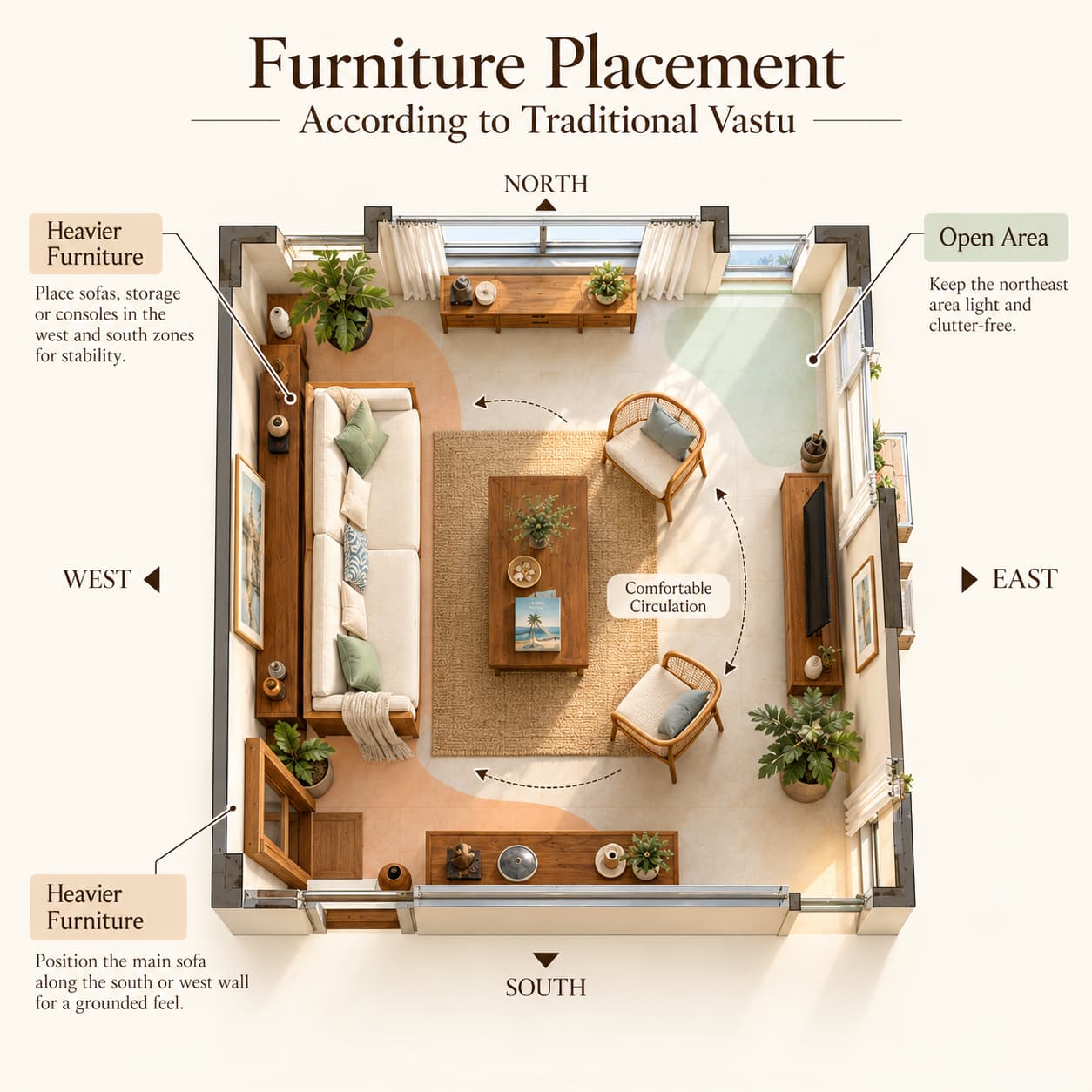
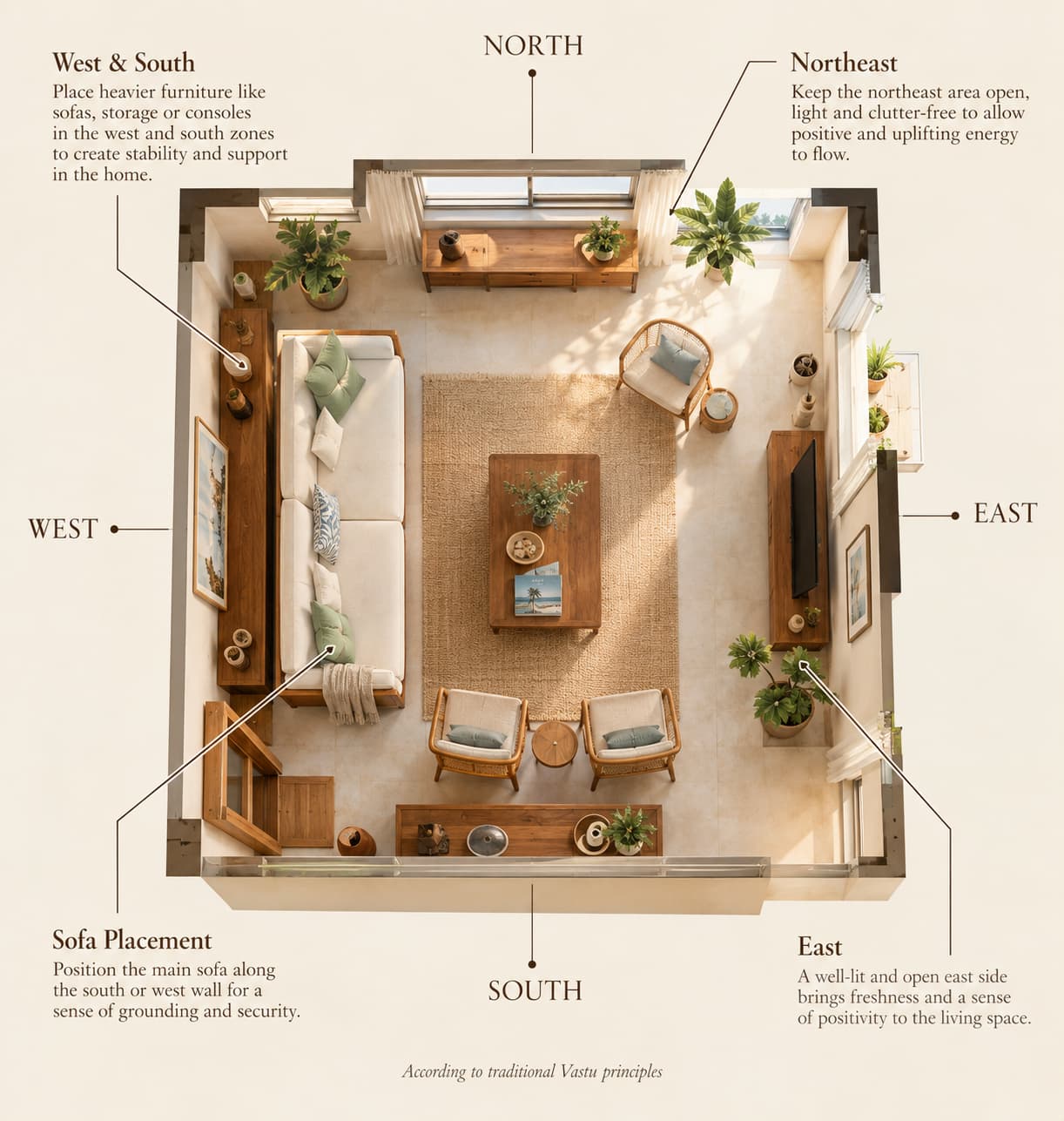
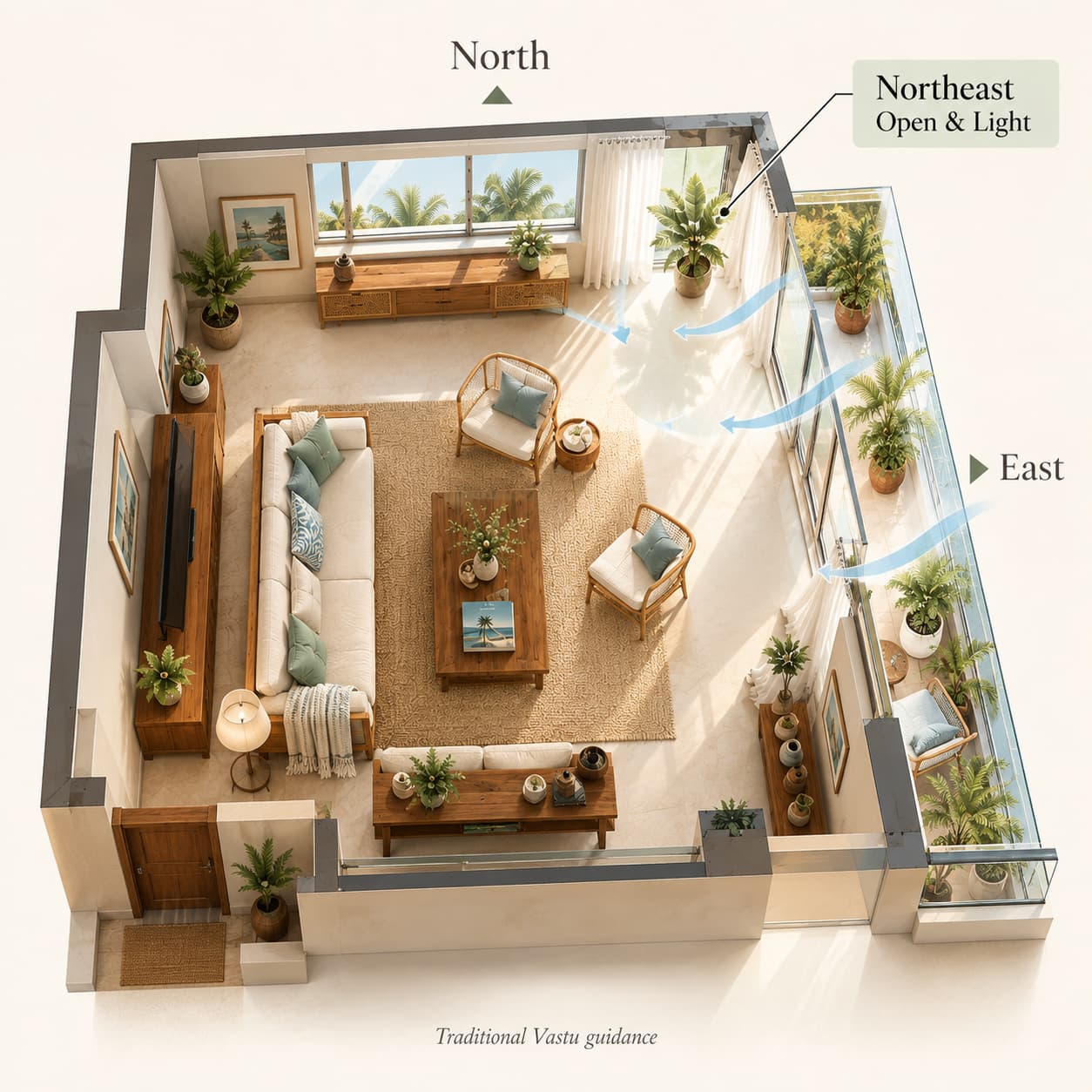
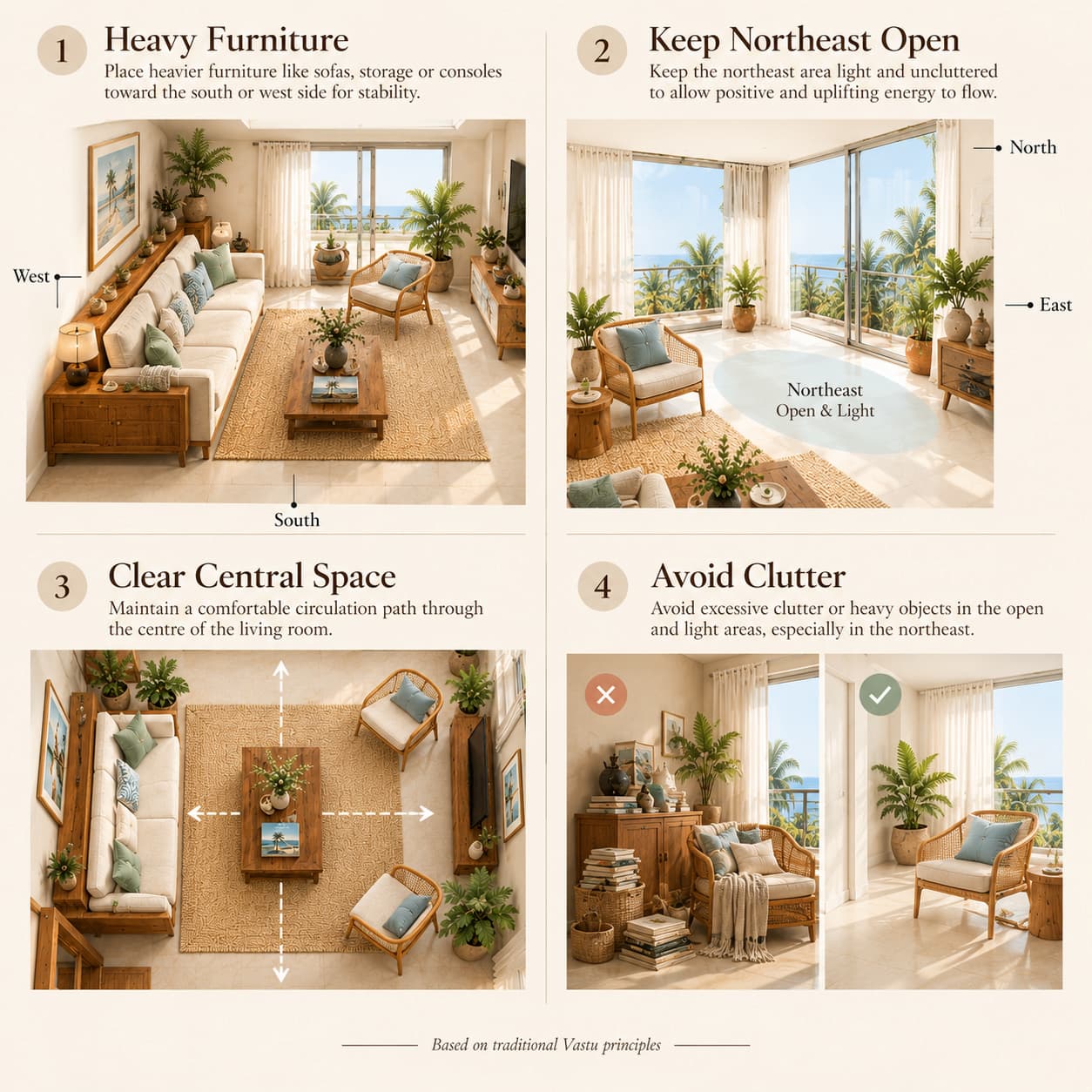
According to traditional Vastu principles:
- Keep the northeast portion of the living room relatively open where the existing layout allows.
- Heavier furniture such as the main sofa or storage can be placed toward the south or west.
- North and east-facing openings are traditionally preferred where new openings are being planned.
- Keep the centre of the room open enough for comfortable movement.
- Avoid overcrowding the room with tall or heavy decorative elements.
These are traditional Vastu guidelines and are not scientifically established requirements.
How to Recreate This — Step by Step
1
Start With Light Furniture
Choose a natural-wood sofa, cane chairs and a low centre table with visually light proportions so the room remains open and relaxed.
2
Create a Soft Wall Base
Use warm white or a subtle lime-textured finish to create the sun-softened background associated with coastal homes.
3
Introduce Cane and Rattan
Add cane through accent seating, cabinet panels or occasional furniture to bring natural texture without making the room feel overly rustic.
4
Layer Muted Coastal Colours
Combine warm white and sand beige with restrained sea green, dusty blue and small terracotta accents.
5
Connect the Room Outdoors
Keep windows visually open and position seating to benefit from daylight, greenery, a balcony or an existing outdoor view.
6
Keep Decor Naturally Restrained
Finish with ceramic vessels, terracotta planters, a natural-fibre rug and subtle brass lighting rather than obvious nautical accessories.
Shop the Look
Bring This Design Home
Curated products selected from the Vandanya Affiliate Products library for recreating this concept.
0 curated picks
Select products in the Shop the Look — Select Affiliate Products box on this Design Concept. Products are pulled from the Affiliate Products library.