This Website Is Still Under Development! So Some Things Might Not Work
We are creating something AWESOME!!!

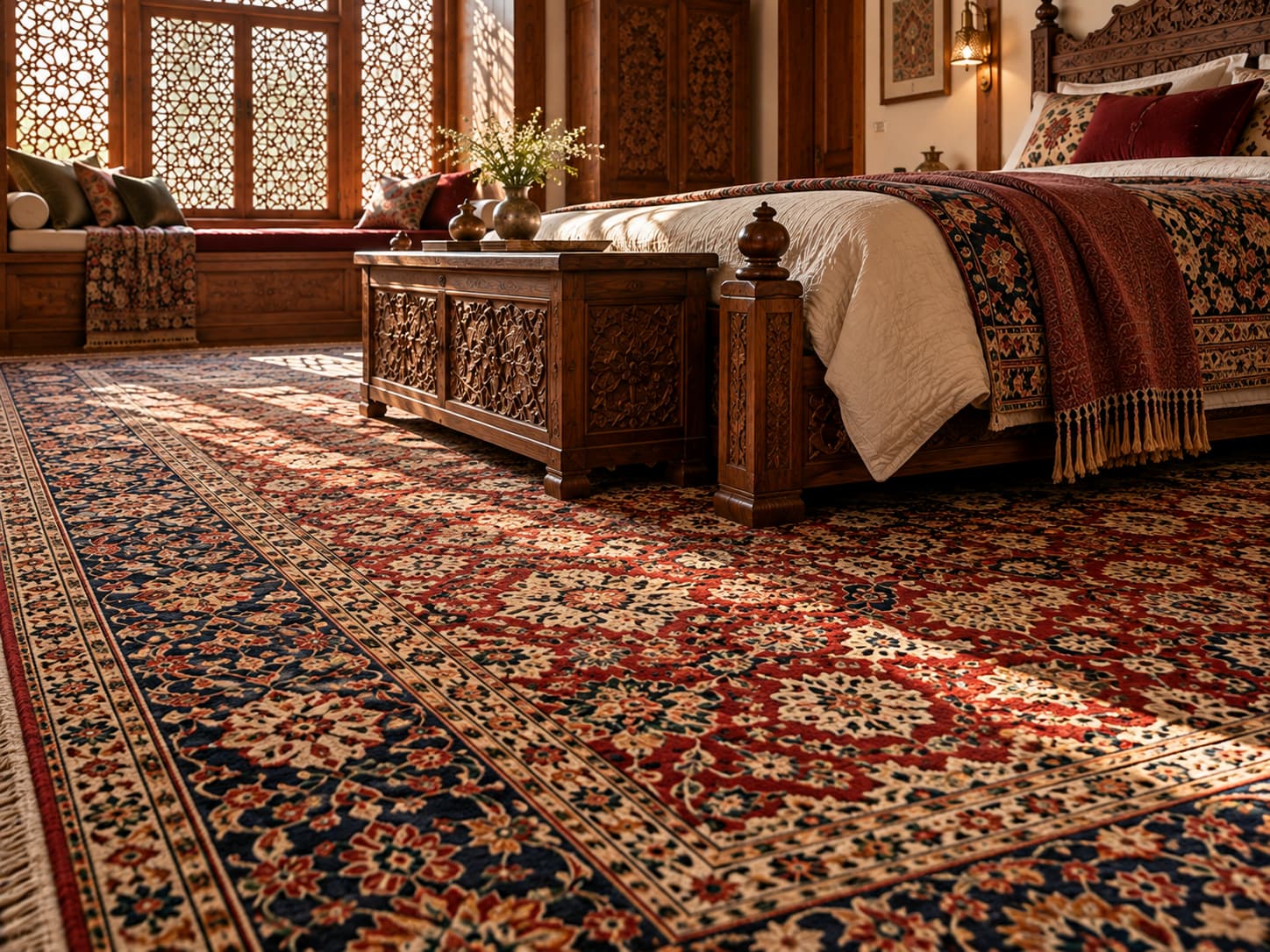
Concept Overview
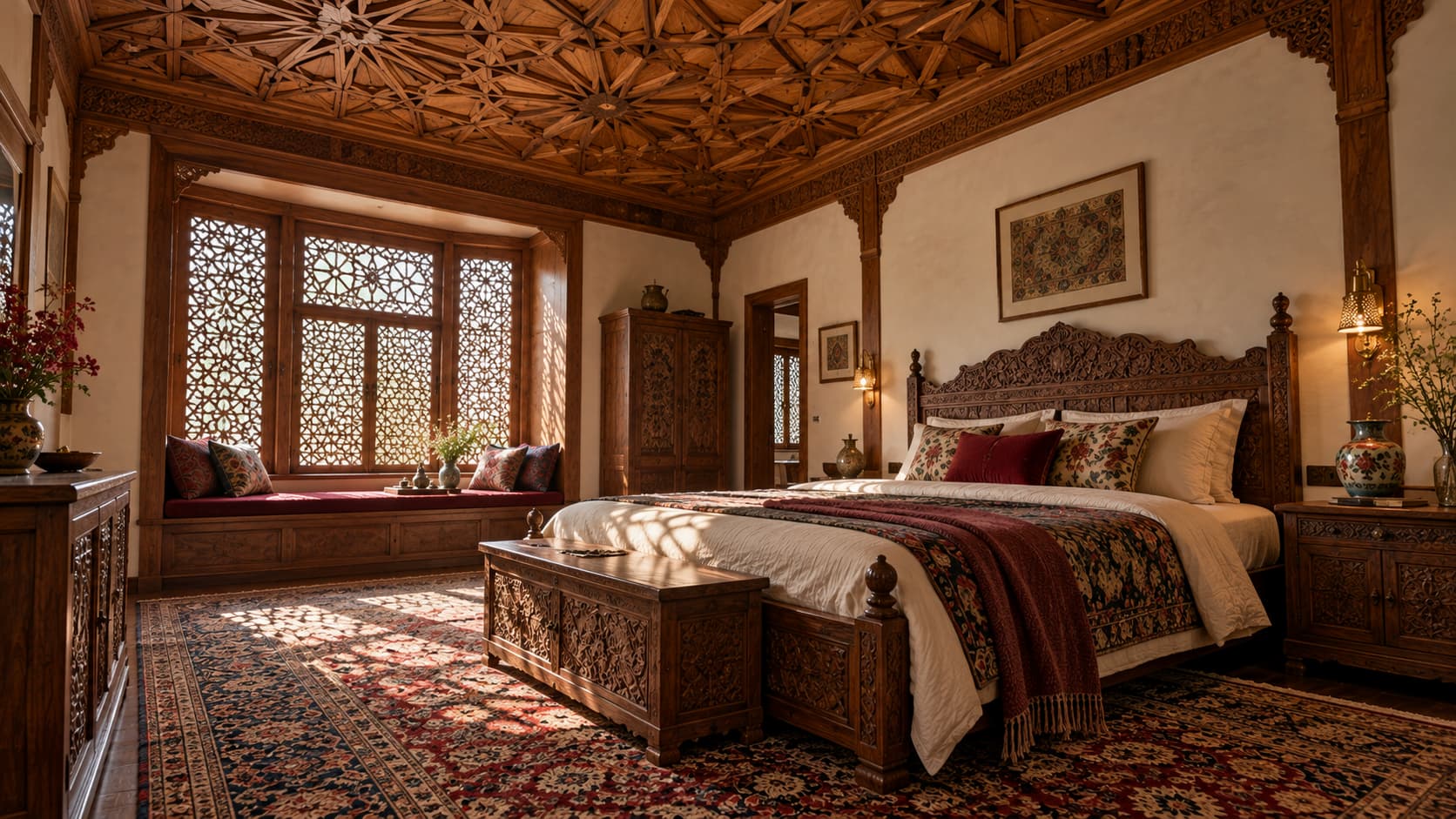
Contemporary Kashmiri Bedroom
A contemporary Kashmiri bedroom inspired by carved walnut furniture, Khatamband-style ceiling geometry, intricate wooden latticework and the warm, tactile character of Kashmir's traditional craftsmanship.
Design Style
Contemporary
Room Type
Bedroom
Room Size
Medium · 140–200 sq ft
Layout
Carved walnut bed beneath a geometric ceiling
Key Feature
Walnut craftsmanship with Khatamband detailing
Lighting
Soft daylight with warm timber-lit ambience
The Concept
A Kashmiri bedroom can draw its character from the region’s celebrated walnut-wood craftsmanship, intricate timber detailing and the geometric patterns associated with traditional Khatamband ceilings. In a contemporary home, these elements can create a room that feels warm, architectural and connected to its regional roots without recreating a historic house or an expensive heritage hotel.
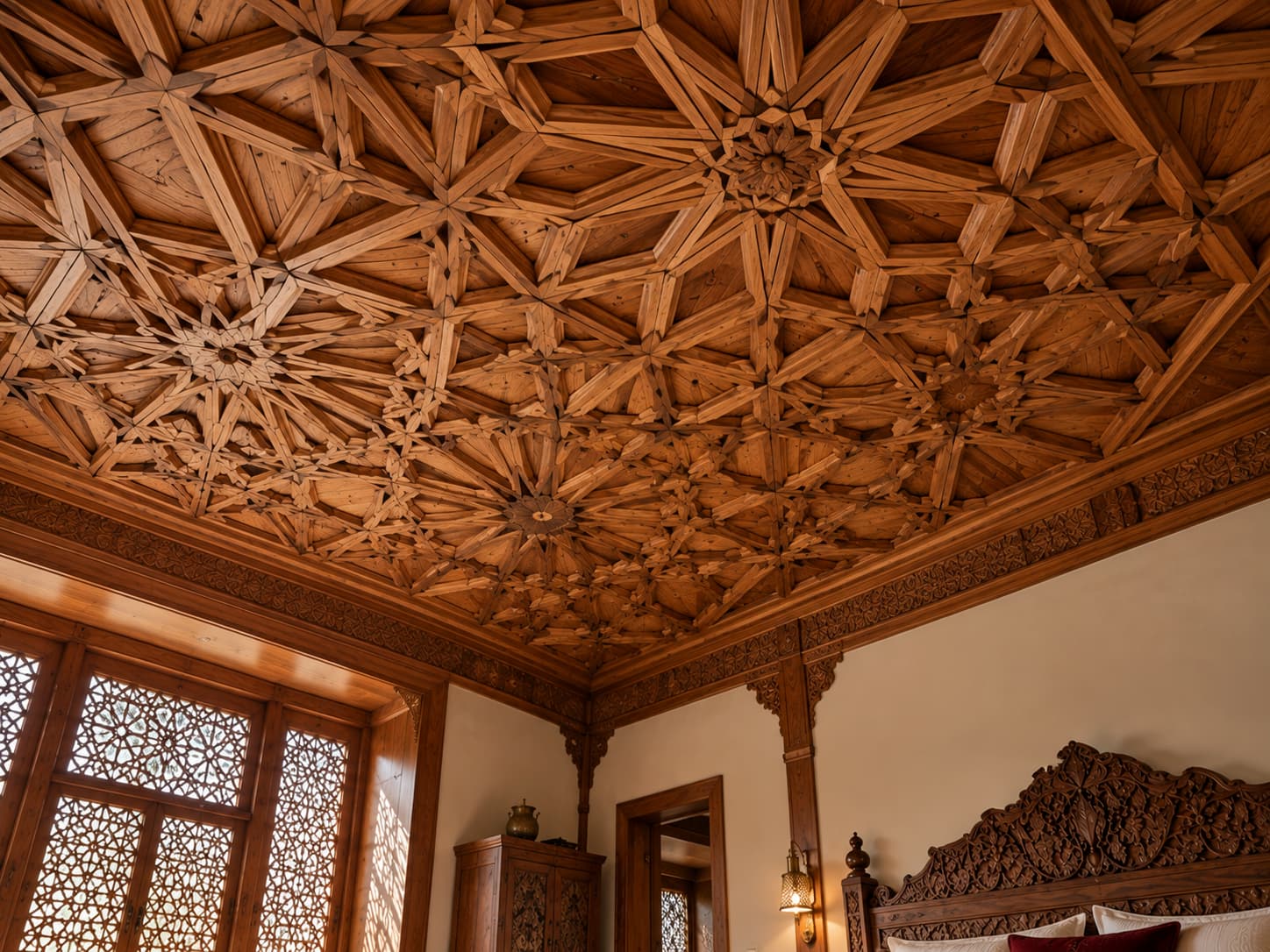
The defining feature of this concept is the relationship between the ceiling and the furniture. A restrained Khatamband-inspired timber ceiling panel introduces a repeating geometric composition overhead, giving the room a different visual identity from a conventional bedroom with a decorative headboard wall. It can be an applied timber feature or a carefully designed ceiling inset rather than a complete handcrafted ceiling, making the idea more attainable for an existing home.
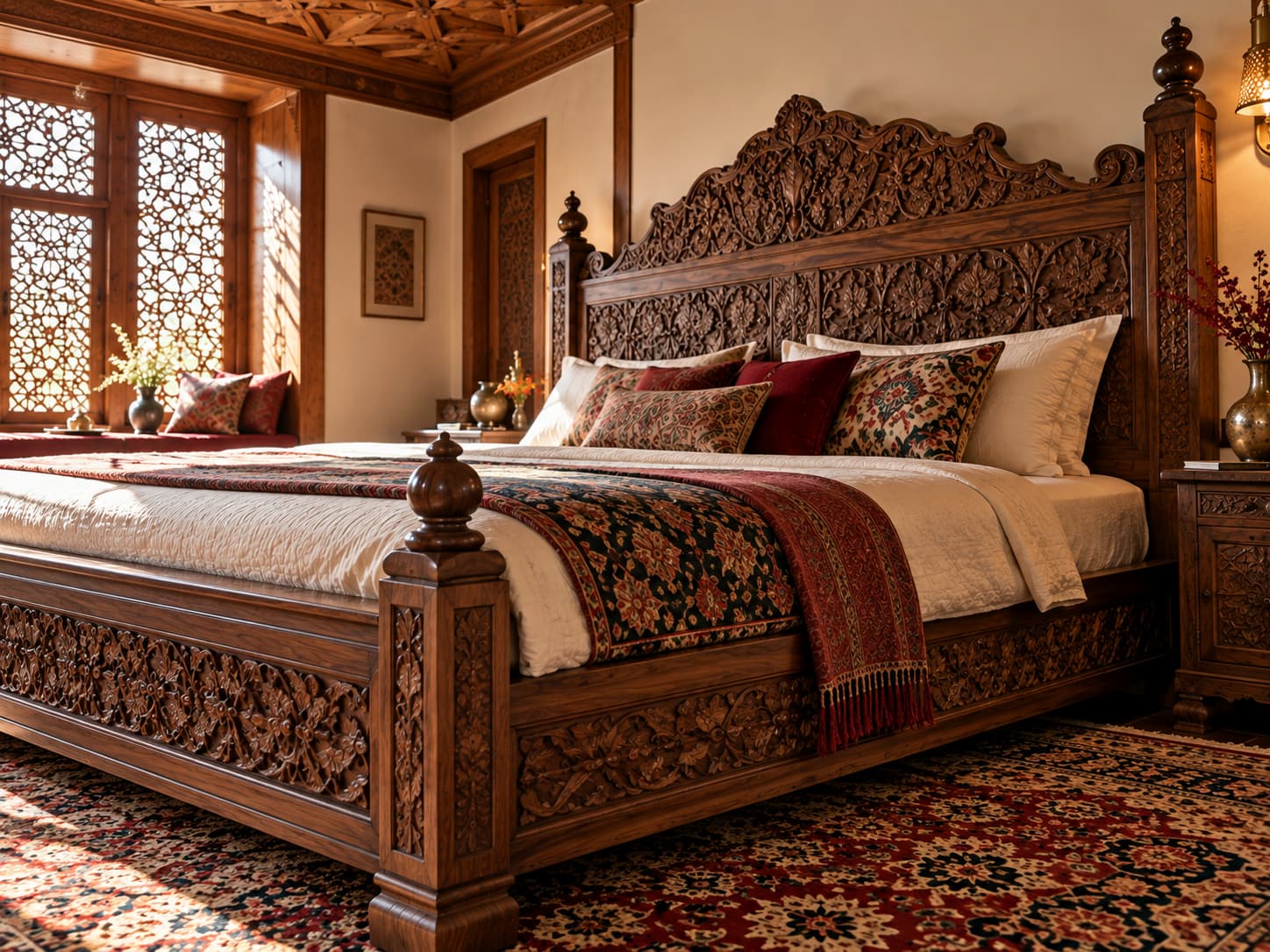
Below it, a substantial walnut-toned bed anchors the room. Its headboard uses a framed timber construction with selective carved detailing inspired by Kashmiri woodworking. The carving should be intricate enough to reveal craftsmanship but restrained enough for daily living. Natural wood grain, softly rounded edges and a deep brown finish provide character without relying on glossy varnish or excessive ornament.
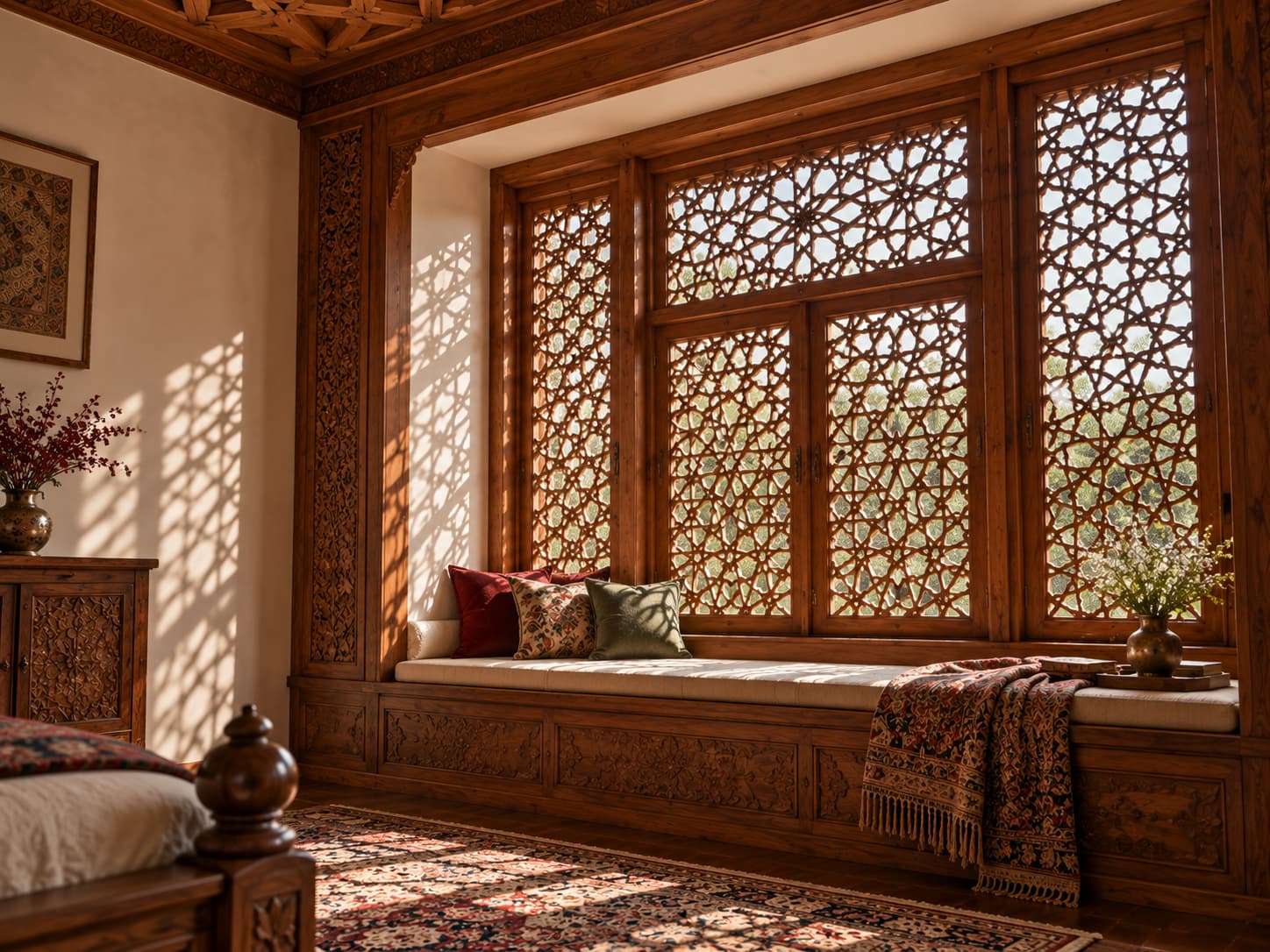
The window area offers a second architectural feature. A timber-framed lattice screen inspired by Kashmiri pinjrakari work filters the light and adds delicate geometry. Where the room permits, a low window-side seat creates a comfortable place to read or enjoy the daylight. These features should be integrated into the wall and window arrangement rather than appearing as decorative props. The result is a bedroom with distinct layers: a geometric ceiling, substantial timber furniture and a finely detailed window zone.
The colour palette takes its cues from walnut wood, warm ivory plaster, muted saffron, soft stone grey and deep forest green. These colours create depth while keeping the room light enough for a modern Indian home. A handmade ceramic vessel or a carefully selected Kashmiri papier-mâché object can provide a small cultural accent, but the architecture and woodworking should remain the main focus.
Materials should feel natural and tactile. Walnut or walnut-finish hardwood, textured plaster, aged brass, handmade ceramic and restrained woven details offer variety without crowding the room. If existing floors and wardrobes are in good condition, they can remain in place while the bed, lighting and selected timber features establish the new look.
Lighting should reveal the geometry overhead and the depth of the carved wood. Daylight through the lattice-filtered window creates soft patterns, while warm, diffused evening lighting makes the timber surfaces feel inviting. Avoid overly dark interiors or exaggerated lodge styling; the bedroom should remain practical and comfortable throughout the year.
The finished room is a contemporary interpretation of Kashmiri craft, not a replica of a traditional house. Its identity comes from the ceiling geometry, walnut furniture and architectural latticework—elements that change the room’s form and composition rather than merely changing its accessories.
Colour Palette
Kashmiri Warm Ivory
#f1e9dc
Walls and visual balance around the timber architecture.
Walnut Brown
#684832
Bed frame, ceiling detailing and window joinery.
Muted Saffron
#b18a48
Small accents and selected craft details.
Soft Stone Grey
#aaa49a
Flooring and secondary neutral surfaces.
Deep Forest Green
#455747
Restrained accent colour in artwork or small objects.
Materials & Textures
Walnut wood
The signature material for the bed, selected furniture and architectural details. Use visible grain and restrained carving.
Geometric timber ceiling
A Khatamband-inspired ceiling inset introduces repeating geometric forms and makes the overhead architecture a defining feature.
Timber latticework
A pinjrakari-inspired screen or window detail filters light and adds fine architectural geometry.
Textured plaster
A matte ivory finish softens the strong timber elements and keeps the room visually balanced.
Aged brass
Subtle hardware and warm wall lighting complement the dark timber without creating a gold-heavy interior.
Handmade ceramic
Simple vessels provide a restrained handcrafted accent alongside the more intricate woodwork.
Vastu Considerations
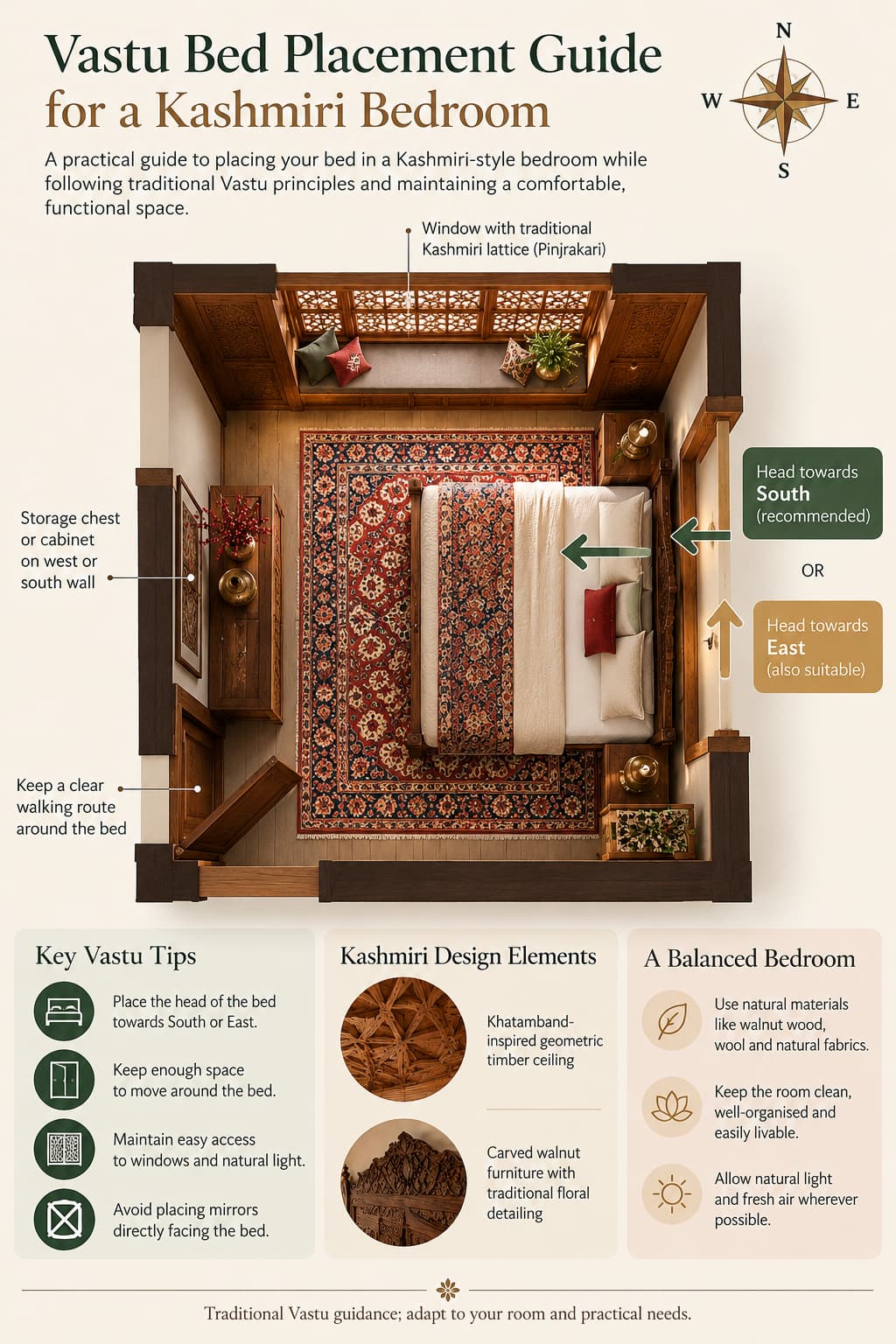
- Bed direction: Some Vastu traditions recommend positioning the head toward the south or east. Choose an orientation that also supports comfortable movement around the bed.
- Heavy furniture: South or west walls are traditionally suggested for heavier wardrobes and storage where the room layout permits.
- Mirror placement: If following traditions that advise against a mirror facing the bed, place a dressing mirror on a side wall.
- Northeast corner: Some Vastu interpretations favour keeping this area relatively open. Maintain access to windows and practical storage rather than sacrificing function to follow a directional preference.
- Ceiling and lighting: Keep ceiling features securely installed and lighting glare-free. These are practical design considerations, separate from traditional Vastu beliefs.
Vastu recommendations vary by tradition and are not scientifically established guarantees of health, prosperity or better sleep. Prioritise safe construction, ventilation, daylight and everyday usability.
How to Recreate This — Step by Step
1
Establish the ceiling geometry
Begin with a restrained Khatamband-inspired geometric ceiling inset or applied timber panel. Keep the pattern proportionate to the room and use it as the main architectural feature rather than adding another decorative headboard wall.
2
Choose a substantial walnut bed
Select a solid-wood bed with a framed headboard and selective carved detailing. Let the wood grain and construction communicate craftsmanship instead of relying on glossy finishes or excessive ornament.
3
Introduce a lattice-filtered window
Use a timber-framed screen inspired by Kashmiri pinjrakari work to create a distinctive window composition. Ensure it allows adequate daylight and does not obstruct ventilation.
4
Build a practical window-side seat
If space permits, incorporate a low timber ledge beneath the window. Keep its design simple and functional, with storage only if it fits the room's dimensions.
5
Balance timber with softer surfaces
Pair the dark wood with warm ivory plaster, muted stone tones and a limited amount of forest green or saffron. Retain existing flooring and wardrobes when possible to keep the project affordable.
6
Light the craftsmanship
Use soft, diffused lighting to reveal the ceiling geometry and carved timber. Add a discreet wall light or table lamp for evening comfort, and avoid overly dark lighting that hides the room's details.
Shop the Look
Bring This Design Home
Curated products selected from the Vandanya Affiliate Products library for recreating this concept.
0 curated picks
Select products in the Shop the Look — Select Affiliate Products box on this Design Concept. Products are pulled from the Affiliate Products library.