💡 The Concept
The Rajasthani haveli is one of India's most distinctive architectural achievements — layered, opulent, and completely unapologetically Indian. But most people assume you need the space of a palace to pull off this aesthetic. You don't.
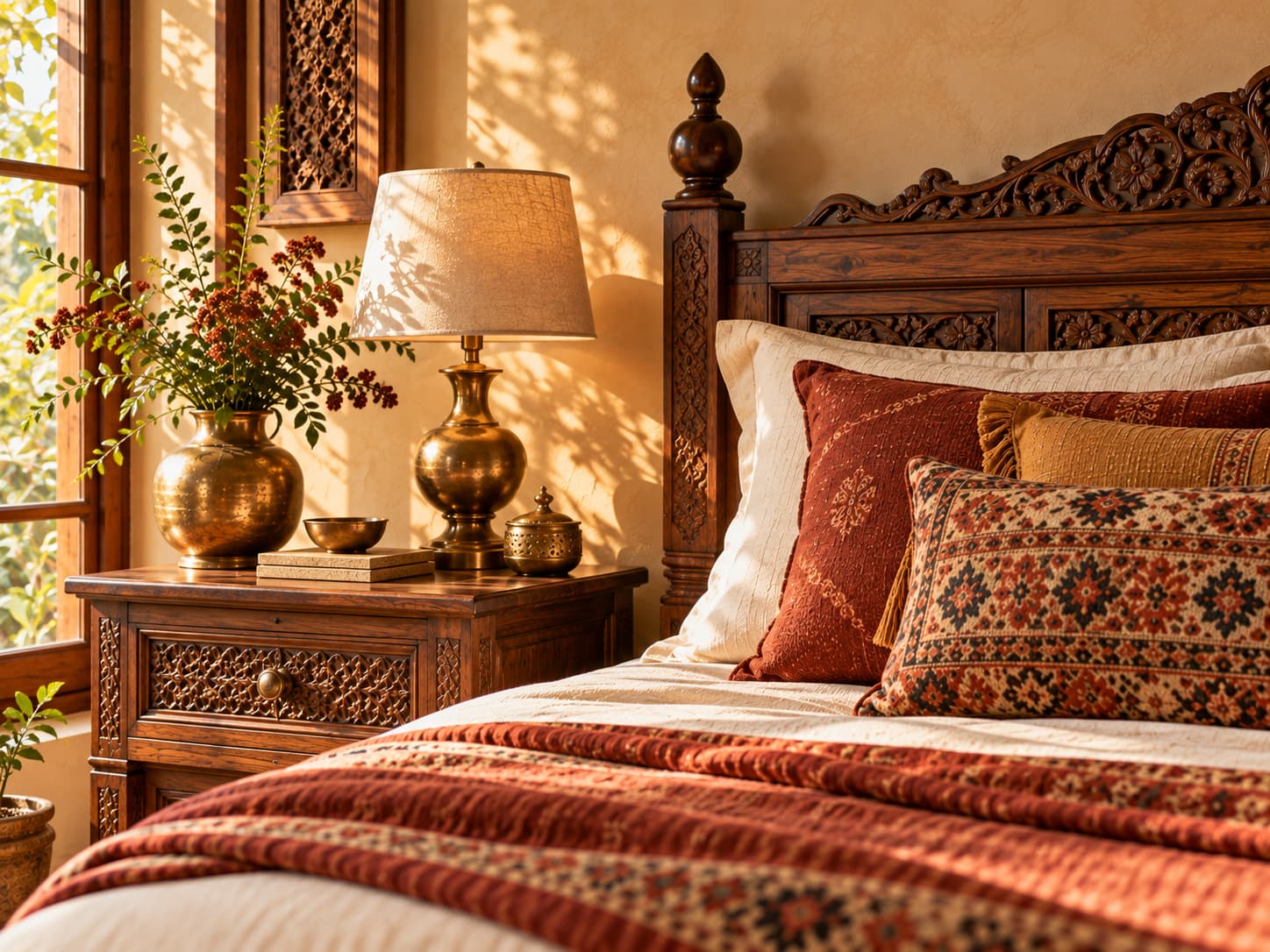
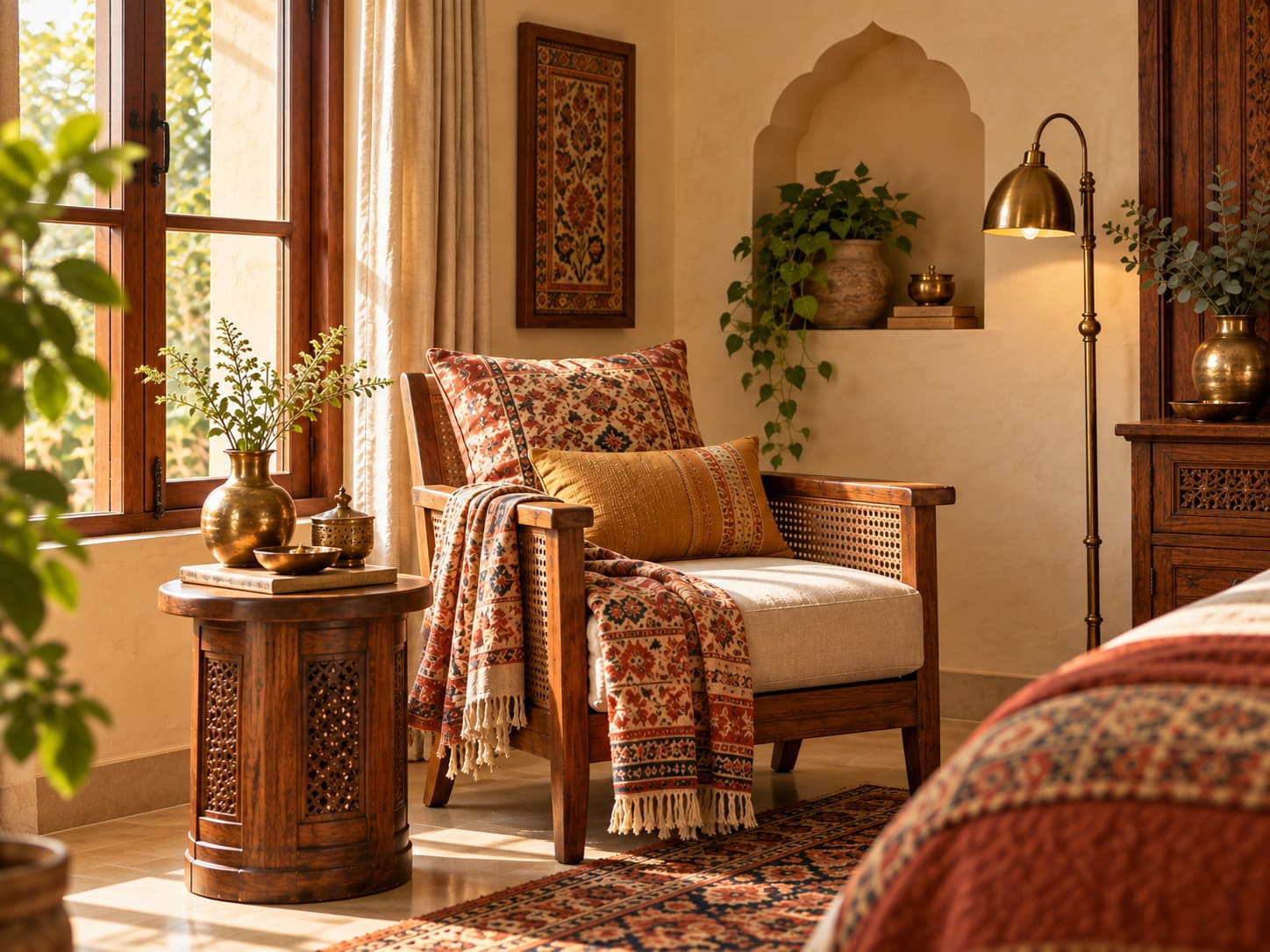
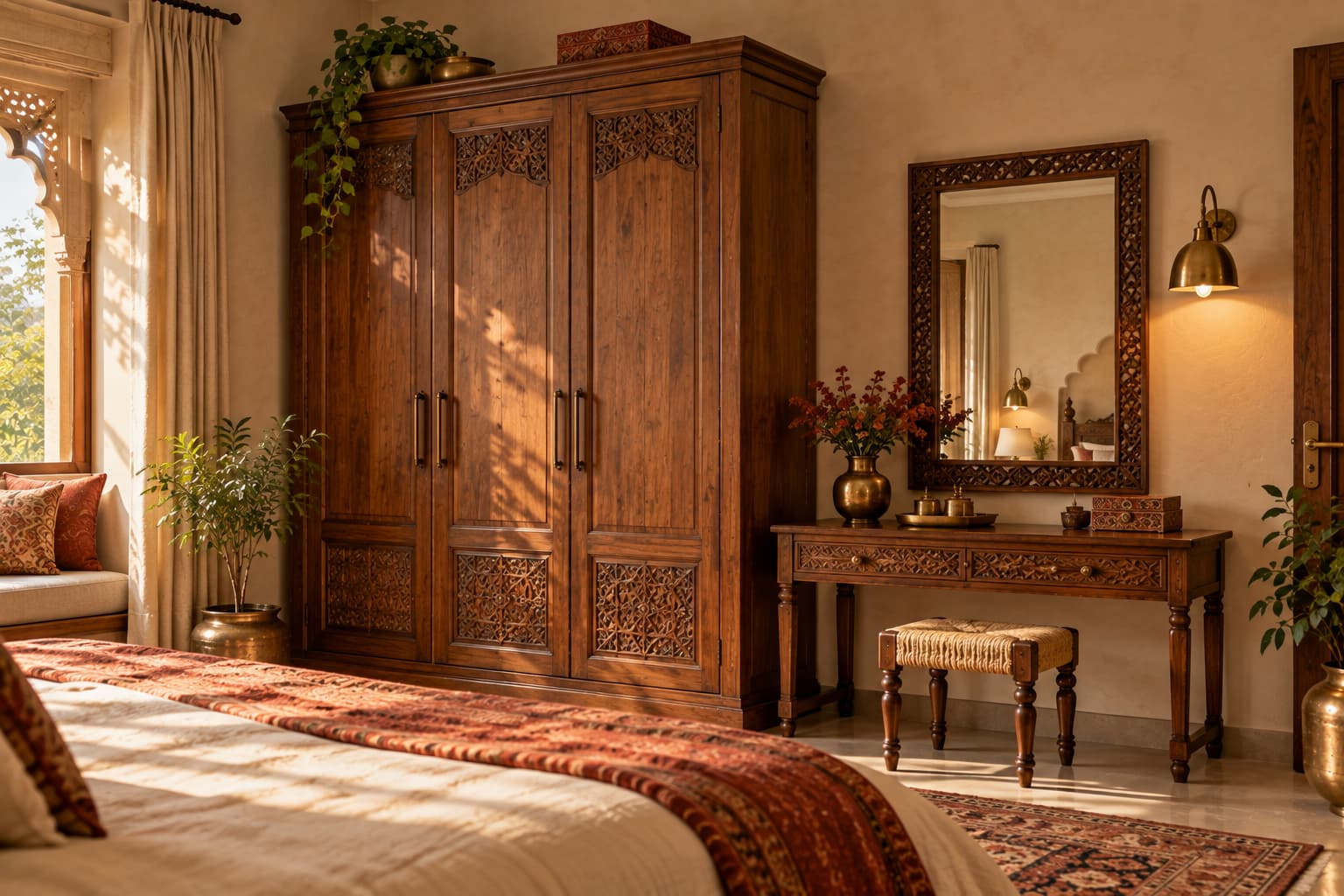
This concept was built around one central idea: use height, texture, and warm light to create the feeling of a haveli, even in a standard city bedroom. The carved wooden headboard acts as the visual anchor — everything else (the colour palette, the bedding, the lighting) extends outward from that single statement piece.
We generated 47 AI variations using Midjourney v6 before landing on this composition. The key breakthrough was treating the ceiling as a design surface — adding a simple jali-pattern border using painter's tape and ochre paint costs under ₹500 and transforms the entire room's proportions.
🎨 Colour Palette
Every colour in this palette is taken directly from Rajasthan's earth, architecture, and craft traditions. Nothing is decorative for its own sake.
Burnt Sienna
#C2683A
Accent Wall
Deep Ochre
#8B3A18
Headboard
Gold Cream
#F0D890
Ceiling / Linen
Dark Bark
#2C1A0E
Wood Tones
Brass Gold
#B8892A
Accents / Diyas
Asian Paints equivalent: Burnt Sienna → 7095 — Tangerine Glow. Berger equivalent: P120-B4 Spice of Life. Ask your painter to mix a 70% wash for the accent wall — full strength will overpower a small room.
🪵 Materials & Textures
Rajasthani interiors are defined by their materiality — carved wood, hand-blocked cotton, hammered brass, and hand-thrown clay. Each material carries a centuries-long craft tradition and ages beautifully.
🪵Sheesham Wood
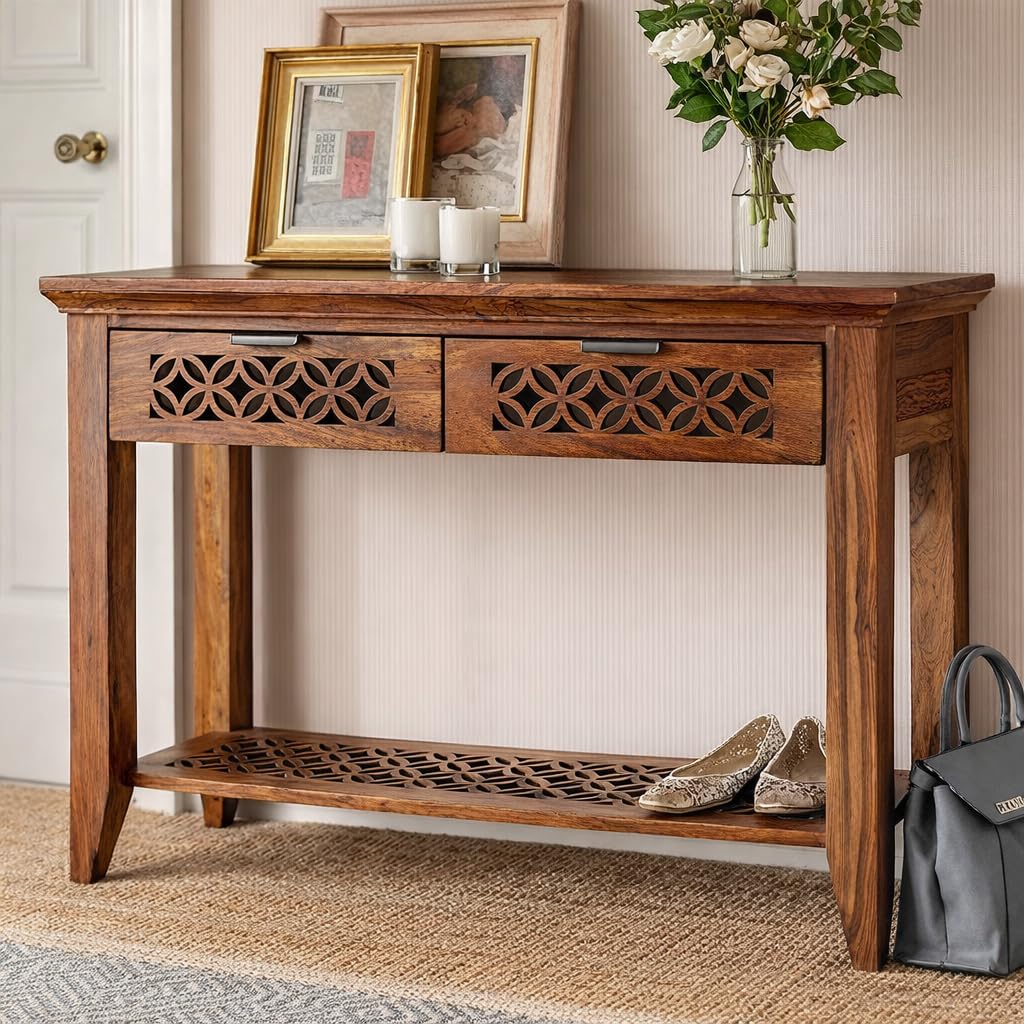
The structural heart of the room. Sheesham (Indian Rosewood) carves beautifully and develops a rich patina over decades.
🧣Block-Print Cotton
Jaipur block printing using natural dyes. Look for geometric bagru prints or floral sanganeri patterns for the bedding.
🪔Hammered Brass
Diyas, lamp bases, and small decorative items. Hammered brass has an organic quality that machine-polished metal lacks.
🏺Hand-Thrown Clay
A large terracotta floor vase in one corner provides grounding weight. The rough texture contrasts beautifully with the smooth wood.
🧶Handwoven Dhurrie
A flatweave cotton dhurrie under the bed ties the floor together. Rajasthani geometric patterns in the room's palette.
🪟Jali Screen
A small carved jali screen (wooden or metal) as a bedside accent adds the architectural complexity of a haveli wall.
🧭 Vastu Considerations
🧭 Vastu Guide for This Concept
✓Headboard placement: Position the headboard against the South or West wall for the best sleep direction in Vastu. Avoid the North wall for sleeping.
✓Ochre/Sienna on South wall: The South direction benefits from earthy, warm tones — the Sienna accent wall is ideal if it faces South or South-West.
✓Brass & fire elements: Diyas and brass represent the fire element. Keep them in the South-East corner of the bedroom — never directly opposite the sleeping position.
⚠️Mirror placement: If adding a mirror, avoid placing it directly facing the bed. The East wall is the preferred location for mirrors in Vastu.
✓Heavy furniture: The sheesham headboard and carved pieces should be placed in the South or West zones — heavier elements anchor best in these directions.
📋 How to Recreate This — Step by Step
1
Start with the headboard
This is your anchor. Find a sheesham carved headboard that fits your bed size (standard Indian double bed is 5×6.5 ft). Budget ₹12,000–₹18,000. Look on Pepperfry, Amazon, or local furniture markets in your city.
2
Paint one wall Sienna — not all four
The accent wall principle is critical here. Paint only the wall behind the headboard in Sienna or Ochre. The remaining three walls stay off-white or cream. This creates drama without overwhelm.
3
Layer bedding in the palette
Start with a plain cream or off-white base sheet. Add a block-print quilt cover in deep red or indigo. Layer with a mustard or gold throw blanket and two block-print cushion covers.
4
Build the corner vignette
In one corner, place a large terracotta floor vase (with or without dried pampas grass). Add a small brass diya stand or lantern at its base. This corner becomes the "third eye" of the room — the detail that makes it look designed.
5
Add the dhurrie and curtains
Lay the dhurrie rug so it extends 2 ft on each side of the bed. Hang block-print curtains that pool slightly on the floor — the extra length adds that haveli grandeur even in a small room.