This Website Is Still Under Development! So Some Things Might Not Work
We are creating something AWESOME!!!

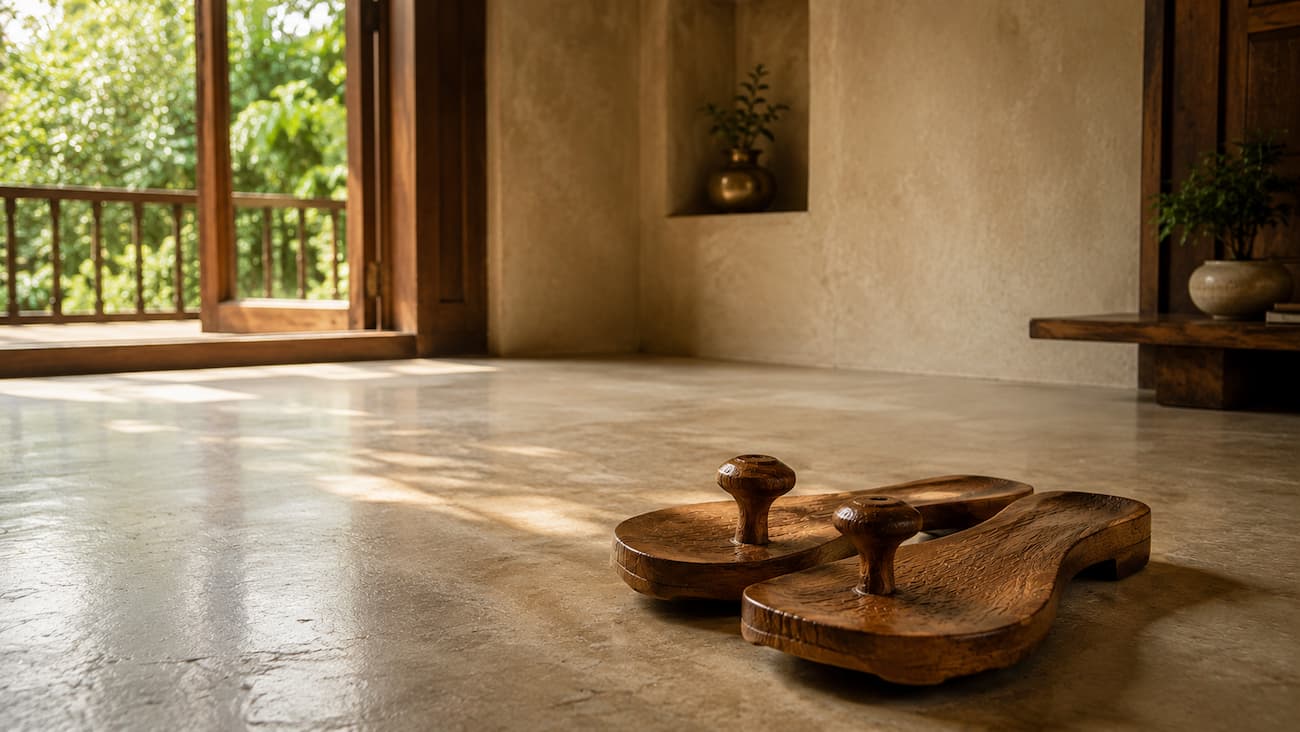

People wear wooden Khadau for several reasons, including their connection to Indian culture and spiritual traditions, their association with simple living, and an appreciation for traditional craftsmanship. While Khadau were once a practical form of footwear made from a widely available natural material, they are now often worn for religious and cultural occasions, personal preference, or simply because people value their distinctive handmade design.
Although modern footwear has largely replaced wooden footwear in everyday life, Khadau have not disappeared. Their meaning and use have simply evolved. Some people continue to wear them as part of traditional or spiritual practices, while modern versions with features such as straps and rubber soles have also made them more accessible for contemporary use.
To understand why people still wear Khadau today, it helps to look at both their traditional role and how they fit into modern life.
Why Did People Traditionally Wear Wooden Khadau?
The traditional use of Khadau makes more sense when viewed within the context of everyday life in India before modern footwear became widely available. People used materials that were accessible to them and worked with techniques that could be passed down through generations. Wood was already used extensively for furniture, utensils, tools, doors, architectural details, and other household objects, so using it to create simple footwear was part of a much broader tradition of working with natural materials.
At the same time, Khadau eventually came to represent more than their practical purpose. Their plain construction and minimal design made them particularly associated with traditions that valued restraint, discipline, and simplicity.
Their Place in Indian Spiritual and Cultural Traditions
Khadau are also closely connected with Indian spiritual traditions, which is one of the main reasons they continue to be recognised today. They are commonly associated with saints, ascetics, gurus, and religious figures, and their simple design fits naturally within traditions where modesty and restraint are important.
However, their significance goes beyond footwear alone. In many traditions, Khadau and Paduka carry symbolic meaning and are associated with reverence, humility, and the presence of a respected spiritual figure. This deeper connection is one of the reasons wooden Khadau continue to hold cultural importance even today. You can explore this aspect further for the spiritual meaning of Khadau.
Wood Was a Practical Material for Traditional Footwear
Wood was a natural choice for many traditional objects because it was widely available, familiar to craftspeople, and relatively straightforward to shape by hand. A skilled artisan could carve and smooth a piece of wood into something functional, whether it was a household object, a tool, or a simple form of footwear. Because wood was already deeply embedded in everyday life, its use in Khadau was not particularly unusual; it was one of the materials people knew how to work with.
There was also a practical advantage in using a solid material that could be shaped according to the intended form. Different pieces of wood naturally have variations in grain, colour, and texture, which meant that handcrafted wooden objects rarely looked perfectly identical.
Today, those variations are often part of what people appreciate about handmade products. While modern manufacturing usually aims for uniformity, a handcrafted wooden pair of Khadau can retain small differences that reflect the material and the making process.
Khadau Were Part of a Wider History of Indian Footwear
Although Khadau are strongly associated with spiritual traditions today, they also belong to a much wider history of Indian footwear. Different regions developed their own styles based on local materials, climate, customs, and the way people lived, resulting in a wide variety of traditional footwear forms across the country.
Khadau became particularly recognisable because of their distinctive wooden construction. Their design remained visually different from leather sandals, fabric footwear, and later forms of manufactured shoes, which helped preserve their identity even as they became less common for everyday use.
This is also why Khadau continue to hold cultural interest today. They are not simply a relic of one particular religious tradition; they are part of a larger story about how everyday objects were once made, used, and adapted to local life.
Why Do People Still Wear Wooden Khadau Today?
The reasons people wear Khadau today are naturally more varied than they were in the past. Modern footwear is widely available and, in most situations, offers greater cushioning, flexibility, and convenience. As a result, choosing wooden Khadau today is usually a deliberate decision rather than a matter of necessity.
While their connection with religious and cultural traditions remains important, many people are also drawn to Khadau because they appreciate handmade objects, traditional design, and natural materials. In some cases, the appeal is simply aesthetic. Wooden Khadau look and feel different from mass-produced slippers, and for people who enjoy traditional Indian design, that difference can be reason enough to wear them.
To Stay Connected With Indian Heritage
Traditional objects often survive because people continue to use them rather than simply preserving them as decorative reminders of the past. Wearing Khadau creates a more direct connection with a traditional object than seeing one in a museum or reading about it in a book.
For someone interested in Indian heritage, a pair of Khadau can therefore be more than footwear. It is a familiar form that has existed across generations and still carries visible traces of the material and craftsmanship from which it is made.
This does not mean the wearer has to follow every historical or cultural practice associated with Khadau. Sometimes the connection is much simpler: people enjoy using something that has a recognisable place in Indian culture and has not been completely replaced by a modern equivalent.
For Religious and Cultural Occasions
Khadau continue to be worn during religious practices, cultural occasions, and visits to spiritual places. In these situations, their association with simplicity and traditional practice can be an important part of why they are chosen.
However, the reason a person wears Khadau can vary considerably. Someone may wear them because of a family tradition, while another person may choose them for a particular religious occasion or simply because they complement traditional clothing.
In other words, the footwear does not carry exactly the same meaning for every wearer. Its cultural importance is broad enough to allow it to exist in religious, traditional, and everyday contexts.
For the Appeal of Handmade Craft
One of the more modern reasons people are drawn to wooden Khadau has less to do with religion and more to do with how the product is made. Most footwear today is produced in large quantities, with the aim of making every pair look and function as consistently as possible.
Handcrafted wooden products work differently. The grain of the wood remains visible, the tone can vary from one piece to another, and small differences can emerge during the shaping and finishing process. These characteristics are often considered imperfections in mass production, but in handmade objects, they can become part of the appeal.
For someone who values craft, this gives Khadau a character that is difficult to reproduce with synthetic materials and industrial manufacturing.
Because They Offer Something Different From Regular Footwear
There is also a much simpler reason: some people just like them.
Khadau do not resemble most modern footwear. The wooden surface, distinctive shape, and traditional construction immediately make them stand out, whether they are worn with ethnic clothing or as part of a more personal style.
Their experience is different as well. Wood has a firm feel underfoot, and traditional designs can change the way the foot interacts with the footwear while walking. For some people, that may take adjustment, while others appreciate the fact that the experience feels noticeably different from wearing another pair of standard slippers.
There is no need to assign a deeper meaning to every pair of Khadau. Sometimes a person simply enjoys the design.
Modern Designs Have Made Them Easier to Wear
At the same time, traditional Khadau are not necessarily convenient for everyone. The toe-knob design requires the wearer to hold the footwear differently, and a smooth wooden base may not offer the same grip as modern footwear.
This is where contemporary adaptations have made a difference. Wooden Khadau with straps can provide greater stability, while rubber soles can improve grip on different surfaces. Changes to the shape and construction can also make the footwear easier for someone who has never worn traditional Khadau before.
These modifications do not necessarily remove the traditional character of Khadau. Instead, they allow the basic idea to adapt to the expectations of modern users.
Are Wooden Khadau Comfortable to Wear?
Wooden Khadau can be comfortable, but they should not be judged using the same expectations people have for cushioned slippers or athletic shoes. Traditional designs are firm because wood is firm, and the experience of walking in them is naturally different from footwear designed around foam or flexible synthetic materials.
Comfort depends on several practical factors, including the shape of the wooden base, the fit, the weight of the footwear, and the way it is secured to the foot. A traditional toe-knob design may also take time to get used to, particularly for someone who has always worn strapped sandals or closed footwear.
For beginners, modern designs with straps and rubber soles can feel more familiar and stable. The important thing is to choose Khadau based on how you intend to wear them rather than expecting every design to serve the same purpose.
Can Wooden Khadau Be Worn Every Day?
Whether wooden Khadau are suitable for everyday use depends largely on the design and the person’s routine. A traditional pair may work well for someone who wears them occasionally or in specific settings, while a modern version with straps and a rubber sole may be better suited to more regular use.
It is also worth considering where the footwear will actually be worn. Using Khadau indoors, around the home, and for short periods is different from expecting the same pair to handle long walks on outdoor surfaces.
Rather than asking whether every pair of Khadau can be worn daily, it is more useful to ask whether a particular design suits your own use. That distinction matters because modern wooden Khadau can vary significantly from traditional versions.
Are Modern Wooden Khadau Different From Traditional Khadau?
Yes, although the difference is mainly about how the original concept has been adapted.
Traditional Khadau
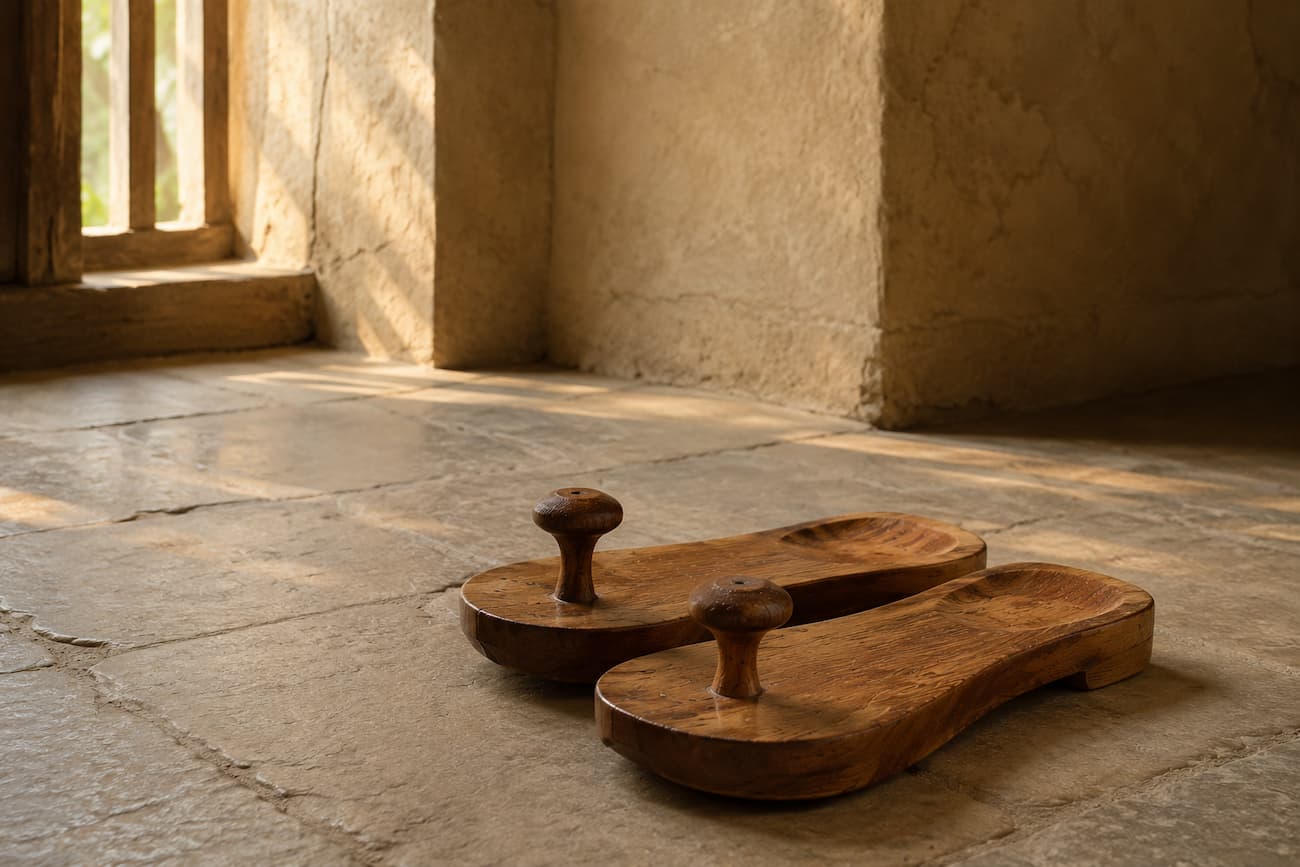
Traditional Khadau generally stay close to the form people have historically associated with wooden footwear. They usually feature a shaped wooden base, minimal construction, and, in many designs, a toe knob that helps keep the foot in place.
They are often chosen by people who are specifically interested in a traditional form of Khadau and the experience that comes with it.
Modern Wooden Khadau
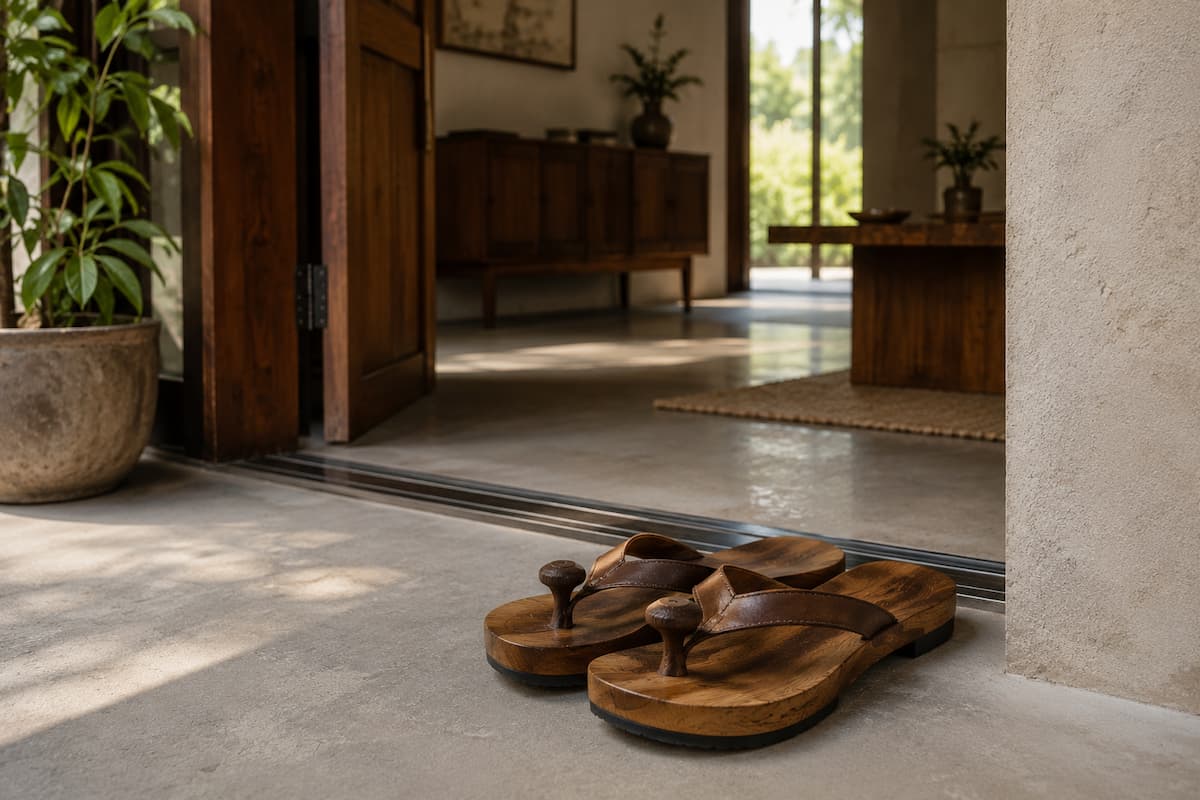
Modern versions usually adapt the traditional design to suit contemporary expectations. They may include straps to secure the foot, rubber soles for additional grip, or changes to the base that make the footwear easier to wear regularly.
For someone interested primarily in cultural authenticity, these additions may not be important. However, for someone who wants to bring wooden Khadau into everyday use, they can make a significant difference.
Neither approach replaces the other. Traditional and modern designs simply answer different needs.
Are Wooden Khadau Only Worn for Religious Reasons?
Wooden Khadau can be comfortable, but they should not be judged using the same expectations people have for cushioned slippers or athletic shoes. Traditional designs are firm because wood is firm, and the experience of walking in them is naturally different from footwear designed around foam or flexible synthetic materials.
Comfort depends on several practical factors, including the shape of the wooden base, the fit, the weight of the footwear, and the way it is secured to the foot. Some people also wear wooden Khadau because of the physical benefits they associate with walking on a firm wooden surface. If you are interested in this aspect, you can also read our detailed guide on how wooden Khadau can be beneficial to health.
For beginners, modern designs with straps and rubber soles can feel more familiar and stable. The important thing is to choose Khadau based on how you intend to wear them rather than expecting every design to serve the same purpose.
Why Do People Wear Wooden Khadau? The Simple Answer
People wear wooden Khadau for reasons that sit somewhere between history and personal preference. Their long association with Indian spiritual and cultural traditions remains important, but that is only part of their appeal today.
For some, Khadau are a way of staying connected with heritage or participating in a religious practice. For others, they are interesting because they are made from a natural material and retain the visible character of handmade craft. And sometimes the reason is simply that they offer something different from standard footwear.
Whatever the reason, Khadau have survived because they are more than a functional object from the past. Their form has been adapted, their use has changed, and yet the basic idea remains familiar: a simple piece of footwear shaped from wood and connected to a long history of Indian craft and culture.
A traditional object does not have to remain in the past to retain its meaning. Wooden Khadau show how craft, culture, and everyday utility can continue to exist together in modern life. At Vandanya, we explore traditional Indian craftsmanship and thoughtfully made essentials through a modern lens. Explore Vandanya for more stories, ideas, and products rooted in craft and made for everyday living.
Frequently Asked Questions
Are Khadau and Paduka the same?
The terms are closely related and are often used in connection with traditional Indian footwear. Paduka can also carry broader cultural and spiritual significance depending on the context.
Do people still wear Khadau today?
Yes. People continue to wear Khadau for cultural, spiritual, aesthetic, and personal reasons. Modern versions have also made wooden footwear more practical for contemporary use.
Are wooden Khadau suitable for beginners?
They can be, but traditional designs may require some adjustment. Modern versions with straps and rubber soles can be easier for people wearing wooden Khadau for the first time.