This Website Is Still Under Development! So Some Things Might Not Work
We are creating something AWESOME!!!

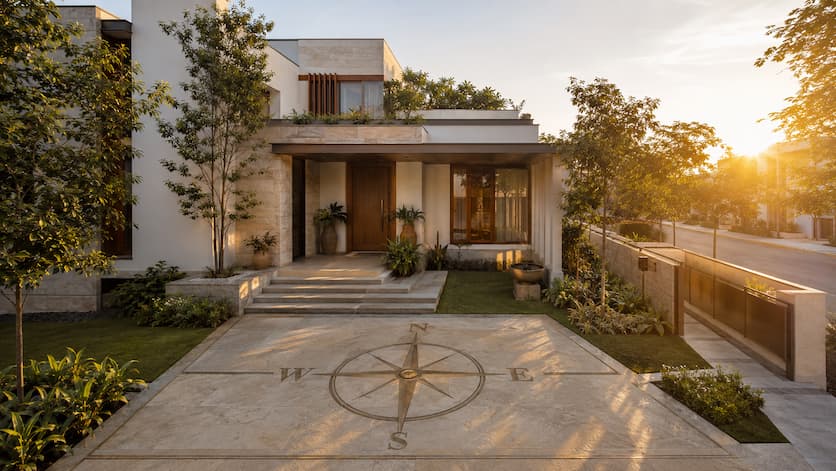

If you are buying or building a home, one of the first Vastu questions that often comes up is: which facing house is good?
According to traditional Vastu Shastra, north- and east-facing houses are generally considered favourable, but that does not mean a west- or south-facing house is automatically bad. The overall layout, entrance location, room placement, slope, open spaces, and surrounding environment also influence how a house is evaluated.
So, rather than choosing a property based only on the direction it faces, it is better to look at the complete Vastu layout of the house.
Which Facing House Is Good According to Vastu?
North-facing and east-facing houses are traditionally considered among the most favourable options in Vastu Shastra. North is associated with prosperity and opportunities, while east is associated with the rising sun, light, and new beginnings.
However, the direction of the main entrance is particularly important. A north-facing house with an unsuitable entrance placement may not be considered as favourable as a well-planned west- or south-facing house.
House Facing at a Glance
| House Facing | Traditional Vastu View | What to Consider |
|---|---|---|
| North | Generally favourable | Entrance placement and northern openness |
| East | Generally favourable | Entrance placement and eastern openness |
| West | Can be favourable | Exact entrance and internal layout |
| South | Not automatically bad | Entrance placement and overall planning |
The key takeaway is simple: house facing is only one part of Vastu.
1) North-Facing House
A north-facing house is one of the most commonly preferred orientations in Vastu.
Traditionally, the north is associated with Kubera, the deity of wealth, which is why north-facing homes are often connected with financial opportunities and prosperity.
A well-planned north-facing home can work particularly well when the entrance and internal spaces are positioned appropriately.
What to consider
- Keep the northern side relatively open where possible.
- Pay attention to the exact location of the main entrance.
- Avoid evaluating the property only because it is north-facing.
- Consider the placement of bedrooms, kitchen, toilets, staircase, and living areas as part of the overall plan.
Vastu verdict: A strong option when the overall layout is well planned.
2) East-Facing House
East-facing homes are another popular choice according to traditional Vastu principles.
The east is associated with the rising sun, light, vitality, and new beginnings. Because morning sunlight enters from the east, this direction is often considered particularly desirable for homes.
An east-facing house can be especially appealing when it has appropriate openings and a well-positioned entrance.
What to consider
- Allow suitable openings toward the east where practical.
- Consider how morning sunlight enters the house.
- Pay attention to the entrance’s exact position.
- Evaluate the complete floor plan instead of relying only on the east-facing orientation.
Vastu verdict: Traditionally considered a favourable orientation.
3) West-Facing House
West-facing houses sometimes get an unnecessarily negative reputation.
In Vastu, a west-facing house is not automatically considered bad. Its suitability depends heavily on the placement of the entrance and the internal arrangement of the property.
A thoughtfully designed west-facing home can be perfectly practical and comfortable.
What to consider
- Study the exact entrance placement.
- Consider afternoon and evening heat, especially in warmer Indian climates.
- Plan windows and shading appropriately.
- Evaluate the position of important rooms in relation to the overall Vastu layout.
Vastu verdict: Can be a good option when properly planned.
4) South-Facing House
The idea that every south-facing house is bad is one of the most common misconceptions surrounding Vastu.
Traditional Vastu does not simply classify an entire direction as good or bad. The exact placement of the entrance, proportions of the property, internal arrangement, and other architectural factors matter.
A south-facing property therefore should not automatically be rejected.
What to consider
- Pay particular attention to the main entrance.
- Study the complete floor plan.
- Consider heat and sunlight exposure from the south.
- Evaluate the property as a whole rather than judging it solely by its facing.
Vastu verdict: Not inherently bad; detailed planning matters.
Which House Facing Is Best for Different Needs?
Traditional Vastu interpretations often associate different directions with different qualities, but the suitability of a home should also take into account its actual design and the needs of the people living there.
If you want a traditionally preferred orientation
North or east are generally the first directions people consider.
If you already own a west-facing house
There is no need to assume that the house is unsuitable. Examine the entrance and complete layout before making a judgement.
If you are considering a south-facing house
Do not reject it simply because it faces south. Have the entrance and floor plan evaluated according to the specific Vastu principles being followed.
Does House Facing Matter More Than the Main Entrance?
This is an important distinction.
A house being described as “east-facing” or “north-facing” generally refers to the direction from which the property or main entrance is approached. But the exact location of the entrance within that side can also be significant in traditional Vastu analysis.
For example, two houses may both be described as east-facing while having their entrances in different portions of the eastern side.
Their Vastu assessments may therefore differ.
This is why simply saying “east-facing is good” does not tell you everything you need to know about a property.
7 Things to Check Before Choosing a Vastu-Friendly House
- Direction of the Property: First establish the actual orientation of the house or plot using a reliable compass rather than assuming its direction from the road.
- Main Entrance: The entrance deserves special attention. Its exact position can be more informative than simply knowing whether the house faces north, south, east, or west.
- Shape of the Plot: Regularly shaped plots are generally easier to plan according to traditional Vastu principles than highly irregular plots.
- Room Placement: Look at where the kitchen, bedrooms, living room, toilets, staircase, and other major spaces are located.
- Open Spaces: The distribution of open and built-up areas around the property can also be considered when evaluating a home according to Vastu.
- Natural Light and Ventilation: Vastu should not be considered independently of good architecture. A house should receive adequate daylight, ventilation, and comfortable airflow.
- Practical Livability: The best house is ultimately one that works for the people living in it.
Consider:
- Privacy
- Noise
- Natural light
- Heat exposure
- Ventilation
- Access to roads and services
- Neighbourhood
- Construction quality
- Future maintenance
A favourable direction cannot compensate for a poorly designed or uncomfortable home.
Is a North-Facing House Always Better Than a South-Facing House?
No.
North-facing houses are traditionally considered favourable in Vastu, but that does not mean every north-facing house is better than every south-facing house.
A poorly planned north-facing property can have problems with its entrance, room placement, ventilation, or functionality. Conversely, a well-planned south-facing home may work very well.
The complete layout matters more than the label attached to the property’s facing.
Is East-Facing House Better Than North-Facing House?
There is no universal answer.
Both east and north are traditionally regarded as favourable directions in Vastu, but they are associated with different principles.
If you are choosing between two properties, compare:
- Main entrance placement
- Plot shape
- Internal layout
- Natural light
- Ventilation
- Surrounding environment
- Practical suitability for your family
The direction alone should not make the decision for you.
What Is the Worst Facing for a House?
There is no single house facing that should universally be labelled the “worst.”
South-facing houses are often described this way in popular Vastu discussions, but that is an oversimplification.
Similarly, a west-facing house is not automatically problematic.
Traditional Vastu considers multiple factors together, including direction, entrance placement, proportions, room arrangement, and other characteristics of the property.
So instead of asking:
“Which direction should I completely avoid?”
A better question is:
“Does this particular house have a Vastu-friendly layout?”
Which Facing House Is Good? The Simple Answer
If you want the short answer, north-facing and east-facing houses are traditionally considered favourable in Vastu Shastra.
But that should be your starting point, not your final decision.
A west-facing or south-facing house is not automatically unsuitable. The main entrance, plot shape, room placement, open spaces, natural light, ventilation, and overall layout should also be considered.
In other words:
Good direction + poor layout ≠ automatically good house.
Less-preferred direction + thoughtful layout ≠ automatically bad house.
For a property you are seriously considering, evaluate the complete plan rather than judging it from the facing alone.
Final Thought
Choosing a home is a much bigger decision than choosing a direction.
North and east may be traditionally preferred, but a truly good home is one where Vastu principles, thoughtful architecture, natural light, ventilation, functionality, and everyday comfort come together.
If you are comparing two properties, don’t stop at asking “Which facing house is good?”
Ask instead:
“Which of these homes has the better overall layout for the way we actually live?”
Frequently Asked Questions
Which direction is best for a house according to Vastu?
North and east are traditionally considered among the most favourable directions for a house. However, the complete Vastu layout should also be evaluated.
Is a north-facing house good?
Yes. North-facing houses are traditionally considered favourable and are associated with prosperity and opportunities in Vastu.
Is an east-facing house good?
Yes. East-facing houses are traditionally considered favourable, particularly because the east is associated with the rising sun and morning light.
Is a west-facing house bad?
No. A west-facing house is not automatically bad. Its entrance placement and overall layout should be considered.
Is a south-facing house bad according to Vastu?
No. A south-facing house is not automatically bad. Traditional Vastu evaluates the specific placement of the entrance and the overall property rather than rejecting an entire direction.
Which facing house is best for a family?
North- and east-facing homes are commonly preferred according to traditional Vastu, but the best choice depends on the property’s complete layout and the family’s practical requirements.
Should I buy a house only because it is north-facing?
No. Direction should be one factor in your decision, not the only factor. Check the entrance, floor plan, plot shape, light, ventilation, construction quality, and surroundings as well.
At Vandanya, we believe a well-designed home is about more than following trends, it is about creating spaces that feel thoughtful, functional, and connected to the way we live. From Vastu and home planning to interiors, design ideas, and everyday living, explore more inspiration and practical insights on the Vandanya to discover ideas for creating a home that feels truly your own.