This Website Is Still Under Development! So Some Things Might Not Work
We are creating something AWESOME!!!

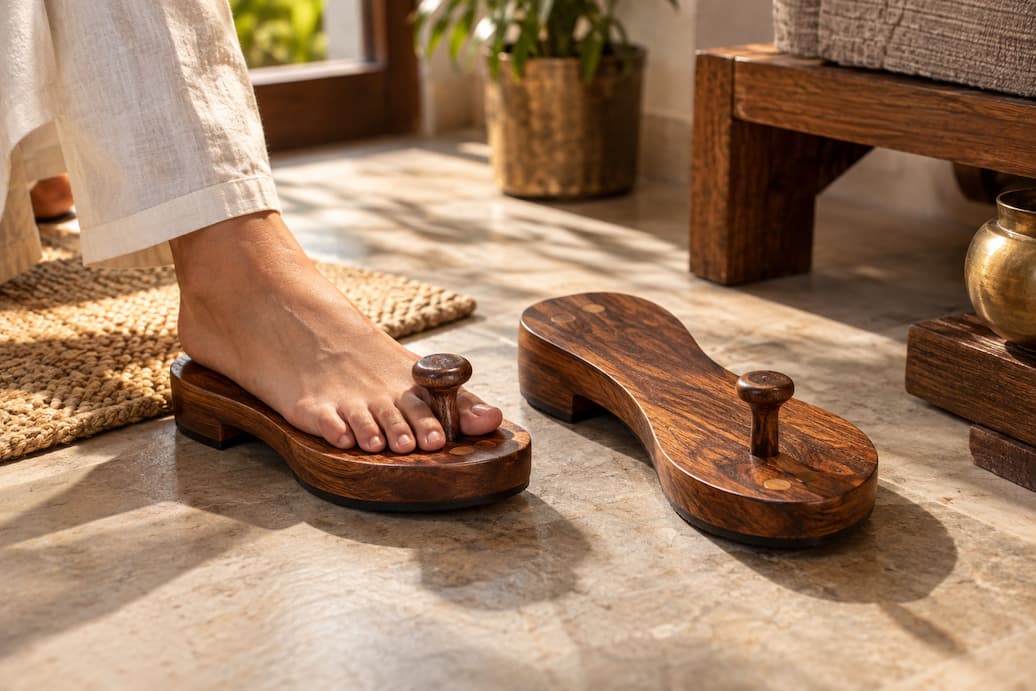

Yes, wooden Khadau can be suitable for daily use, but not every pair is designed with everyday wear in mind. Traditional Khadau have a simple wooden base and toe peg, while modern versions may include rubber straps, rubber-enhanced soles, and other features that make them easier to use around a contemporary home.
The right pair depends on several factors, including fit, weight, peg design, wood, sole, grip, and how much walking you expect to do. A Khadau chosen for occasional temple or spiritual use may have very different characteristics from one intended to be worn around the house every day.
If you’re considering making Khadau part of your daily routine, here’s what you should look at before buying a pair.
What Makes a Khadau Suitable for Daily Use?
Daily wear requires more than an attractive wooden design. The Khadau needs to work with your feet, your flooring, and the amount of movement involved in your routine.
A few things become particularly important:
- Fit: Your foot should sit naturally on the wooden base.
- Weight: The pair should feel manageable for regular movement.
- Peg or strap: Your foot should remain secure without unnecessary pressure.
- Sole: The sole should suit the surfaces where you intend to wear the Khadau.
- Finish: The wood should be smooth and properly finished.
- Construction: The peg, straps and wooden base should feel solid and well made.
Traditional Khadau have been worn for much more than purely practical reasons, and their cultural and everyday significance is part of what makes them distinctive. If you’re curious about the broader reasons people continue to wear them, you can also explore why people wear wooden Khadau.
Are Traditional Wooden Khadau Comfortable for Everyday Wear?
They can be, but they don’t feel like conventional sandals.
The biggest adjustment is usually the toe peg. Instead of having a strap hold the foot across the upper, your toes interact directly with the peg while the wooden base supports the rest of the foot. This creates a very different walking experience from modern footwear.
Comfort therefore depends heavily on size and peg placement. A Khadau that is too short, too wide, too narrow, or has an awkwardly positioned peg can become uncomfortable regardless of how attractive or well crafted it looks.
If you’re new to Khadau, it may help to begin with shorter periods of wear and gradually become accustomed to the movement. Choosing a properly sized pair with a smooth, well-positioned peg can make that process easier.
For a deeper look at the considerations involved in selecting a pair, our guide on how to choose the right Khadau covers everything from wood and sizing to peg design, soles and intended use.
Traditional vs Modern Khadau for Daily Use
Traditional and modern Khadau can look similar while offering a noticeably different wearing experience.
Traditional Khadau generally retain the classic wooden base and toe peg. Modern versions may keep the wooden character while adding features such as straps or rubber soles to make them more practical for contemporary use.
| Feature | Traditional Khadau | Modern Khadau |
|---|---|---|
| Wooden base | Yes | Yes |
| Toe peg | Usually | May be retained |
| Straps | Usually absent | May be included |
| Sole | Usually wooden | May include rubber |
| Grip | Depends on surface | May be enhanced |
| Everyday use | Depends on design | Often adapted for daily use |
If preserving the traditional construction is your priority, a classic peg-and-wood design may be what you’re looking for. If you want to wear Khadau regularly around a modern home, features such as a strap or rubber-enhanced sole may offer additional practicality.
Does the Weight of a Khadau Matter?
Yes, particularly if you plan to wear them regularly.
Wooden footwear naturally has more structure than many modern sandals, but there is a difference between a solid, well-balanced Khadau and one that simply feels unnecessarily heavy.
The type of wood, thickness of the base and overall construction all contribute to the weight. Dense hardwoods can produce a substantial feel, while a lighter construction may be easier to manage during frequent indoor use.
There isn’t one ideal weight for everyone. Someone wearing Khadau for short periods at home may be perfectly comfortable with a substantial wooden pair, while someone spending several hours walking around may prefer something lighter.
The important question is simple: does the weight suit the way you intend to use them?
Why Does the Khadau Peg Matter for Daily Wear?
The toe peg is one of the most important features to examine if you’re considering traditional Khadau for regular use.
It sits between the big toe and second toe and provides the main point around which the foot interacts with the wooden base. Its position, height, shape and finish can therefore make a noticeable difference.
A good peg should be smoothly finished and firmly attached to the wooden base. It should sit naturally between the toes without forcing them into an uncomfortable position.
If you’re new to Khadau, don’t assume that every peg will feel the same. Small differences in design can change how easily your foot settles onto the base.
The peg is also one of the defining features of traditional Khadau and an important part of their cultural history. You can learn more about the spiritual meaning of Khadau if you’re interested in the traditions and symbolism associated with this distinctive footwear.
Is a Rubber Sole Better for Daily Wear?
A rubber-enhanced sole can be useful, particularly on smooth modern flooring.
Traditional Khadau generally have a wooden base, which gives them their characteristic appearance and feel. Modern versions may add rubber underneath or around the wooden structure to provide additional traction.
Whether that is useful depends on where you wear them. A plain wooden sole may be perfectly suitable for some indoor environments, while polished stone, tiles and other smooth surfaces can make additional grip more important.
If your priority is everyday practicality rather than maintaining completely traditional construction, a rubber-enhanced sole is worth considering.
Can You Wear Khadau Around the House Every Day?
For many people, home wear is one of the most practical ways to incorporate Khadau into a daily routine.
You generally cover shorter distances indoors than you would during outdoor walking, making it easier to become accustomed to the wooden base and toe peg. You can also choose a pair based specifically on your home’s flooring and your usual routine.
If your floors are smooth, consider the grip offered by the sole. If you spend a lot of time standing or moving around the house, pay attention to the weight and fit as well.
A modern Khadau with a rubber sole or strap can be worth considering if you want the traditional wooden character while adding features suited to everyday movement.
Can You Wear Wooden Khadau Outdoors Every Day?
You can, but outdoor use requires more consideration than wearing them around the house.
Think about the surfaces you’ll encounter, how much walking you’ll do, and how securely the Khadau stays on your foot. A completely smooth wooden sole may not be equally practical across every outdoor surface.
For regular outdoor use, look for a pair with appropriate traction and secure foot placement. A rubber-enhanced sole can provide additional grip, while a strap can offer another way of keeping the foot secure.
The important thing is to choose the construction according to the environment rather than assuming that every wooden Khadau is suitable for every surface.
How Long Does It Take to Get Used to Wearing Khadau?
There isn’t a fixed adjustment period.
Traditional Khadau require a different walking motion because the foot interacts with the wooden base through the toe peg rather than a conventional sandal strap. Someone who has never worn them may therefore need some time to become comfortable with the movement.
Start with shorter periods and suitable surfaces. As you become familiar with controlling the wooden base, the movement can begin to feel more natural.
The initial experience can also depend heavily on the size and peg design. A poorly fitting Khadau can make the adjustment unnecessarily difficult, while a well-sized pair with a comfortable peg gives you a better starting point.
How to Make Wooden Khadau More Practical for Everyday Use
You don’t need to change the traditional character of Khadau to make them more practical. The key is choosing and maintaining them according to your routine.
Choose the Correct Size
Measure your feet and compare them with the seller’s sizing chart rather than automatically choosing the same size you wear in regular footwear.
Pay Attention to the Finish
Check the edges and visible wooden surfaces for rough areas, splinters or unfinished sections. Smooth finishing is particularly important because your feet remain in direct contact with the wooden base.
Match the Sole to Your Flooring
Consider whether you mainly walk on wood, stone, tiles or other smooth surfaces. A rubber-enhanced sole may be useful where additional traction is needed.
Start Gradually
If you’re new to peg-style Khadau, begin with shorter periods of wear instead of immediately using them for extended walks.
Keep the Wood Dry
Wooden footwear should not be left exposed to water or excessive moisture for prolonged periods. Wipe the Khadau when necessary and allow them to dry naturally.
Who Are Wooden Khadau Best Suited For?
Wooden Khadau can appeal to people for very different reasons.
They may suit someone who appreciates Indian craftsmanship and traditional footwear, someone looking for distinctive home footwear, or someone interested in incorporating traditional objects and practices into modern life.
They can also be a meaningful choice for people interested in the cultural and spiritual traditions surrounding Khadau. Their significance goes beyond simply being a pair of wooden sandals, which is why understanding their history and symbolism can add context to the decision.
At the same time, wooden Khadau aren’t necessarily suited to every type of activity. Someone looking for highly cushioned, flexible footwear for long-distance walking may have different requirements.
The important thing is to match the Khadau to the purpose for which you are buying it.
Common Mistakes When Wearing Khadau Daily
One common mistake is choosing Khadau purely because they look attractive. Wood grain, carving and traditional design can make a pair visually appealing, but they don’t tell you whether it will be comfortable for everyday use.
Another is assuming that your regular footwear size will automatically work. Khadau have a different construction, so checking the manufacturer’s measurements is important.
Ignoring the sole is another mistake. A traditional wooden sole may be perfectly suitable for some environments but may not offer the same traction as a rubber-enhanced design on smoother surfaces.
The condition of the Khadau also matters. Rough edges, cracks, a loose peg or damaged straps shouldn’t be overlooked simply because the overall design looks good.
Finally, don’t assume that choosing a traditional peg-only design is the only way to wear wooden Khadau. Modern versions can retain the character of wooden footwear while introducing features designed for different everyday needs.
So, Are Wooden Khadau Good for Daily Use?
They can be, provided you choose a pair that matches your feet, routine and surroundings.
For everyday home use, focus on fit, weight, peg comfort and the finish of the wooden base. If you regularly walk on smooth flooring or want additional foot security, a rubber-enhanced sole or strap-based design may be worth considering.
Traditional peg-style Khadau offer the classic experience, while modern versions can adapt some of the same traditional elements for contemporary everyday use.
Ultimately, the right daily-use Khadau isn’t necessarily the most traditional or the most decorative pair. It is the one that fits properly, feels manageable, is well constructed and suits the surfaces and routine where you actually intend to wear it.
Final Thoughts
Wooden Khadau can fit into modern daily life while retaining the character of traditional Indian footwear. The wooden base and toe peg give them their distinctive identity, while contemporary adaptations such as rubber soles and straps can make them more practical for different everyday settings.
If you’re considering wearing Khadau regularly, start with the basics: measure your feet, inspect the wood, check the peg, consider the sole and think about where you’ll actually wear them.
Once those factors match your routine, choosing a pair becomes much easier.
A well-made Khadau doesn’t have to choose between being traditional and being practical. With the right construction, it can bring the character of traditional wooden footwear into everyday life.
Frequently Asked Questions
Are Khadau comfortable for long hours?
Comfort varies between designs and individuals. Fit, peg position, weight and familiarity with wooden footwear can all affect how comfortable a pair feels over an extended period.
Are modern Khadau better for daily use?
Modern Khadau may be more convenient for everyday use when they include features such as straps or rubber-enhanced soles. Traditional peg-only Khadau can also be suitable when they fit properly and match the intended use.
Can beginners wear Khadau daily?
Beginners may want to start with shorter periods of wear while getting accustomed to the peg and wooden base. A correctly sized pair with a well-finished peg can make the adjustment easier.
Are wooden Khadau slippery?
Traction depends on the sole material and the surface you're walking on. A completely wooden sole behaves differently from a rubber-enhanced sole, so consider your usual flooring before choosing a pair.
How do you maintain wooden Khadau?
Keep them clean and avoid prolonged exposure to water or excessive moisture. Wipe them when necessary, allow them to dry naturally, and periodically check the wooden base, peg and straps for damage.