This Website Is Still Under Development! So Some Things Might Not Work
We are creating something AWESOME!!!

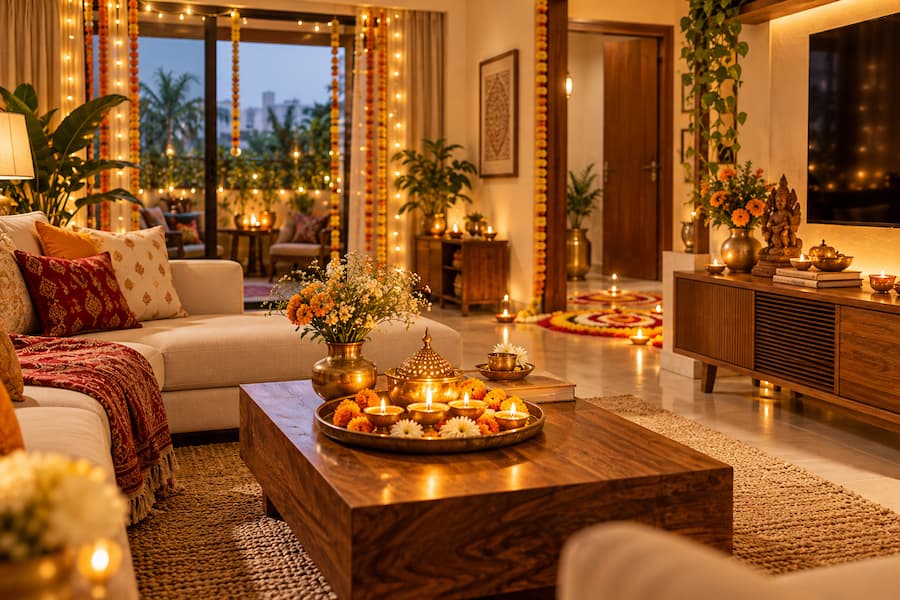

The living room is usually the centre of Diwali celebrations, which makes it one of the best places to focus your festive decorating. You do not need to completely redesign the room or fill every surface with decorations. A few well-chosen elements—warm lighting, diyas, flowers, textiles, brass accents and a thoughtfully decorated focal point—can make the space feel festive without making it look crowded.
The key is to work with the living room you already have. Use existing furniture as part of the decoration, create one or two strong focal points, and let lighting do much of the work.
Whether you have a large traditional living room, a modern apartment or a compact urban space, these Diwali decoration ideas can help you create a warm and inviting setting.
Quick Takeaways
- Use warm lighting instead of relying only on overhead lights.
- Decorate the TV unit or main console rather than every surface.
- Use diyas in small groups for a more natural arrangement.
- Add marigolds, fresh flowers or subtle floral arrangements.
- Bring in brass, wood and other traditional materials.
- Change cushions and throws instead of buying new furniture.
- Keep the coffee table decoration low and practical.
- Use curtains, windows and walls for vertical decoration.
- Create a small festive corner if the living room is compact.
- Avoid overcrowding the room with too many colours or decorative objects.
1. Start With Warm Diwali Lighting
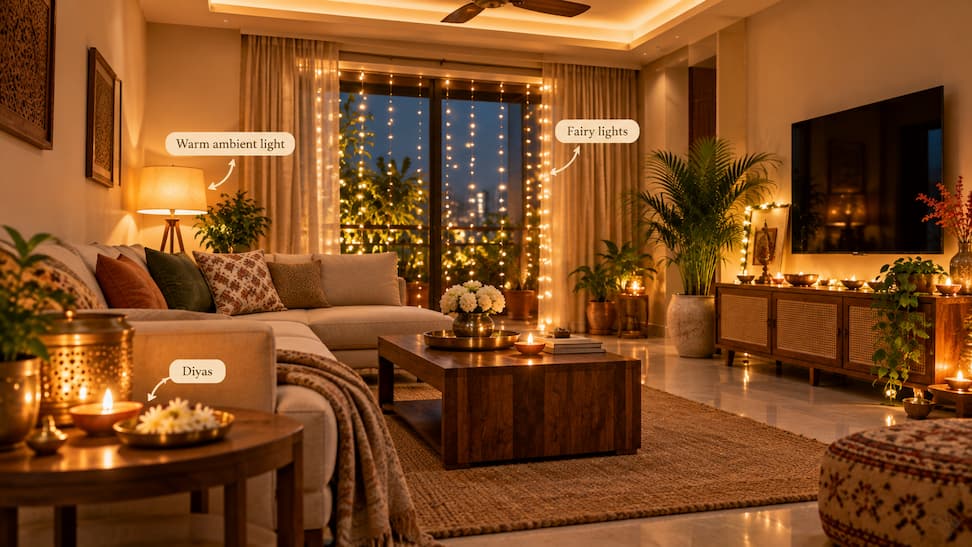
Lighting can completely change the atmosphere of a living room during Diwali.
Instead of illuminating the room entirely with bright white ceiling lights, introduce layers of warm light. String lights can be placed around a window, along a curtain rod, behind a console or around a balcony opening.
The idea is not to cover every wall with fairy lights. Choose one or two areas where the lighting creates a noticeable glow.
For a more traditional look, combine electric lights with a few clay diyas or brass lamps. The contrast between small points of flame and soft ambient lighting makes the room feel much warmer.
2. Decorate the TV Unit or Main Console
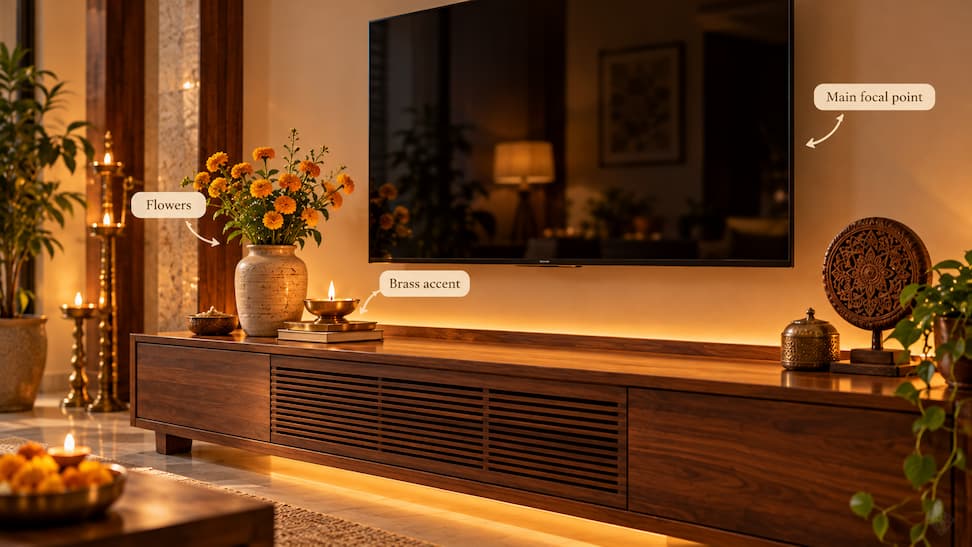
The TV unit is often one of the largest visual elements in a contemporary living room, so it can become a natural Diwali focal point.
Rather than decorating the entire unit, create a simple arrangement around the centre or one side. A brass diya, a small vase of flowers, a wooden decorative piece or a traditional figurine can work well.
If the TV itself is visually dominant, keep the decoration below and around it relatively restrained. Too many objects competing with the screen can make the wall look cluttered.
A simple arrangement of one larger object + two smaller elements + a little greenery is often enough.
3. Create a Diwali Corner With Diyas
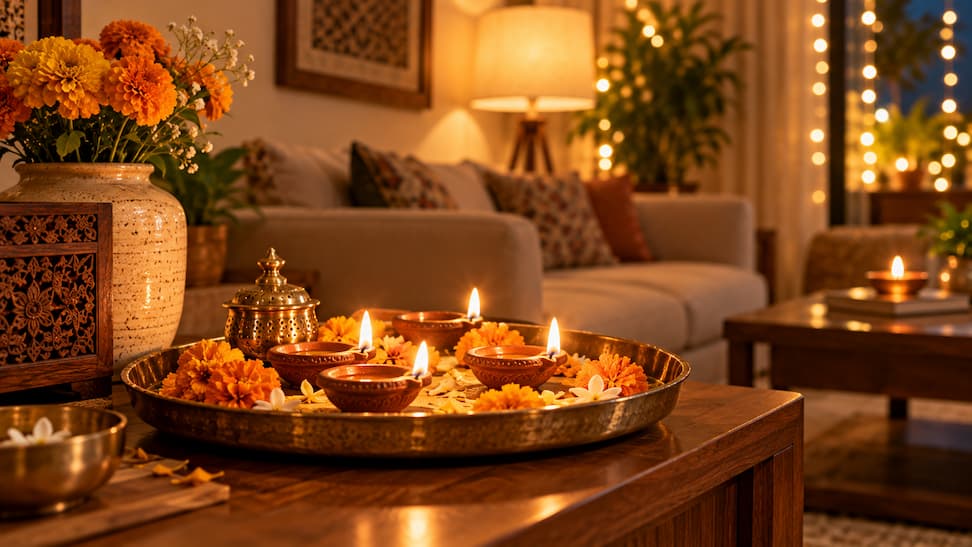
You do not need dozens of diyas scattered around the living room.
Instead, group them intentionally on a side table, console, shelf or low wooden stool. Place a few diyas at different heights using safe, stable surfaces so that the arrangement feels layered rather than perfectly symmetrical.
A brass or wooden tray can help contain the display while protecting the furniture underneath.
For homes with children or pets, LED diyas can be a practical alternative in areas where an open flame would be difficult to manage.
4. Bring in Fresh Marigolds and Flowers
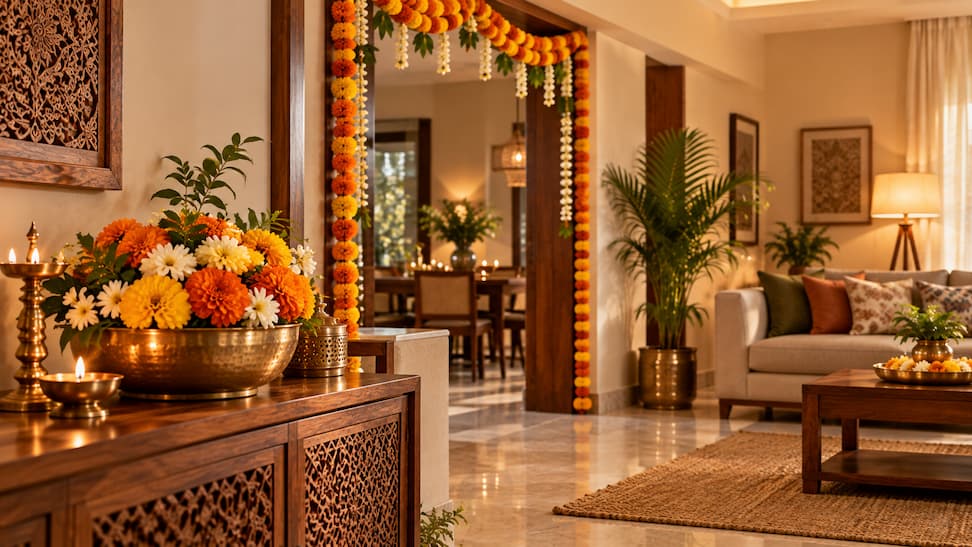
Flowers are one of the easiest ways to introduce a distinctly Indian festive character into a living room.
Marigold strings can be used around a doorway, window or console. You can also use loose marigold flowers in a shallow brass bowl or combine them with white flowers for a softer arrangement.
The important thing is to avoid decorating every available surface with flowers. Choose a few areas and allow the natural colour of the flowers to stand out.
For a contemporary living room, a simple marigold arrangement against neutral walls and wooden furniture can be particularly effective.
5. Give Your Coffee Table a Small Diwali Makeover
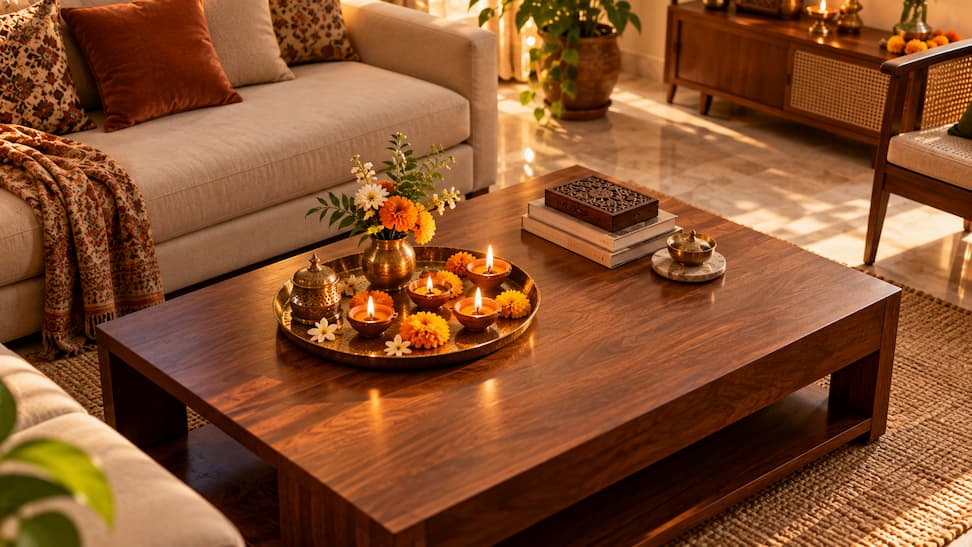
The coffee table does not need a large decorative arrangement.
A shallow tray with three or four diyas, a small vase, a few flowers and one decorative object can create a festive centrepiece without taking over the table.
Leave enough open space for everyday use. A coffee table that looks beautiful but cannot hold a cup, book or serving tray is not particularly practical during a gathering.
6. Change Cushions and Throws
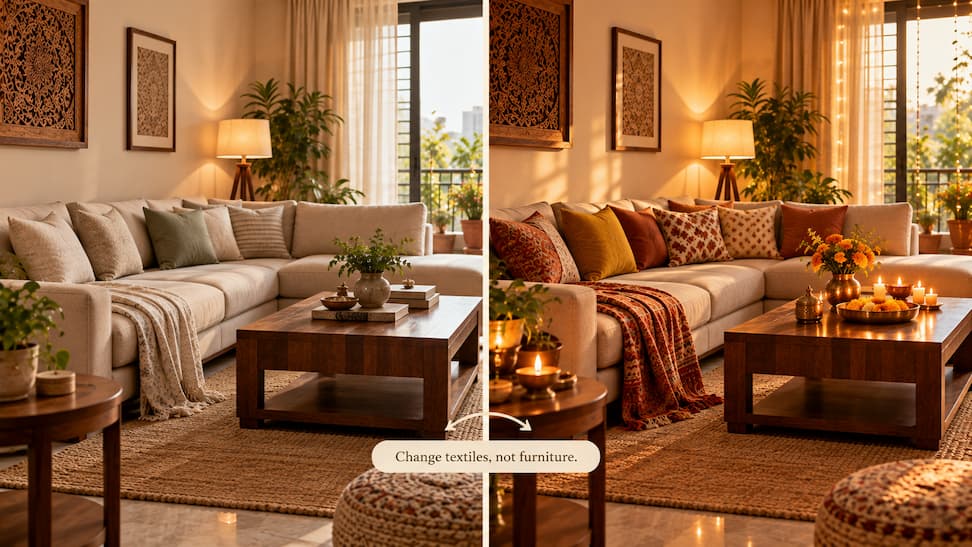
One of the easiest ways to make a living room feel different for Diwali is to change the textiles rather than the furniture.
Introduce cushions or throws in colours such as:
- Deep red
- Mustard
- Rust
- Olive
- Terracotta
- Cream
- Gold
- Warm brown
You do not need to use all of these colours together. Pick two or three that work with the existing sofa and walls.
If your living room is already colourful, neutral cushions with subtle Indian patterns can create a more balanced festive look.
7. Add Brass Elements for a Traditional Touch
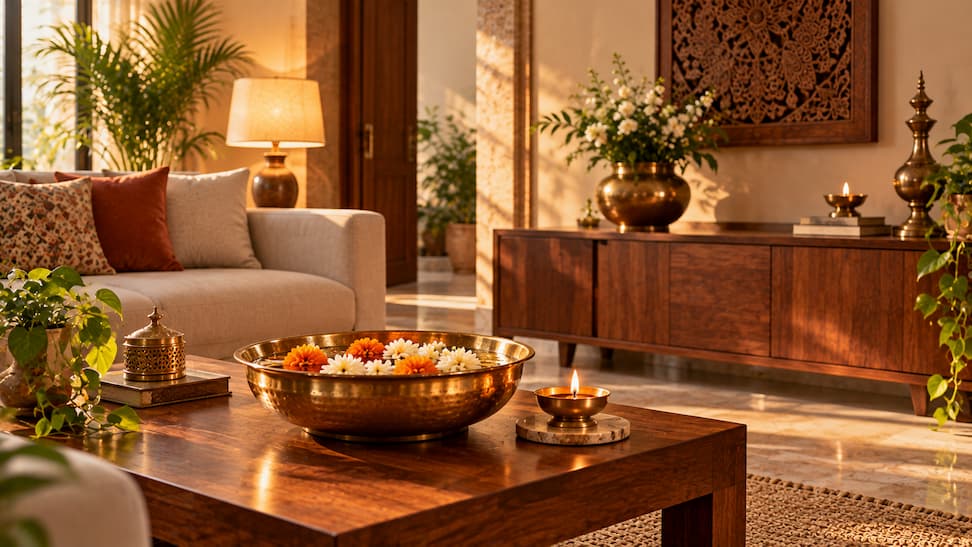
Brass works particularly well in Diwali interiors because it introduces warmth without requiring a major change to the room.
A brass urli, diya, lamp, bowl or small decorative object can sit on a console, side table or shelf.
The material also works surprisingly well with contemporary interiors. A modern sofa, neutral walls and natural wood can be paired with one or two traditional brass elements without making the entire room feel overtly traditional.
8. Use Your Windows as Decoration
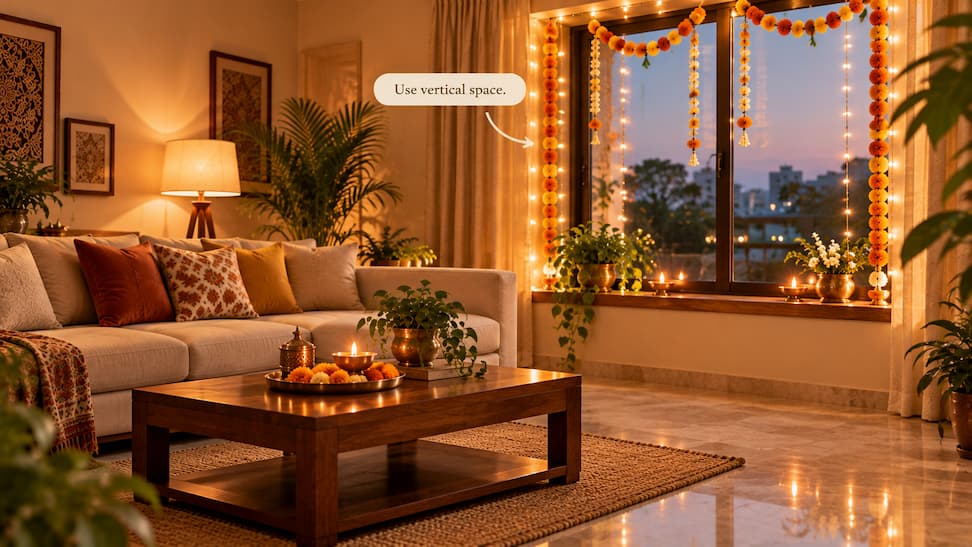
Windows are often overlooked when decorating living rooms for Diwali.
Instead of filling the floor with more decorations, use the vertical space around a window. Warm fairy lights can be placed around the frame, while a simple floral string can be added to the curtain rod.
You can also place a few small diyas on a secure windowsill if the surface and location are suitable.
This approach is especially useful in smaller living rooms because it adds festive detail without taking away valuable floor space.
9. Create a Simple Rangoli Near the Living Room Entrance
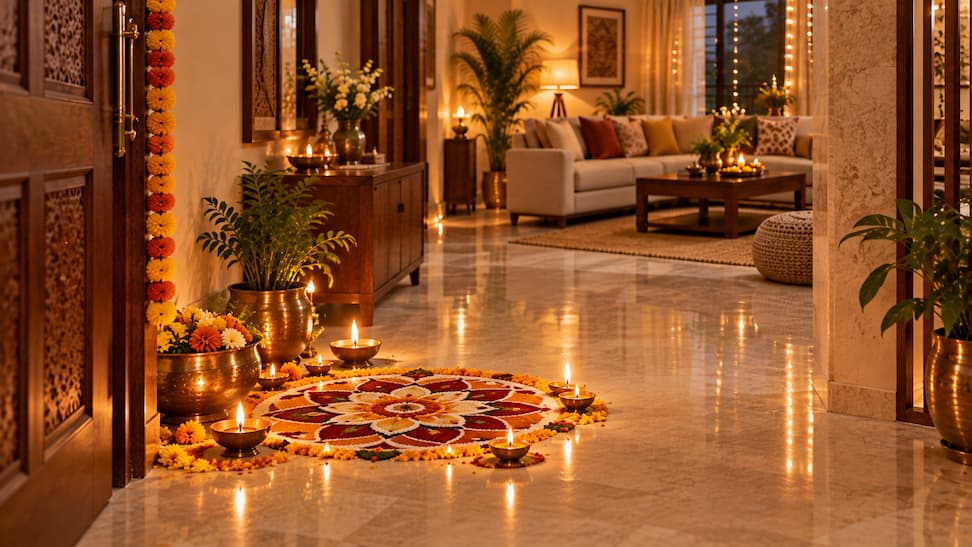
If the main entrance opens directly into the living room, a rangoli can naturally become part of the overall decoration.
For a modern home, you do not necessarily need a large, elaborate design. A compact geometric rangoli, floral pattern or traditional motif can work beautifully.
Use flowers, coloured powders, rice or reusable rangoli designs depending on how much time you want to spend and whether the area needs to remain accessible.
Keep the design positioned away from the main walking path so that it does not get damaged during the evening.
10. Decorate a Plain Wall
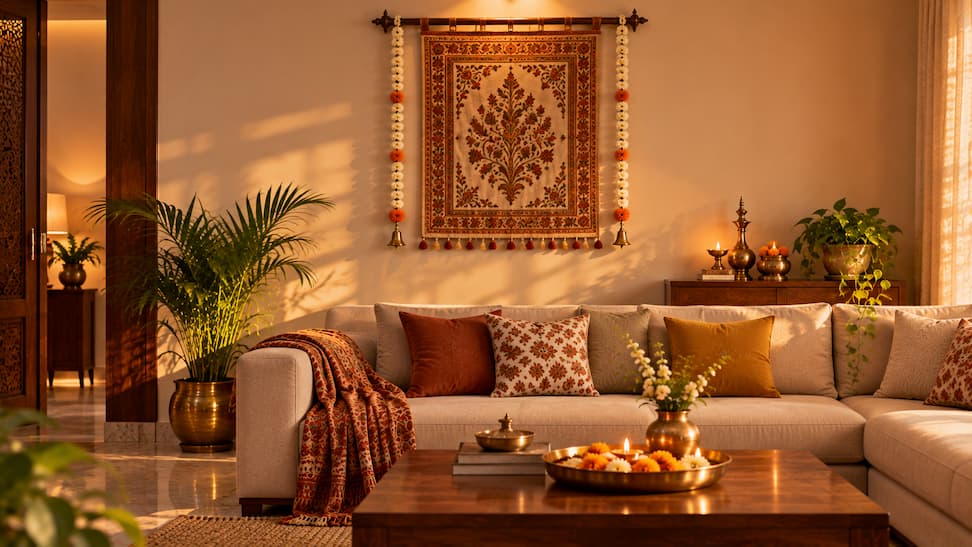
If your living room has a large empty wall, Diwali is a good opportunity to introduce a temporary focal point.
You could use:
- A traditional wall hanging
- A small collection of brass décor
- Floral strings
- Indian-inspired artwork
- A decorative mirror
- A simple festive arrangement
Do not feel that the wall needs to be completely covered. A single well-composed arrangement can have more impact than several unrelated decorations.
If you already have artwork on the wall, work around it rather than removing everything.
11. Use a Traditional Lamp or Lantern
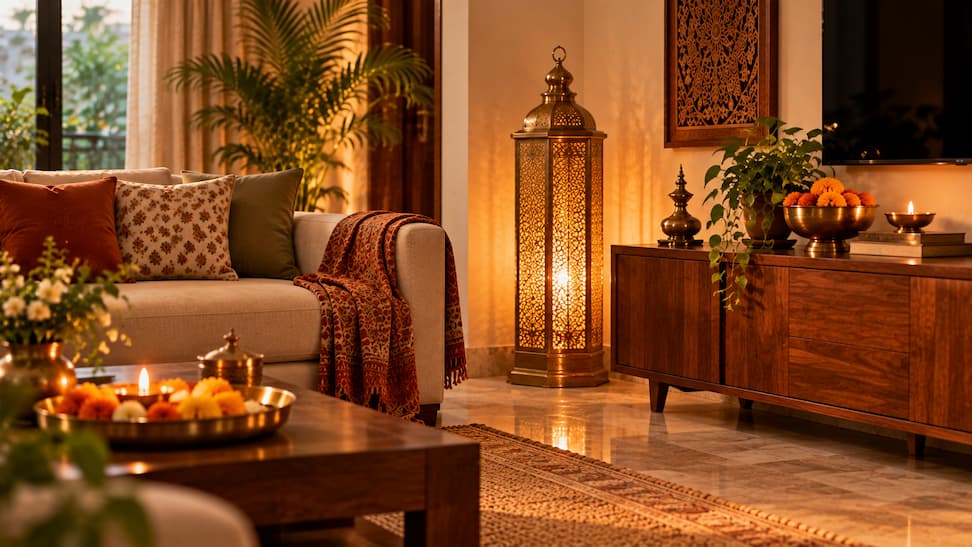
A floor lamp, hanging lantern or traditional diya stand can add height to the living room decoration.
This is particularly useful because most festive décor tends to sit on tables, shelves and floors. Introducing one taller element creates visual variety.
A traditional lantern beside a console or seating area can also become a permanent décor piece after Diwali rather than something that needs to be packed away immediately.
12. Add Natural Wood to Balance the Festive Décor
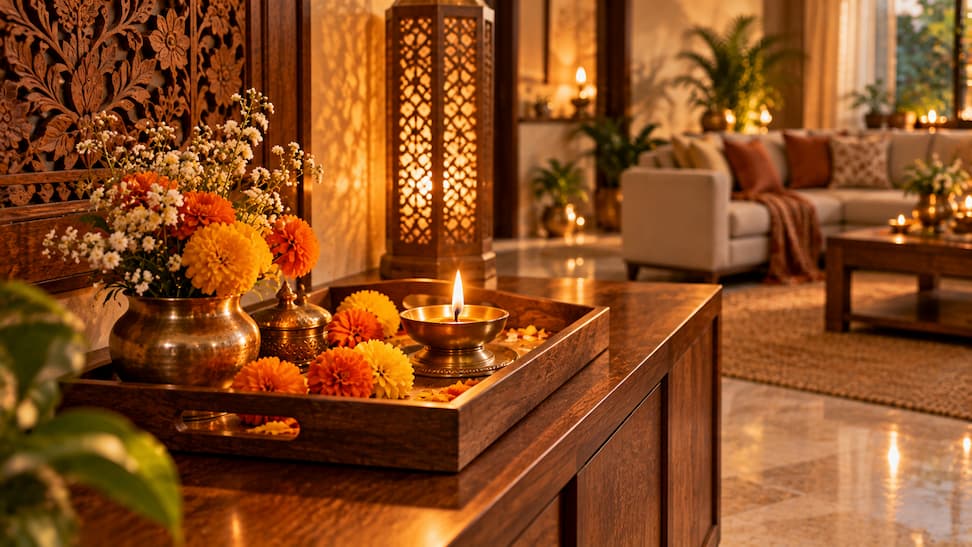
Diwali decoration can easily become dominated by shiny materials, bright colours and artificial lighting.
Natural wood can balance this out.
A wooden tray, carved stool, side table, decorative box or handcrafted object can introduce texture and warmth while keeping the room grounded.
This works especially well in Indian interiors where materials such as wood, brass, cotton, cane and stone can naturally sit alongside festive elements.
For a more understated Diwali look, combine wood + brass + flowers + warm light rather than adding more colours.
13. Create a Small Pooja or Prayer Corner
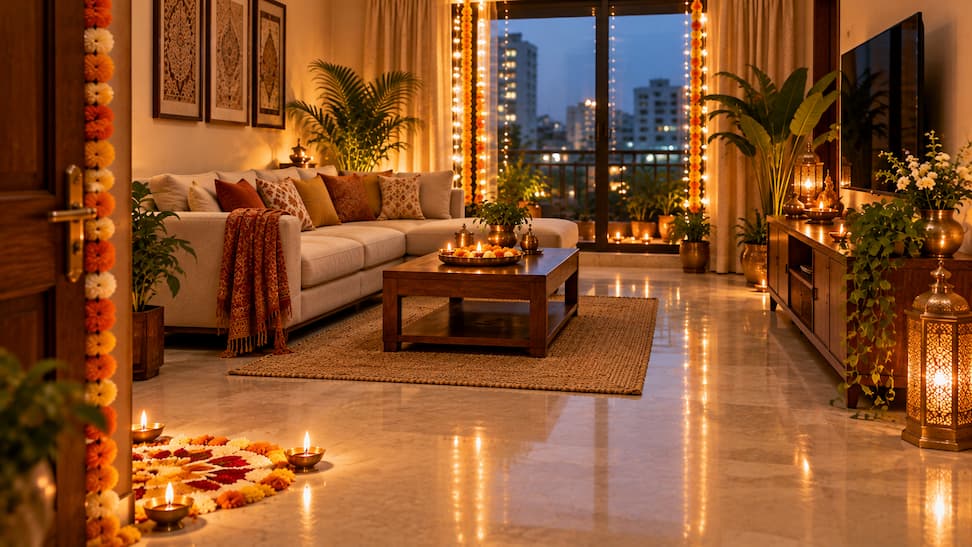
If your home does not have a dedicated pooja room, a small corner of the living room can be arranged for Diwali prayers.
A compact wooden cabinet, console or clean shelf can provide a suitable base. Keep the area visually uncluttered and use a few intentional elements such as a diya, flowers and a small decorative arrangement.
The exact arrangement should also take into account your existing home layout and any Vastu principles you follow rather than treating decorative rules as universal requirements.
14. Use Mirrors to Reflect Festive Lighting
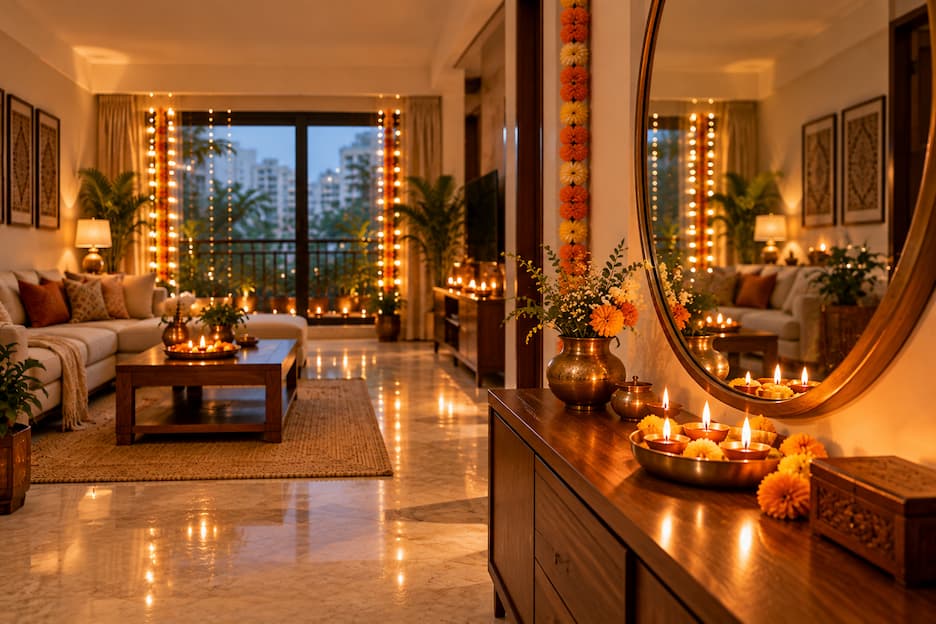
A mirror placed opposite or near a warm light source can help distribute light visually around the room.
This can work particularly well in smaller living rooms where you want the space to feel brighter without adding more lamps and decorations.
Avoid placing open-flame diyas directly against curtains, furniture or other combustible materials simply for the sake of creating a reflection. Safety should always come first.
15. Try a Minimal Traditional Diwali Look
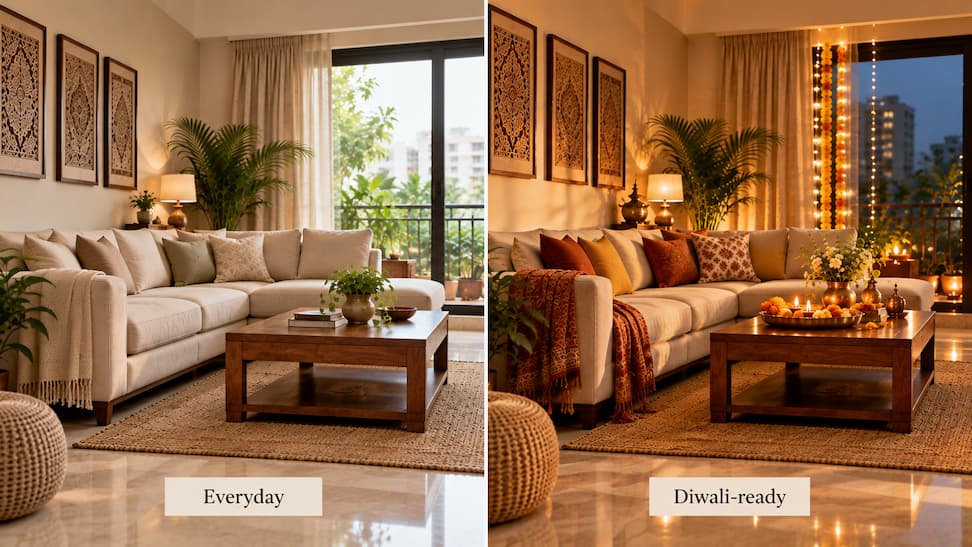
You do not need an elaborate theme to make your living room feel festive.
A simple traditional arrangement could include:
- One marigold toran
- A compact rangoli
- A few clay diyas
- One brass element
- Warm fairy lights
- Fresh flowers
- One or two traditional decorative pieces
Keep the rest of the room relatively calm.
This approach works particularly well if your everyday interior is modern, Scandinavian, minimalist or neutral because the festive elements become accents rather than overwhelming the existing design.
How to Decorate a Small Living Room for Diwali
A small living room needs a slightly different approach.
The biggest mistake is adding too much floor décor. Diyas, lanterns, stools, baskets and decorative objects can quickly reduce the usable space.
Instead, concentrate on walls, windows, the TV unit, coffee table and existing furniture.
Use vertical lighting, a small rangoli, a compact floral arrangement and a few carefully selected decorative objects. Change your cushions and throw rather than introducing additional furniture.
The goal should be to make the room feel festive while keeping the original circulation intact.
A Simple Diwali Living Room Arrangement
If you want something easy to execute, try this combination:
- Entrance: Small rangoli + marigold toran
- TV unit/console: Brass object + flowers + warm lighting
- Coffee table: Small tray + 3–5 diyas + flowers
- Sofa: Festive cushions + one throw
- Window: Warm fairy lights
- Floor: One lantern or diya stand, if space allows
This gives you several festive touchpoints without decorating every corner.
Diwali Living Room Decoration on a Budget
You do not have to spend a large amount to transform the room.
Start with the things that create the biggest visual difference: lighting, flowers and textiles.
Reuse existing brass objects, trays, vases and decorative pieces. Add marigolds and diyas rather than buying a completely new décor collection.
You can also create a festive arrangement using objects already present in your home. A wooden tray, a few diyas, flowers and one decorative bowl can become a beautiful centrepiece with almost no additional furniture or styling.
How to Make a Modern Living Room Look Traditional for Diwali
You do not need to replace contemporary furniture with traditional furniture.
Instead, introduce traditional materials and details into the existing space.
A neutral modern sofa can work with brass diyas, marigold flowers, a wooden tray and warm lighting. A contemporary coffee table can hold a traditional festive arrangement. Modern artwork can remain on the wall while a small floral or brass accent is added nearby.
This creates a modern Indian festive interior rather than trying to recreate a completely traditional room.
Final Thoughts
A good Diwali living room does not need to be the most decorated room in the house. It simply needs to feel warmer, brighter and more welcoming than it does on an ordinary day.
Start with the existing layout, identify one or two focal points and build around them with light, flowers, diyas, textiles and a few traditional materials. Whether your home is large or compact, the most successful decoration is usually the kind that makes the room feel festive without making it difficult to live in.
At Vandanya, we explore the relationship between Indian traditions, thoughtful interiors, Vastu and everyday living. Explore Vandanya for more ideas on creating spaces that feel considered, comfortable and connected to Indian design.
Frequently Asked Questions
What should I put on my living room table for Diwali?
A small tray with diyas, flowers, a brass object or a decorative bowl can make an effective centrepiece. Keep the arrangement low enough that it does not interfere with conversation or everyday use.
How can I decorate my living room for Diwali on a budget?
Reuse existing décor and focus your spending on high-impact elements such as warm lights, flowers, diyas and a few festive textiles. You do not need to buy new furniture.
What colours are good for Diwali living room decoration?
Warm colours such as mustard, rust, red, terracotta, gold and cream work well, but the best choice depends on your existing interior. Two or three complementary colours are usually enough.
How do I decorate a small living room for Diwali?
Prioritise vertical areas such as windows, walls and the TV unit instead of adding lots of floor decoration. Use compact arrangements and keep walkways clear.
How can I make a modern living room look festive?
Use warm lighting, flowers, brass, wood, diyas and festive cushions as accents. This adds traditional character without changing the underlying modern design.