This Website Is Still Under Development! So Some Things Might Not Work
We are creating something AWESOME!!!

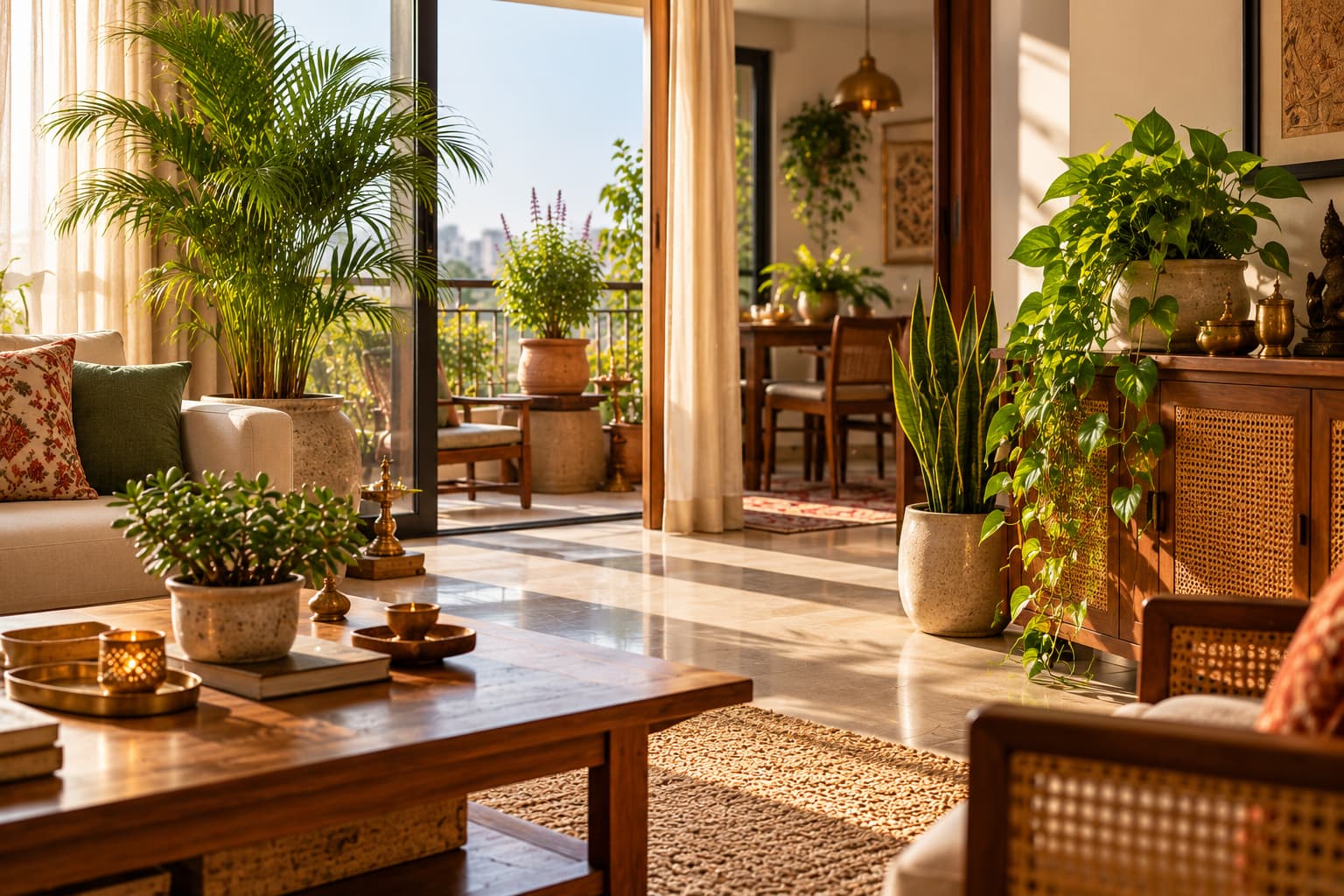

Plants are one of the easiest ways to bring life, colour and natural texture into a home. In Vastu Shastra, however, plants are also traditionally associated with growth, prosperity, harmony and positive energy, and their direction and placement are considered important.
That does not mean a money plant can literally create wealth or that a particular plant can medically improve your health. Those are traditional Vastu beliefs rather than scientifically established effects. The practical benefits of houseplants are better supported: research suggests that indoor plants can contribute to wellbeing and that healthy greenery can make indoor spaces feel more attractive and calming, while their effect on whole-room air quality is more limited than popular claims often suggest.
So, if you want to follow Vastu while choosing plants, the most useful approach is to consider three things together: the traditional association of the plant, the recommended direction, and whether that location actually provides the light and conditions the plant needs.
Here are some of the most commonly recommended Vastu plants for wealth, health, harmony and positive energy, along with practical guidance on where they can work in a modern Indian home.
Quick Takeaways
- Money Plant is traditionally associated with prosperity and is commonly recommended for the southeast.
- Tulsi has a particularly important place in Indian households and is traditionally associated with purity, wellbeing and positive energy.
- Jade Plant is commonly linked with wealth, growth and financial prosperity.
- Lucky Bamboo is associated with growth, balance and good fortune.
- Snake Plant is often recommended for its hardy nature and is associated with protection and positive energy in Vastu traditions.
- Areca Palm works well when you want a larger plant to bring greenery and softness into a room.
- Peace Lily is associated with calm and harmony, although it should be kept away from pets because it is toxic to cats and dogs.
- A healthy plant in an appropriate location is more practical than forcing a plant into a particular direction where it cannot thrive.
- Vastu associations are traditional beliefs, not scientifically proven mechanisms for attracting money, removing negative energy or preventing illness.
What Are Vastu Plants?
The idea behind Vastu plants is not simply that certain plants are “lucky.”
Vastu Shastra is a traditional Indian system concerned with the relationship between built spaces, directions, elements and how a home is organised. Within contemporary Vastu guidance, certain plants are considered more suitable for particular parts of the home because of their symbolic qualities, growth patterns, associations with nature and traditional interpretations of different directions.
For example, Tulsi is strongly associated with purity and auspiciousness, while a money plant or jade plant is commonly associated with prosperity and growth. Lucky bamboo is frequently connected with balance and good fortune. Contemporary Vastu guides consistently mention these plants among the most auspicious choices for homes.
There is an important distinction, though.
Vastu belief and scientific evidence are not the same thing
There is no established scientific evidence showing that placing a particular plant in the southeast corner of a house directly increases income or that a plant can remove a supernatural form of negative energy.
What is supported is that plants can contribute to the visual and psychological quality of indoor spaces. The Royal Horticultural Society notes that the strongest evidence for indoor plants relates to wellbeing and productivity, while the scale of their impact on indoor air quality in ordinary homes remains an area of research.
That distinction allows you to enjoy Vastu as a design and cultural practice without making promises that the evidence cannot support.
1. Money Plant: The Classic Vastu Choice for Prosperity
Scientific name: Epipremnum aureum
Few plants are as strongly associated with the idea of prosperity in Indian homes as the money plant.
In Vastu traditions, it is commonly associated with financial growth, abundance and prosperity, with the southeast direction frequently recommended for its placement. Recent Vastu guides from Times of India and other Indian home-design sources similarly associate the money plant with wealth and recommend the southeast.
The plant itself is also practical for many Indian homes. It can be grown in soil or water, tolerates a range of indoor conditions and can be trained to climb or trail.
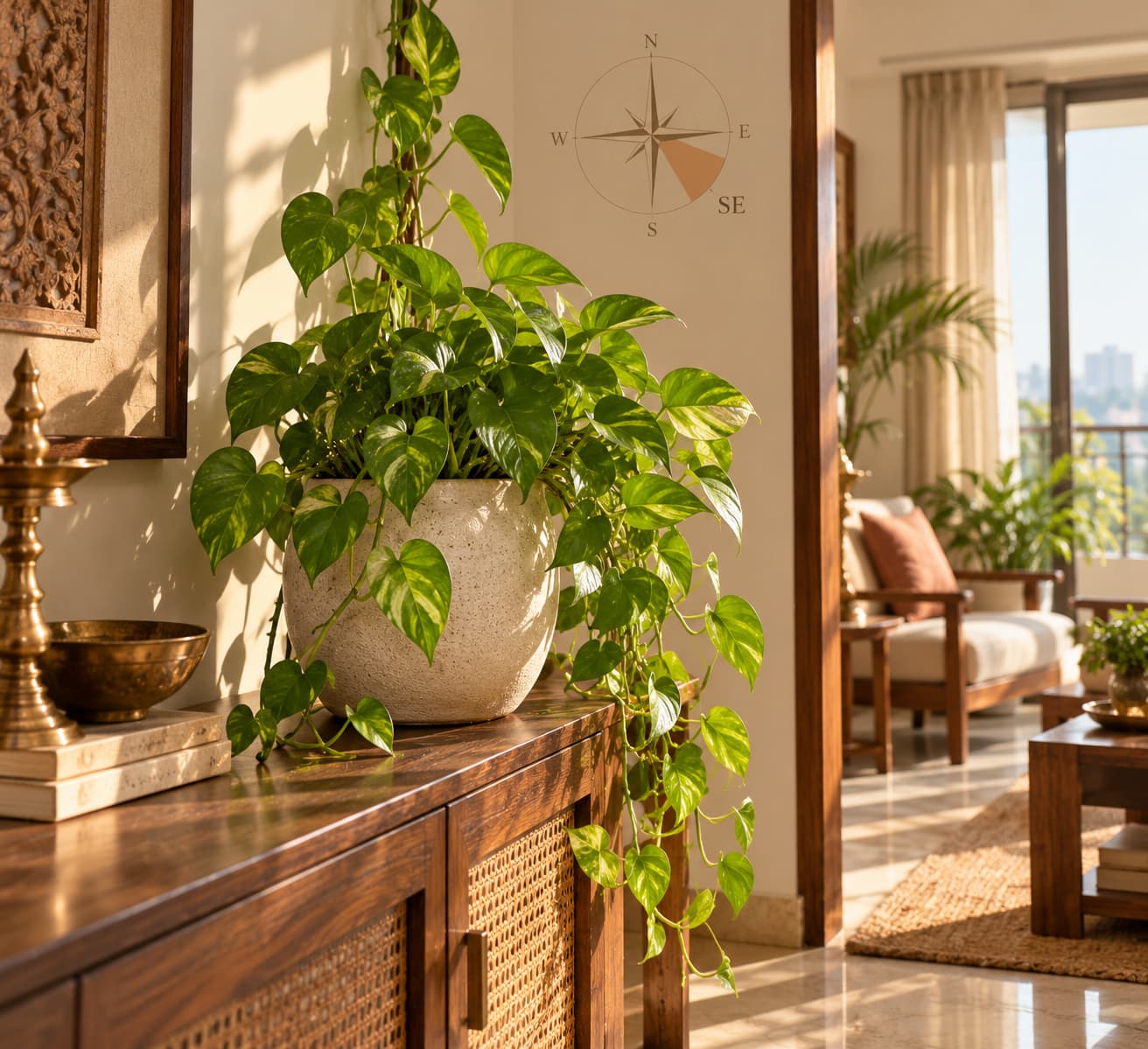
Where to place a money plant
The commonly recommended Vastu placement is:
Southeast
Other sources may suggest north or east depending on the particular Vastu tradition being followed, so there is not complete agreement across modern Vastu guides.
From a practical gardening perspective, however, the location must also provide appropriate light and watering conditions.
Best rooms
- Living room
- Home office
- Balcony
- Bright corner near a window
A simple styling idea
Place a healthy money plant in a simple ceramic or terracotta planter on a console or shelf. Allowing the vines to trail naturally can add movement and soften a room dominated by hard architectural lines.
2. Tulsi: The Traditional Plant for a Positive Home
Scientific name: Ocimum tenuiflorum
Tulsi, or holy basil, has a much deeper cultural significance in Indian households than many of the plants commonly marketed as “lucky.”
It is traditionally revered and is associated with purity, auspiciousness, wellbeing and spiritual significance. Vastu sources commonly recommend Tulsi in the north, east or northeast, with northeast frequently considered especially suitable.
Unlike some indoor ornamental plants, Tulsi generally benefits from plenty of sunlight. That means a sunny balcony, courtyard, verandah or bright window area may be more appropriate than a dark interior corner.
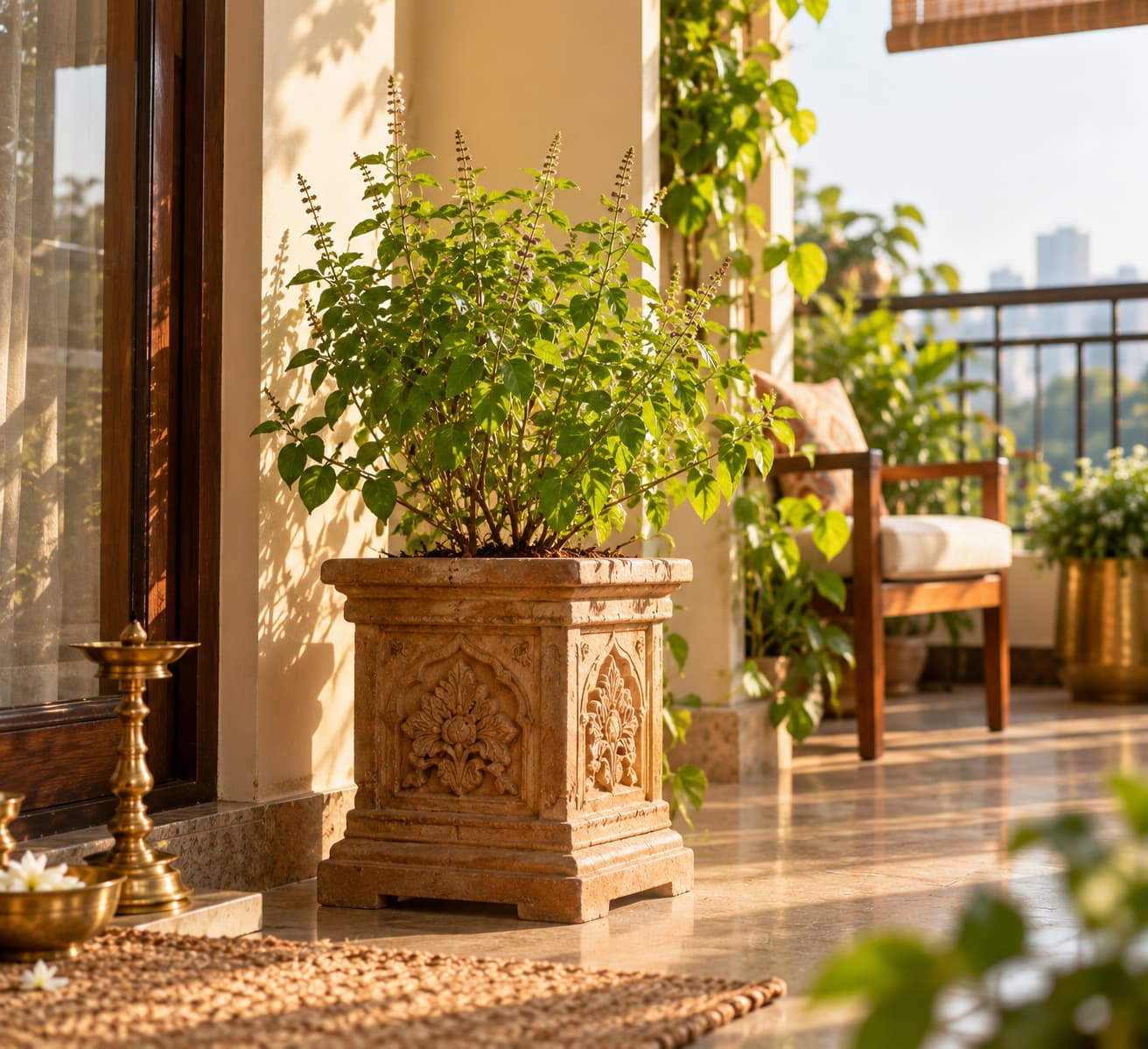
Where to place Tulsi
Common Vastu recommendations include:
- North
- East
- Northeast
Where it works best
A sunny balcony or open entrance area is often more practical than placing Tulsi deep inside a room.
Why placement matters
A plant should not be kept in a dark corner simply because a Vastu chart recommends that direction. If the plant cannot survive there, the result is neither good gardening nor particularly useful home design.
A healthy Tulsi plant in a suitable sunny location is a much more sensible approach.
3. Jade Plant: A Popular Choice for Wealth and Growth
Scientific name: Crassula ovata
The jade plant is easily recognisable by its thick, rounded leaves. Those coin-like leaves are one reason the plant has become associated with wealth, abundance and financial growth in various traditions.
Vastu guides commonly connect jade with prosperity and frequently recommend placing it in the southeast, with some also suggesting an entrance or bright area.
From a gardening perspective, jade is also attractive for homes because it is a succulent and generally prefers bright conditions.
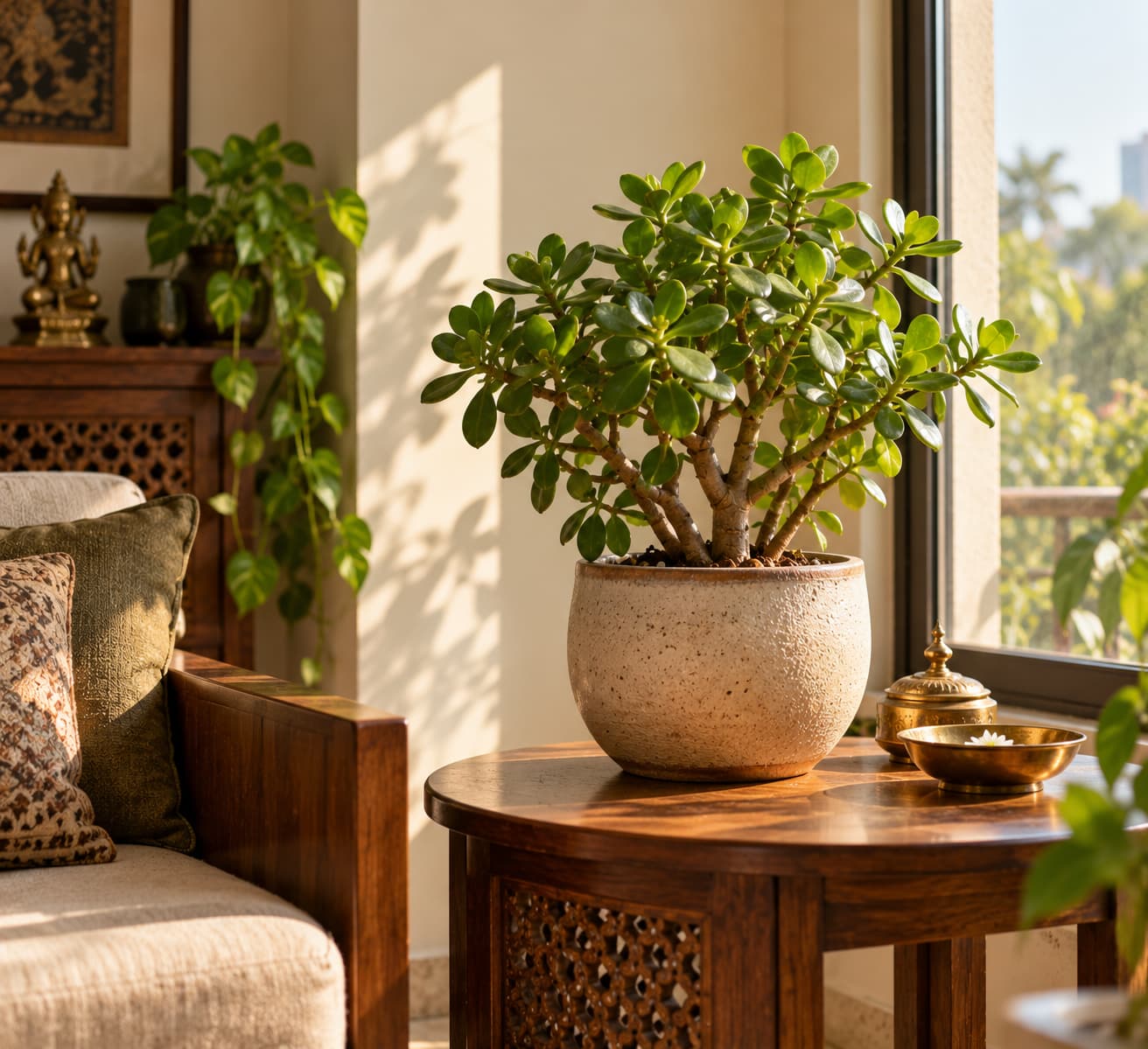
Best placement
For Vastu:
Southeast
For practical care:
A bright location with appropriate sunlight
Good locations
- Home office
- Study
- Living-room window
- Bright entrance area
- Balcony
The thick leaves and compact growth make jade especially suitable for apartments where a large plant would take up too much space.
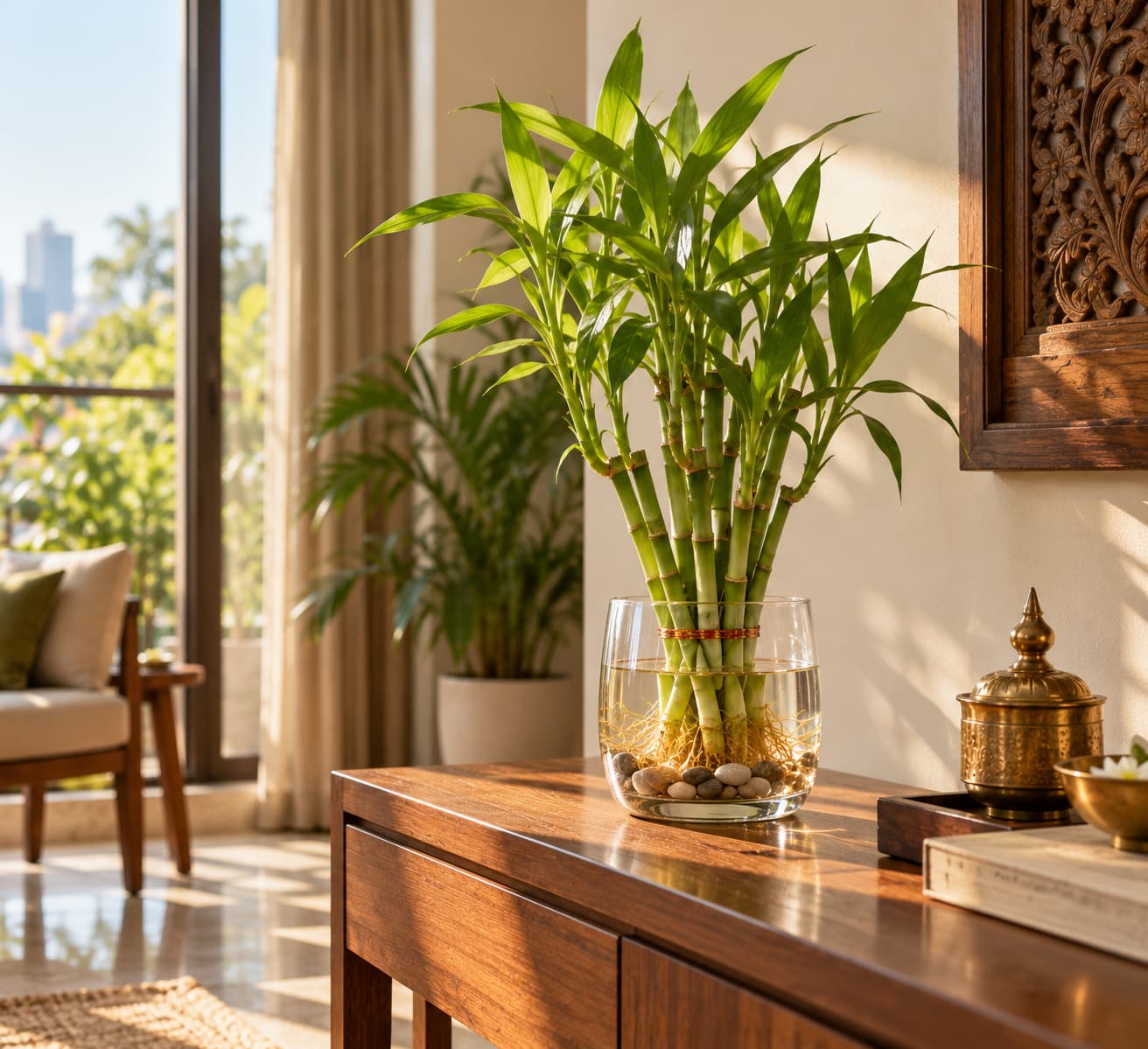
4. Lucky Bamboo: Growth, Balance and Good Fortune
Lucky bamboo is one of the most recognisable plants associated with prosperity and positive energy.
It is frequently included in modern Vastu and Feng Shui discussions and is traditionally associated with growth, balance, resilience and good fortune. Contemporary Vastu guidance often recommends the east or southeast for lucky bamboo.
One important clarification is that the plant commonly sold as “lucky bamboo” is generally Dracaena sanderiana, rather than a true bamboo species.
Where to place lucky bamboo
Common recommendations include:
- East
- Southeast
Where it works particularly well
A small lucky bamboo arrangement can work on:
- Work desks
- Study tables
- Sideboards
- Shelves
- Console tables
It is therefore one of the easiest options for apartments where floor space is limited.
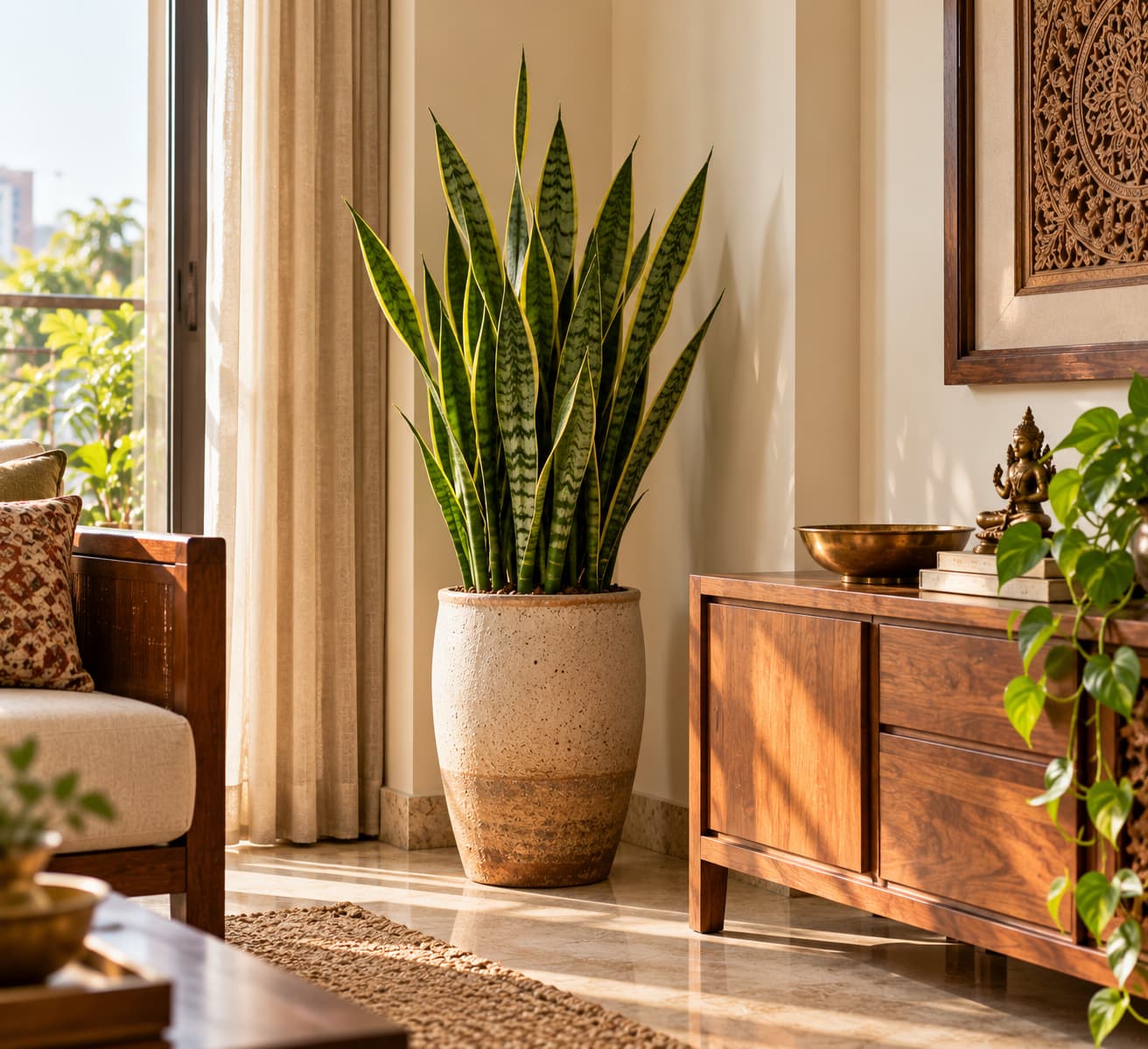
5. Snake Plant: A Low-Maintenance Choice for Modern Homes
Scientific name: Dracaena trifasciata
The snake plant is particularly popular because it combines a strong architectural appearance with relatively straightforward care.
Vastu sources associate the plant with positive energy, protection and a sense of freshness, while modern horticultural sources recognise it as a resilient houseplant. Some Vastu guides recommend the south, east or southeast.
It is particularly useful if you want greenery but don’t have the time or conditions required for a more demanding plant.
Where to place it
Common Vastu recommendations include:
- East
- South
- Southeast
Good rooms
- Living room
- Study
- Entryway
- Bedroom with suitable light
- Home office
The tall, upright growth also makes it useful in narrow spaces where a wide plant would interfere with movement.
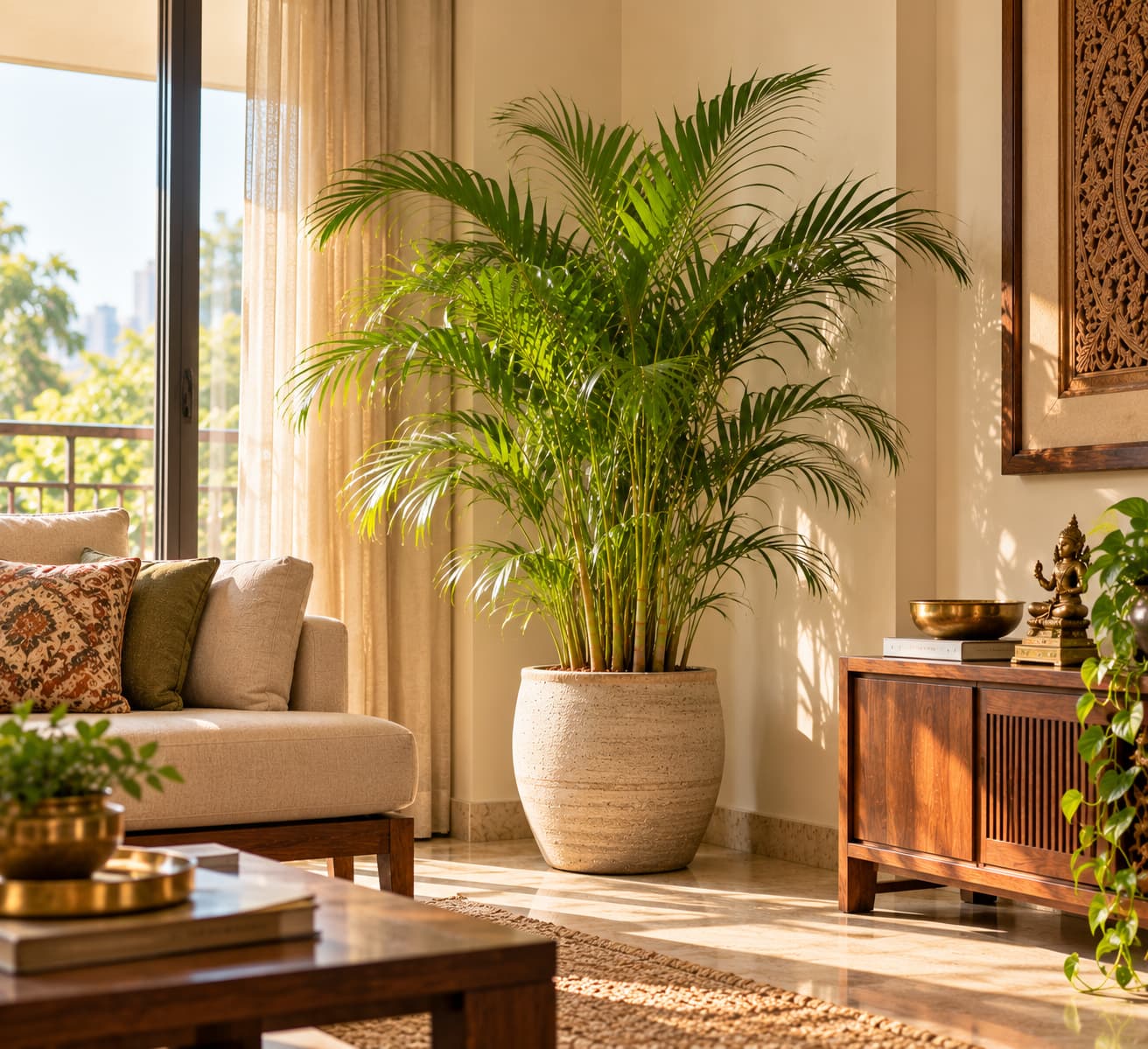
6. Areca Palm: A Softer, Larger Green Element
Scientific name: Dypsis lutescens
If smaller plants feel insignificant in a large living room, an areca palm can create a much stronger visual impact.
Vastu sources commonly associate the areca palm with freshness, positive energy and harmony, while horticultural and wellbeing research also frequently includes palms among attractive indoor plants.
The plant’s arching leaves soften rooms dominated by straight lines, wood, stone and furniture.
Where to place an areca palm
Modern Vastu guides commonly suggest:
- East
- North
- Southeast
The precise recommendation varies by source, so consider the direction alongside the actual conditions of your home.
Best for
- Large living rooms
- Bright corners
- Balconies
- Open-plan interiors
A large planter can also become an important part of your interior composition rather than simply another decorative object.
7. Peace Lily: For a Calm and Green Interior
Scientific name: Spathiphyllum
Peace lily is often included in Vastu plant lists because of its association with peace, harmony and calmness. Some contemporary Vastu guides recommend it in the west or northwest, while others give different directional recommendations.
It is also visually distinctive because of its dark green leaves and white flowers.
But there is an important practical consideration that many “positive energy” lists leave out.
Peace lilies are toxic to cats and dogs
The ASPCA lists peace lily as toxic to both dogs and cats because it contains insoluble calcium oxalates. Ingestion can cause oral irritation, drooling, vomiting and difficulty swallowing.
So if you have pets that can reach your plants, pet safety should take priority over Vastu placement.
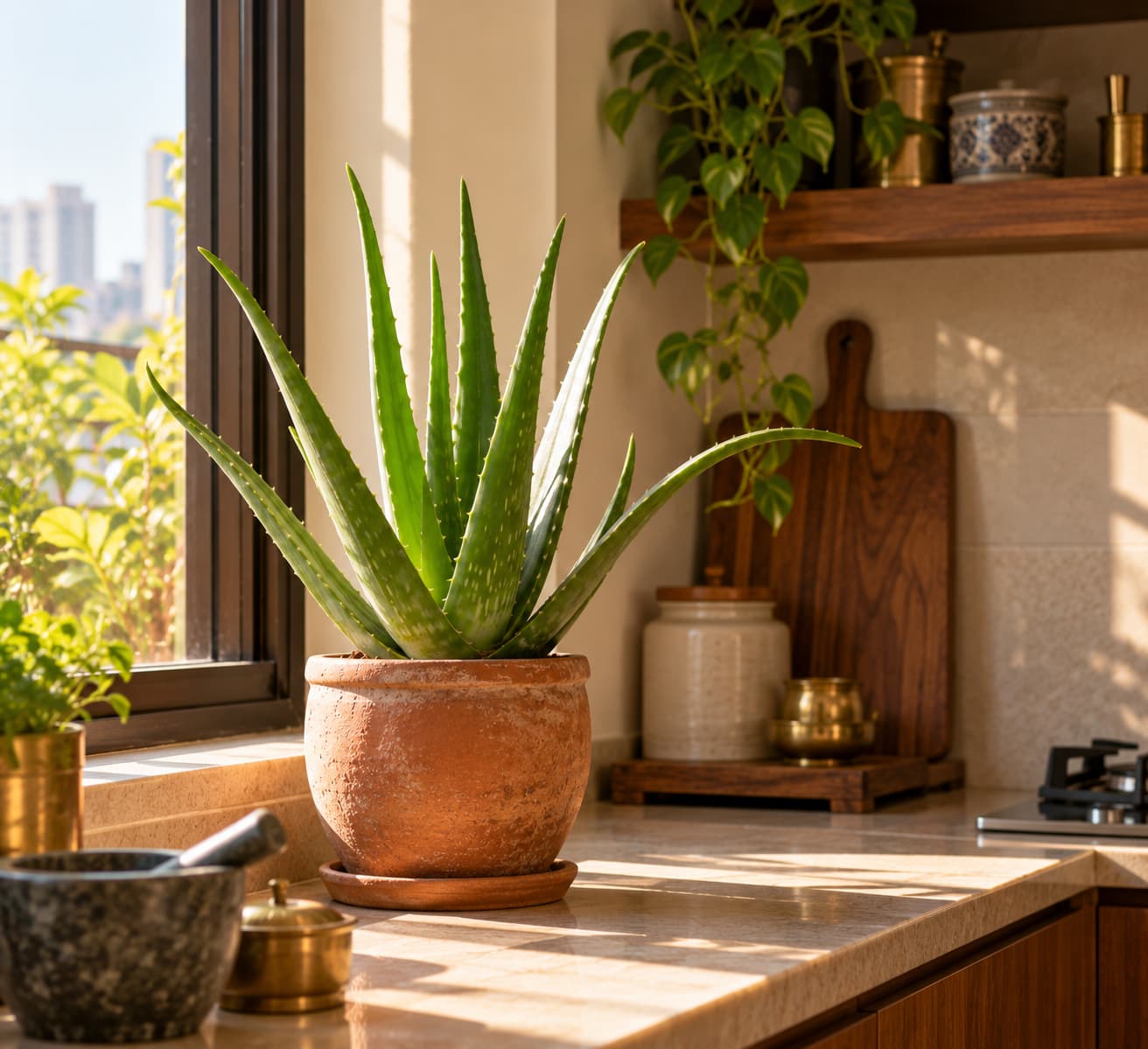
8. Aloe Vera: A Useful Plant With Traditional Associations
Scientific name: Aloe vera
Aloe vera is another plant frequently included in Vastu lists. Modern Vastu sources commonly associate it with health, positivity and protection, with east or north sometimes recommended for placement.
Unlike a purely decorative plant, aloe vera also has a long history of traditional and cosmetic use.
However, it is important not to turn that traditional use into a medical claim. Having an aloe vera plant in your home does not mean it will automatically improve health.
Where it can work
- Sunny windowsill
- Balcony
- Kitchen window
- Bright utility area
Its compact size makes it particularly useful for apartments.
9. Jasmine: Fragrance and Positive Atmosphere
Common Indian name: Mogra/Jasmine
Jasmine is valued in Indian homes for its fragrance and flowers, and Vastu sources commonly associate it with positivity, prosperity and pleasant energy. Modern Vastu lists often recommend the east, north or northeast.
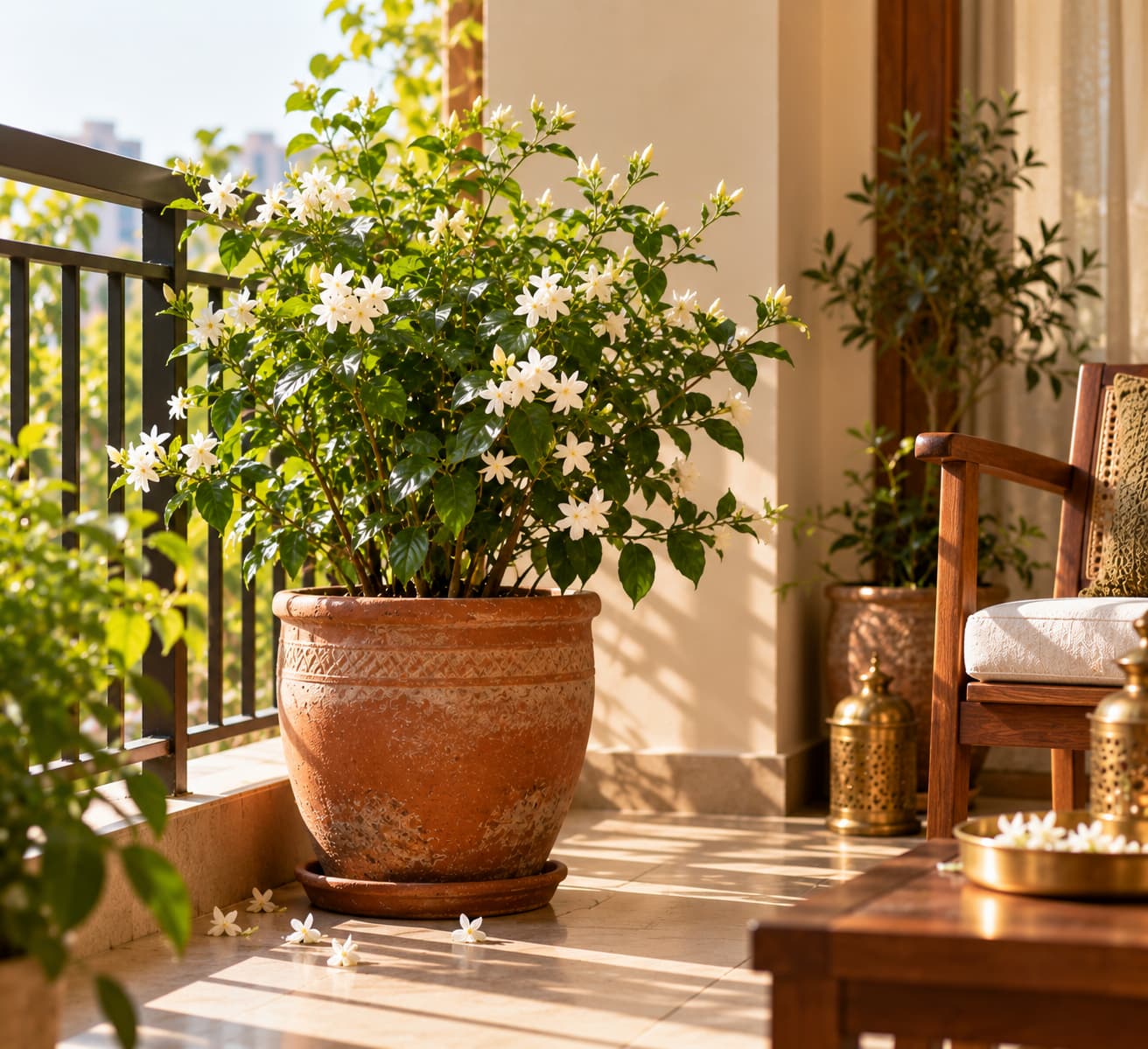
Its biggest practical advantage is sensory rather than mystical: fragrance can contribute to the atmosphere of a space.
A flowering jasmine plant can work particularly well near:
- A balcony
- Courtyard
- Sunny window
- Entrance area
If you’re growing jasmine indoors, however, make sure the plant actually receives the light it needs.
Which Vastu Plant Is Best for Wealth?
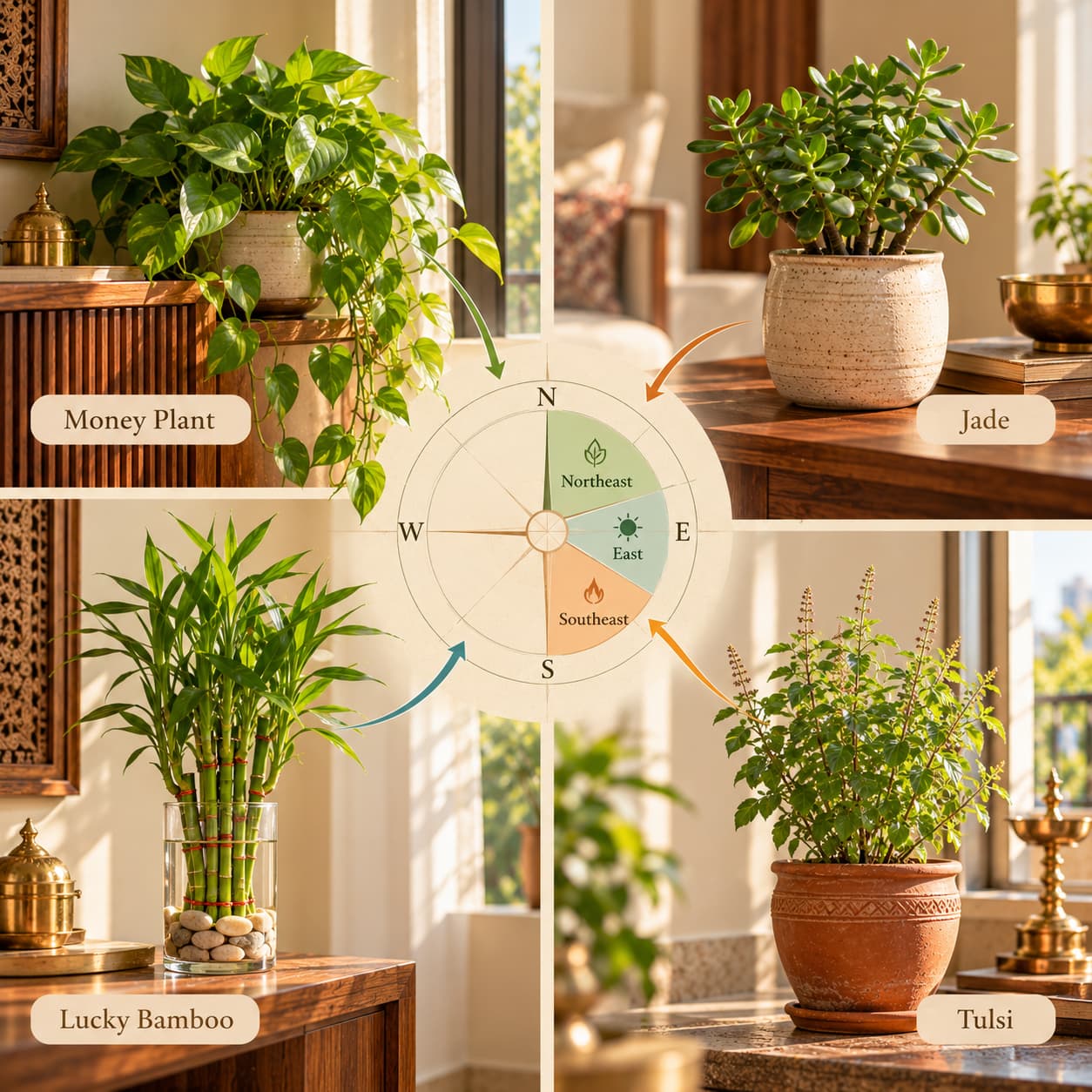
If you’re specifically interested in the wealth/prosperity association, the plants most frequently mentioned in contemporary Vastu guidance are:
| Plant | Traditional association | Common Vastu placement |
|---|---|---|
| Money Plant | Wealth, prosperity, growth | Southeast |
| Jade Plant | Financial growth, abundance | Southeast |
| Lucky Bamboo | Good fortune, growth | East / Southeast |
| Tulsi | Prosperity, auspiciousness, purity | North / East / Northeast |
| Rubber Plant | Growth and stability | Southeast |
These associations come from Vastu traditions and modern interpretations of them; they should not be understood as scientifically demonstrated methods of increasing income or wealth.
If you’re choosing a plant primarily for financial symbolism, money plant and jade are the two most straightforward choices.
Which Vastu Plants Are Associated With Health?
The answer requires a little more care because “health” can mean two different things.
Traditional Vastu interpretation
Plants such as Tulsi, Aloe Vera, Snake Plant and Areca Palm are frequently associated with health, freshness, purification or positive energy in contemporary Vastu content.
What research actually supports
Research on houseplants provides stronger support for their potential contribution to wellbeing and the experience of indoor spaces than for dramatic medical or air-purification claims.
The RHS notes that indoor plants can support psychological wellbeing, while significant room-scale air-quality improvements may require large numbers of plants and specific conditions that aren’t practical in many homes. Ventilation and reducing pollutant sources remain more effective strategies for indoor air quality.
So, think of plants as part of a healthy home environment, not as a substitute for ventilation, cleaning, medical treatment or other evidence-based health measures.
Which Direction Is Best for Vastu Plants?
There isn’t one universal direction for every plant.
Different Vastu sources give different combinations of directions, but some patterns appear repeatedly:
Northeast
Often associated with Tulsi and other plants considered auspicious or spiritually beneficial.
East
Commonly recommended for Tulsi, bamboo, jasmine, areca palm and several other plants.
Southeast
Frequently associated with Money Plant, Jade and Lucky Bamboo, particularly when prosperity is the intended symbolism.
North
Often recommended for Tulsi, jasmine, aloe vera and other plants in contemporary Vastu guides.
The important point is that plant direction should not be treated as a standalone rule.
If the southeast corner of your home is a dark cupboard with no usable light, forcing a sun-loving plant into that spot is unlikely to produce a healthy plant.
How to Choose a Vastu Plant for Your Home
Instead of asking only:
“Which plant brings the most wealth?”
ask four questions.
1. What do you want the plant to represent?
If the intention is prosperity, money plant or jade are commonly associated with that symbolism.
If the priority is cultural and spiritual significance, Tulsi is a different category altogether.
If you want a large visual statement, an areca palm may be more appropriate.
2. What direction do you have available?
Identify the directions in your home first.
If you haven’t already done so, our guide to Vastu tips for home explains how directions and different areas of the home are traditionally interpreted.
3. Does the plant actually suit that location?
This is where practical gardening should override a rigid decorative rule.
A plant needs suitable:
- Light
- Water
- Temperature
- Drainage
- Humidity
- Space
4. Can you maintain it?
A neglected or dying plant does not improve the appearance of a home.
The RHS’s wellbeing research found that healthy, attractive plants were perceived more positively, while unhealthy plants performed poorly in perceptions of wellbeing and environmental quality.
So healthy plant first, Vastu direction second is a sensible practical approach.
Vastu Plants for Different Areas of the Home
Living Room
Good choices include:
- Areca Palm
- Money Plant
- Jade Plant
- Snake Plant
- Lucky Bamboo
Use larger plants in empty corners and smaller plants on consoles or shelves.
Entrance
Depending on the available light:
- Tulsi
- Jade
- Money Plant
- Jasmine
- Areca Palm
Avoid turning the entrance into a dense jungle. The doorway should remain clear and welcoming.
Home Office
Compact plants work especially well here:
- Jade
- Lucky Bamboo
- Money Plant
- Snake Plant
A small plant on a desk can introduce natural texture without taking up much space.
Balcony
This is often the best location for plants that need more natural light.
Consider:
- Tulsi
- Jasmine
- Aloe Vera
- Areca Palm
- Money Plant
Bedroom
If you want plants in a bedroom, choose carefully based on light, humidity and your ability to maintain them.
Snake plants are commonly recommended because they are hardy, but you should not rely on popular claims that they dramatically oxygenate a bedroom overnight. RHS guidance notes that night-time CO₂ release from houseplants is very low and is unlikely to be a room-scale problem.
What About Cactus, Bonsai and Thorny Plants?
This is one area where Vastu recommendations vary significantly.
Many contemporary Vastu guides advise against keeping thorny plants, cactus, bonsai or unhealthy/dead plants in certain indoor locations, based on traditional interpretations.
The reasoning differs across sources, and there isn’t scientific evidence that a cactus creates negative energy in a home.
From a practical perspective, there are other reasons you might avoid them in particular locations.
A cactus with sharp spines may not be sensible beside a children’s play area or a narrow hallway. A bonsai may require more specialised care than someone wants to provide.
So don’t treat a Vastu “avoid” list as an absolute scientific rule. Consider safety, maintenance and suitability for the room alongside your preferred Vastu tradition.
Should You Keep Dead or Dying Plants at Home?
Regardless of whether you follow Vastu, this is one recommendation worth taking seriously from a design perspective.
Dead leaves, broken stems and severely unhealthy plants make a home look neglected.
Vastu traditions may interpret dying plants as undesirable because they represent declining vitality. Modern interior design reaches a similar practical conclusion for a much simpler reason: an unhealthy plant generally looks worse than a healthy one.
The RHS’s research found that unhealthy-looking plants were perceived less positively than healthy ones in relation to wellbeing and air quality.
Remove dead leaves, prune appropriately and replace plants that have genuinely failed rather than keeping them indefinitely.
A Note for Homes With Pets
Plant selection should change if you have cats or dogs.
Some plants commonly promoted in Vastu lists are not pet-safe. The ASPCA, for example, lists peace lily as toxic to cats and dogs, while its plant database also lists jade and aloe among plants that can cause problems if consumed.
Before bringing a new plant home:
- Identify the exact plant species.
- Check whether it is toxic to your pets.
- Consider whether your pet can access it.
- Keep potentially harmful plants out of reach or choose a safer alternative.
This is more important than following a particular Vastu placement.
7 Simple Vastu Plant Combinations for Different Goals
Rather than filling your home with every plant on a “lucky plants” list, you can create a few purposeful combinations.
For Prosperity
Money Plant + Jade
Use these in bright locations commonly associated with prosperity, such as the southeast, while making sure the plants receive appropriate light.
For a Traditional Indian Home
Tulsi + Jasmine
This combination brings together two plants with strong cultural associations and can work beautifully on a sunny balcony or courtyard.
For a Modern Apartment
Snake Plant + Money Plant
The contrasting upright and trailing forms create visual variety without requiring much floor space.
For a Large Living Room
Areca Palm + Jade
Use the palm as the larger structural element and jade as a smaller accent.
For a Small Home Office
Lucky Bamboo + Jade
Both can work as compact desk or shelf plants, provided their care and light requirements are met.
Common Mistakes People Make With Vastu Plants
Choosing a Plant Only Because It Is “Lucky”
A plant still needs to survive in your home.
Ignoring Natural Light
A direction cannot compensate for unsuitable growing conditions.
Keeping Too Many Plants
More greenery does not automatically create a better interior. A few healthy plants are often enough.
Forgetting Maintenance
Watering, pruning, repotting and cleaning leaves are part of owning houseplants.
Treating Vastu Claims as Guaranteed Outcomes
A money plant is not a financial investment strategy, and no plant can guarantee wealth or prevent illness.
Ignoring Pet Safety
Check plant toxicity before bringing anything into a home with cats or dogs.
The Best Vastu Plant Is the One That Works in Your Actual Home
There is no single plant that is universally “best” for wealth, health and positive energy.
- If your priority is prosperity symbolism, money plant and jade are among the most commonly recommended options.
- If you want traditional cultural significance, Tulsi is difficult to overlook.
- If you want low-maintenance greenery, snake plant is practical.
- If you want a larger visual presence, areca palm is more appropriate.
- If you want a compact desk plant, lucky bamboo or jade may work better.
And if your priority is wellbeing, choose a plant you actually enjoy looking at and can keep healthy. Research increasingly suggests that the appearance and condition of indoor plants influence how positively people experience them, while their ability to meaningfully clean an entire home’s air is much more limited than popular houseplant claims suggest.
Final Thoughts
Vastu plants are most useful when you treat them as a meeting point between traditional Indian home practices and practical interior design, rather than as guaranteed remedies for financial or health problems.
A healthy Tulsi plant on a sunny balcony, a trailing Money Plant in the southeast, a compact Jade on a work desk or an Areca Palm softening an empty living-room corner can all make a home feel more alive.
The traditional symbolism gives these choices another layer of meaning, while the plants themselves contribute colour, texture and a stronger visual connection with nature.
If you’re applying Vastu to your home more broadly, plant placement is only one part of the picture. Direction, entrance, room planning, natural light, ventilation, clutter and the use of space all play a role in traditional Vastu planning. You can continue with Vandanya’s Top 10 Vastu Tips for Home for a broader guide.
The simplest rule is perhaps the most useful one: choose a plant you can keep healthy, give it the conditions it needs, and then use Vastu principles to decide where it fits within your home.
Frequently Asked Questions
Which Vastu plant is best for positive energy?
Tulsi, Money Plant, Lucky Bamboo, Snake Plant and Areca Palm are among the plants frequently recommended in modern Vastu guides for positive energy. The specific choice should also depend on the light and growing conditions available in your home.
Which plant is good for health according to Vastu?
Tulsi, Aloe Vera, Snake Plant and Areca Palm are commonly associated with health or freshness in Vastu content. Scientifically, indoor plants are better supported for potential wellbeing benefits than for dramatic health or air-purification effects.
Which direction is best for a Money Plant?
The southeast is the most commonly cited Vastu direction for a Money Plant, particularly in relation to prosperity. However, different Vastu sources provide different recommendations, so placement traditions are not completely uniform.
Can I keep Tulsi inside the house?
Tulsi can be kept at home, but it generally needs good sunlight. A bright balcony, verandah, courtyard or sunny window area is often more practical than a dark interior corner.
Which plants should be avoided according to Vastu?
Many contemporary Vastu guides recommend avoiding thorny plants, cactus, bonsai and dead or unhealthy plants in certain indoor settings. These recommendations are based on Vastu traditions rather than scientific evidence.
Can plants really attract wealth?
There is no scientific evidence that plants directly attract money or increase household income. The association between plants such as Money Plant and Jade and wealth comes from traditional beliefs and symbolism. They can still be valuable additions to a home for their decorative and wellbeing qualities.
Do indoor plants really clean the air?
Some plants can remove certain pollutants under controlled conditions, but research indicates that achieving substantial room-scale air-quality improvements may require more plants and specific environmental conditions than are practical in most homes. Ventilation and reducing pollution sources remain more effective strategies.