This Website Is Still Under Development! So Some Things Might Not Work
We are creating something AWESOME!!!

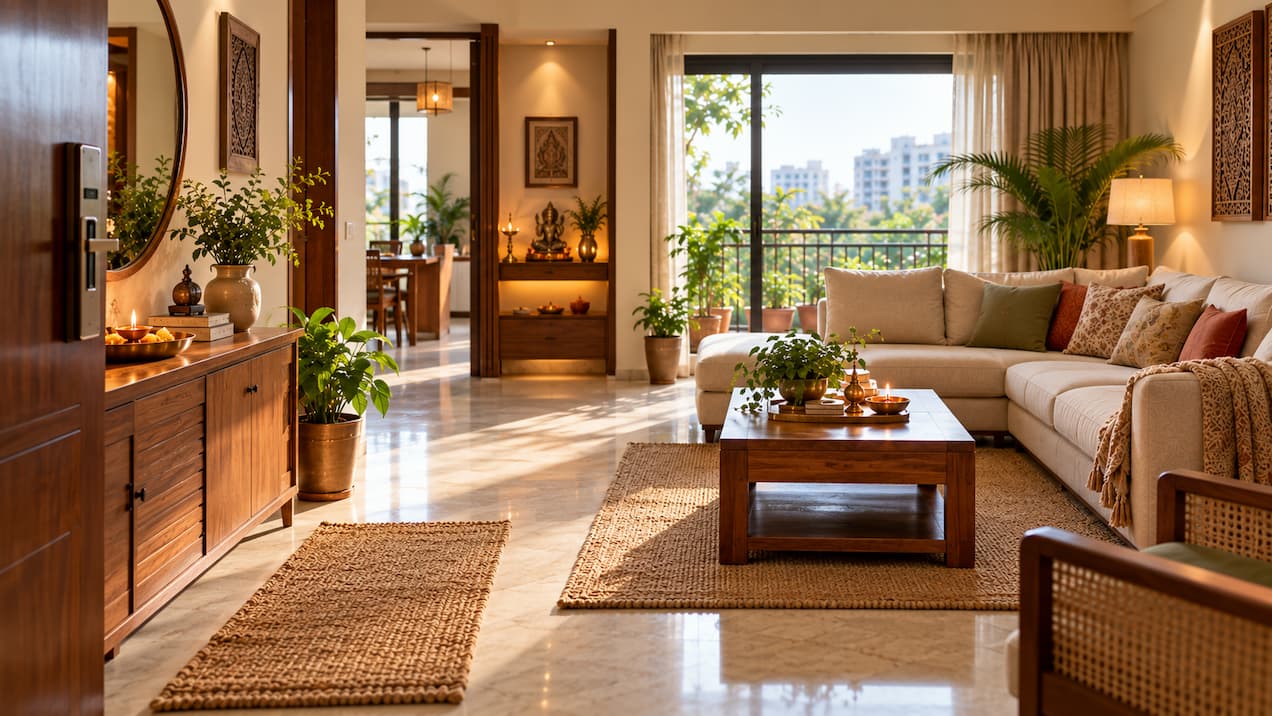

Vastu remedies for home can help you understand traditional ways of arranging your entrance, rooms, furniture, lighting and everyday surroundings according to Vastu Shastra. If your home does not follow every traditional Vastu recommendation, that does not automatically mean you need structural changes, expensive corrections or a complete renovation.
Many commonly suggested remedies focus on practical adjustments: keeping the entrance clear, improving natural light, reducing clutter, arranging furniture thoughtfully and maintaining a clean, functional living space. Other remedies, such as placing particular objects in specific directions, come from traditional Vastu beliefs rather than established scientific evidence.
The right approach is to understand the concern, identify what can realistically be improved and avoid making unnecessary changes to a home that already works well for you.
In this guide, we explore 15 commonly recommended Vastu remedies for home, including simple adjustments for the main entrance, northeast corner, kitchen, bedroom, bathroom, mirrors, colours and more. These suggestions are intended for existing homes, rented flats and apartments where major structural changes may not be practical.
Quick Takeaways
- Keep the main entrance clean, well-lit and free from unnecessary obstacles.
- Maintain a relatively light, uncluttered northeast corner if your layout allows.
- Keep the kitchen organised and make sure cooking areas are well ventilated.
- Arrange the bedroom for comfortable movement, privacy and restful sleep.
- Use mirrors thoughtfully, considering what they reflect and how they affect the room.
- Repair leaking taps, damaged fittings and persistent maintenance problems.
- Use natural light, ventilation and comfortable lighting wherever possible.
- Avoid expensive renovations solely because of a Vastu concern without considering practical needs.
- Treat traditional remedies as cultural or spiritual practices, not guaranteed solutions to financial, health or relationship problems.
1. Keep the Main Entrance Clean and Welcoming
In Vastu Shastra, the main entrance is traditionally regarded as an important point through which energy enters the home. As a result, keeping this area clean, accessible and well maintained is one of the most commonly recommended remedies.
Start with the basics. Remove footwear, delivery boxes and unused objects that obstruct the entrance. Check that the door opens comfortably, the handle works properly and the surrounding area has sufficient light. A clean doormat, a simple nameplate and a modest decorative element can make the entrance feel more welcoming.
If the entrance is poorly lit, consider adding a suitable wall light or improving the existing lighting. Avoid placing decorative objects where people may trip over them or where the door cannot open fully.
Some traditional Vastu interpretations favour entrances facing particular directions. However, changing the direction of an existing entrance is rarely practical and should not be treated as necessary simply because another direction is considered preferable.
For a deeper explanation of traditional directional preferences, read our guide to Vastu tips for home.
2. Keep the Northeast Corner Light and Uncluttered
The northeast corner, often called the Ishan direction in traditional Vastu discussions, is commonly associated with openness, clarity and spiritual activity. One frequently suggested remedy is to keep this area relatively light and free from unnecessary storage.
If the northeast corner of your home is crowded with boxes, unused furniture or miscellaneous belongings, begin by removing anything you no longer need. If possible, maintain an open walking area and avoid using the corner as a dumping ground for household items.
You can keep the area simple with a small plant suited to its light conditions, a modest decorative object or an uncluttered seating arrangement. If you use the corner for prayer or meditation, make sure it remains comfortable and easy to maintain.
Do not assume that every northeast corner must be completely empty. Real homes have doors, windows, structural columns, wardrobes and other fixed elements. Work with the layout you have rather than attempting expensive changes to satisfy a rigid interpretation.
3. Improve Natural Light and Ventilation
Good natural light and ventilation are among the most practical improvements you can make to an existing home. While traditional Vastu interpretations associate light and openness with a balanced environment, the everyday benefits of adequate daylight and fresh air can also be understood independently of Vastu.
Open curtains during the day when privacy and weather conditions permit. Keep windows reasonably clean, avoid blocking ventilation openings with large furniture and make sure exhaust fans work properly in kitchens and bathrooms.
If a room feels dark, consider lighter curtains, a better-positioned lamp or a mirror that reflects daylight without causing uncomfortable glare. Where natural ventilation is limited, use suitable mechanical ventilation rather than assuming decorative remedies will solve the problem.
The objective is to make rooms brighter, more comfortable and easier to use. You do not need to install expensive lighting systems if simple changes to curtains, furniture and existing fixtures are enough.
4. Organise the Kitchen and Cooking Area
The kitchen is an important part of many traditional Vastu layouts, with some interpretations associating it with the fire element and preferring a southeast location. However, the position of a kitchen in an existing apartment is usually fixed.
Instead of worrying about relocating it, focus on its practical arrangement. Keep the cooking surface clean, maintain adequate ventilation and separate food preparation areas from waste storage. Store frequently used utensils where they are easy to reach, and avoid placing items where they interfere with safe cooking.
If your layout permits, keep the cooking area and sink organised as separate functional zones. This is a useful kitchen-planning principle regardless of whether you follow Vastu.
If your kitchen faces a direction that differs from traditional recommendations, there is no need to assume that this alone will cause misfortune. Concentrate on cleanliness, safe appliance use, good ventilation and a layout that supports everyday cooking.
5. Arrange the Bedroom for Rest and Comfort
Traditional Vastu guidance often recommends placing the master bedroom in the southwest part of a home and sleeping with the head toward the south or east. These are traditional recommendations, not guarantees of better sleep or improved relationships.
If your bedroom is already in another part of the home, do not rush into structural changes. Start by arranging the bed so that you can get in and out comfortably, keeping the main walking paths clear and ensuring that doors and wardrobes are easy to access.
Choose curtains that help you manage daylight, reduce unnecessary light at night and keep the room at a comfortable temperature. Remove work materials and clutter from the immediate sleeping area if they make it difficult to relax.
If possible, position the bed against a stable wall and avoid placing furniture where it creates a hazard. These adjustments improve the usability of the bedroom without requiring a complete redesign.
For more detailed guidance on traditional home arrangements, explore our Vastu tips for home.
6. Keep the Centre of the Home Relatively Open
The central area of a home is known in Vastu Shastra as the Brahmasthan. Traditional interpretations often recommend keeping this part of the layout open and relatively free from heavy obstructions.
In an existing home, the centre may already contain a dining table, sofa, partition, staircase or structural element. You should not remove essential furniture or alter structural features simply to create an empty centre.
Instead, look for opportunities to improve movement through the space. Remove unnecessary stools and storage boxes, avoid accumulating items in circulation areas and ensure that the route between rooms remains comfortable.
If the central part of your home feels crowded, try rearranging movable furniture before purchasing anything new. An open walking route can make a room feel more spacious and functional, even when the original floor plan cannot be changed.
7. Repair Leaking Taps and Damaged Fixtures
Water is associated with several traditional Vastu interpretations, and some remedies advise paying attention to leaking taps, drainage problems and damaged water fixtures.
There is also a straightforward practical reason to address these problems. Leaks can waste water, damage cabinets and walls, encourage mould growth and increase maintenance costs.
Check taps, pipes, toilet fittings and areas under sinks periodically. Repair leaks promptly and investigate persistent damp patches rather than covering them with paint or decorative panels.
If you follow traditional Vastu practices, you may also prefer to keep water storage areas clean and organised. However, the most important remedy for a leaking pipe is a proper repair, not a decorative object placed nearby.
8. Use Mirrors Thoughtfully
Mirrors are often discussed in Vastu guidance because their placement affects how a room appears and what is reflected within it. Different traditional interpretations offer different recommendations, so it is sensible to avoid treating every mirror rule as universal.
From a practical perspective, place mirrors where they improve light, support everyday use or make a compact room feel more open. A mirror opposite a window may reflect daylight, while one in a narrow entrance can help the area feel brighter.
Check what the mirror reflects before deciding where to hang it. Reflecting an attractive view or a well-lit part of the room may improve the visual composition, while reflecting clutter can make the space appear busier.
In bedrooms, consider whether a mirror reflects light into your eyes at night or creates unwanted visual distractions. If you follow a specific Vastu tradition that recommends avoiding certain mirror positions, you can incorporate that preference when it is practical.
9. Choose Colours That Suit the Room
Colours are an important part of traditional Indian interiors, and Vastu recommendations often associate different colours with particular directions, elements or room functions. These associations vary across sources and should be understood as traditional guidance rather than scientific rules.
For an existing home, start with the room’s natural light, size and purpose. Soft neutrals can help a small or dim room feel brighter, while warmer colours can introduce visual comfort into a living area. Bedrooms may benefit from a palette that feels calm to the people using them.
You do not need to repaint an entire room because a particular colour is considered unsuitable in one interpretation of Vastu. Consider cushions, curtains, bedding, rugs or artwork as lower-cost ways to adjust the palette.
The best colour scheme is one that works with the home’s lighting, furniture and your preferences while remaining comfortable to live with.
10. Keep the Pooja or Prayer Area Clean
For households that maintain a pooja space, traditional Vastu guidance often favours a clean, peaceful and relatively uncluttered arrangement. Some interpretations prefer the northeast, east or north, but the ideal location in an existing home depends on its layout and available space.
A dedicated room is not essential. A clean shelf, compact cabinet or small corner can serve as a prayer area if it is suitable for your household’s practices.
Keep prayer items organised, clean the surface regularly and make sure lamps or incense are used safely. Avoid overcrowding the area with decorative objects that make it difficult to maintain.
If you cannot place the pooja area in a traditionally preferred direction, focus on creating a respectful and practical space that fits your home.
11. Remove Clutter and Reconsider Heavy Storage
Decluttering is one of the easiest remedies to try because it does not require structural work. Traditional Vastu advice often recommends maintaining open areas and arranging heavier furniture toward particular parts of the home, although exact recommendations vary.
Begin with spaces that collect unused belongings: the entrance, corners behind doors, under beds, the centre of the living room and the tops of cupboards.
Donate, recycle or store items that you genuinely need elsewhere. For things you use regularly, assign a clear storage location so that they do not keep returning to common areas.
If your home has a large wardrobe or fixed storage unit in a direction that differs from traditional guidance, do not assume that it must be removed. Consider the cost, practicality and structural implications before making changes. A safe, accessible and well-organised home matters more than following a direction-based rule at any cost.
12. Maintain Bathrooms and Toilets Properly
Bathrooms and toilets are sometimes treated as areas requiring special attention in Vastu Shastra. Recommendations about their preferred directions vary, and an existing bathroom is generally expensive and disruptive to relocate.
Instead, start with maintenance. Keep the space ventilated, repair leaks, clean drains, check exhaust fans and address persistent dampness. Store toiletries neatly and avoid letting waste or laundry accumulate unnecessarily.
If the bathroom feels dark, improve the lighting and use lighter finishes or accessories where appropriate. Ensure that flooring remains safe and that water does not spread into adjoining rooms.
If your bathroom is in a direction you consider unfavourable according to Vastu, begin with these practical steps rather than attempting a costly relocation. A clean and well-maintained bathroom is an important part of a healthy, functional home.
13. Add Plants Where They Can Thrive
Plants are sometimes recommended in Vastu practices for their traditional associations with growth, freshness and prosperity. The direction considered suitable varies by plant and tradition, so it is worth choosing plants according to their actual growing requirements first.
Select plants that suit the light, temperature and available space. A Money Plant may work in a bright indirect-light area, while Tulsi generally needs substantial sunlight to thrive. A plant that is poorly suited to its environment can struggle regardless of where it is positioned.
Avoid overcrowding narrow passages or placing large pots where they obstruct doors and windows. Remove dead leaves, water plants according to their needs and check whether a chosen plant is safe for children and pets.
For more plant-specific guidance, read our article on Vastu plants for wealth, health and positive energy if that page is available on Vandanya.
14. Use Lighting to Improve Dark Corners
Traditional Vastu interpretations often associate light with clarity and a balanced home environment. A practical way to apply this idea is to identify corners that remain dark even during the day and improve their lighting where possible.
A floor lamp, wall light or table lamp can help brighten a dim corner. Choose the type of lighting according to the room’s purpose: softer light for relaxing areas and brighter task lighting for reading, cooking or working.
If a dark corner is caused by a blocked window or poorly arranged furniture, see whether a small layout adjustment can help before buying a new lamp.
Avoid treating a lamp or candle as a guaranteed remedy for financial difficulties, illness or other serious problems. Lighting is useful for visibility, atmosphere and comfort; claims about guaranteed life outcomes are not established.
15. Check the Main Door, Windows and Everyday Movement
A final remedy is to review how people move through the home. Traditional Vastu guidance pays attention to entrances, openings and circulation, while good interior planning also prioritises safe and comfortable movement.
Make sure doors open without hitting furniture, windows can be reached and opened where intended, and passageways are not blocked by storage. Fix squeaky hinges, loose handles and damaged fittings.
If a room feels awkward, try moving a side table, chair or storage basket before purchasing new furniture. Sometimes a small change creates a more noticeable improvement than adding another decorative object.
These adjustments are especially useful in rented flats, where changing walls, doors or fixed installations may not be permitted.
Simple Vastu Remedies for Common Home Concerns
The following table summarises common concerns and practical first steps. The traditional interpretations are not proof that a particular arrangement causes good or bad outcomes.
| Home concern | Simple adjustment |
|---|---|
| Cluttered entrance | Clear the doorway and improve lighting |
| Crowded northeast corner | Remove unnecessary storage where practical |
| Dark living room | Open curtains and add suitable lighting |
| Kitchen feels disorganised | Improve storage, cleanliness and ventilation |
| Bedroom feels uncomfortable | Reconsider bed position, light and walking space |
| Blocked central area | Rearrange movable furniture to improve circulation |
| Leaking tap | Repair the leak and check for water damage |
| Mirror reflects clutter | Adjust its position or what appears in the reflection |
| Bathroom stays damp | Improve ventilation and repair plumbing issues |
| Plants keep dying | Choose species suited to the available light and care routine |
Vastu Remedies for a Rented Flat
If you live in a rented flat, the most useful remedies are generally those that do not require drilling, demolition or permanent alterations.
You can reorganise movable furniture, reduce clutter, improve the use of natural light, add suitable lamps, maintain plants and keep the entrance and bathroom in good condition. Freestanding shelves and removable décor can also help you create a prayer corner or organise a small room.
Before installing wall fixtures or making changes to doors, plumbing or electrical systems, check the rental agreement and obtain permission where needed.
Do not feel pressured to spend heavily on objects marketed as compulsory Vastu corrections. Prioritise the changes that improve your everyday experience and fit your budget.
What to Avoid When Trying Vastu Remedies
Vastu advice can become confusing when different sources recommend different directions, objects or rituals. A few principles can help you make sensible decisions.
Avoid expensive structural changes without a clear reason. Moving a kitchen, toilet or staircase can involve substantial cost and disruption. Seek qualified professional advice before considering such work.
Do not treat every traditional recommendation as universal. Vastu interpretations can differ, and the practical layout of a home may limit what is possible.
Be cautious about guaranteed promises. Claims that a particular object will definitely bring wealth, cure illness, solve relationship problems or remove every difficulty are not supported by reliable scientific evidence.
Do not ignore maintenance or safety. A decorative remedy cannot replace repairing a leak, fixing faulty wiring, improving ventilation or addressing a structural problem.
Avoid buying objects simply out of fear. Make decisions based on your household’s beliefs, practical needs and budget rather than pressure or alarming claims.
Final Thoughts
Vastu remedies for home do not have to begin with expensive products or major renovations. Start by looking at the space you already have: the entrance, the way light enters, how furniture is arranged, whether rooms are maintained properly and whether everyday movement feels comfortable.
If Vastu is part of your family’s traditions, you can incorporate its principles where they fit naturally into your home. For areas that cannot be changed, focus on practical improvements rather than assuming that an unfavourable direction will determine your future.
At Vandanya, we explore the relationship between Indian traditions, thoughtful interiors, Vastu and everyday living. Explore our guides for more practical ideas to help you create a home that feels considered, comfortable and connected to Indian design.
Frequently Asked Questions
Can Vastu defects be corrected without renovation?
Many commonly suggested adjustments do not require renovation. You can reorganise movable furniture, improve lighting, declutter rooms, maintain plants and keep entrances and functional areas clear. Structural concerns may be difficult to change, but they do not automatically require expensive alterations.
What is the first thing to correct according to Vastu?
There is no single universally accepted first correction across all Vastu interpretations. A practical starting point is the main entrance because it is easy to inspect and often benefits from cleaning, better lighting and clear access.
What can I do if my main door faces the wrong direction?
First, remember that directional preferences vary across Vastu traditions. If you are concerned about the entrance, keep it well maintained, accessible and adequately lit. Changing the direction of an existing main door is usually a major undertaking and should not be considered necessary without careful evaluation.
Which Vastu remedies are suitable for rented homes?
Non-permanent changes are the easiest to manage: decluttering, rearranging movable furniture, using lamps, maintaining plants, improving organisation and keeping the entrance clean. Avoid structural changes without the property owner's permission.
Do Vastu remedies guarantee wealth or good health?
No reliable scientific evidence establishes that specific Vastu objects or placements guarantee wealth, health or success. Vastu is a traditional system of spatial guidance. Practical improvements to light, ventilation, organisation and maintenance may support comfort and usability, but they cannot guarantee particular life outcomes.
Should I buy Vastu pyramids, crystals or other corrective objects?
Such objects are associated with certain traditional or commercial Vastu practices, but they should not be treated as scientifically proven necessities. If you choose to use them for personal or cultural reasons, consider their cost and placement carefully and avoid making purchases under pressure.
Is Vastu necessary for every home?
Vastu is meaningful to many people as a traditional framework for arranging living spaces, but not everyone follows it in the same way. A home can still be comfortable, safe and functional even if its layout does not match every traditional recommendation.